
Soil Restoration Secrets Revealed: What Our Top Case Studies Teach Us About Living Soil
By Jeremy Standring
At Regen Soil, we don’t just look at dirt; we look at the complex, subterranean cities that power life on Earth. When we talk about regenerative agriculture, we are talking about a fundamental shift from "managing chemistry" to "nurturing biology."
Over the years, we have analyzed countless successful soil restoration projects. From small-scale market gardens to massive commercial operations, the patterns are clear. The secret to high yields, drought resistance, and nutrient density isn't found in a synthetic fertilizer bag, it is found in living soil.
In this deep dive, we’re going to pull back the curtain on the data. We will explore what our top case studies teach us about the power of Rhizo Logic® (our signature living soil) and how Bio-boost (a premier Terrabiotics solution) can accelerate the restoration process.
The Paradigm Shift: Why "Living Soil" Changes Everything
For decades, conventional agriculture treated soil like an inert medium, a sponge to hold synthetic N-P-K (Nitrogen, Phosphorus, and Potassium). We now know this approach is a dead end. It leads to compaction, erosion, and a total reliance on external inputs.
Living soil, or what we categorize under the Rhizo Logic® framework, is a self-sustaining ecosystem. It is teeming with bacteria, fungi, protozoa, and nematodes that work in harmony to cycle nutrients and build soil structure.
Key Lessons from Our Research:
- Biology Drives Yield: In a landmark study of a market garden near Stockholm, restoring soil biology through complete compost led to a 72% average yield increase across eight different crop types in just one season.
- Water is the New Gold: Case studies from arid regions like Arizona and the UAE show that restored soil structure can reduce water usage by 40% to 50%.
- Economic Resilience: Healthy soil isn't just a "green" choice; it’s a financial one. Operations using the Soil Food Web approach have recovered from near-bankruptcy by slashing input costs and improving animal health.
Lesson 1: The Rhizosphere is the Command Center
The most critical area of any farm or garden is the rhizosphere, the narrow region of soil directly influenced by root secretions and associated microorganisms. This is where the magic of Rhizo Logic® happens.
When we look at soil restoration through an electron microscope, we see a battlefield turned into a partnership. In degraded soil, roots are bare and vulnerable. In restored, living soil, those same roots are coated in beneficial bacteria and fungal hyphae.
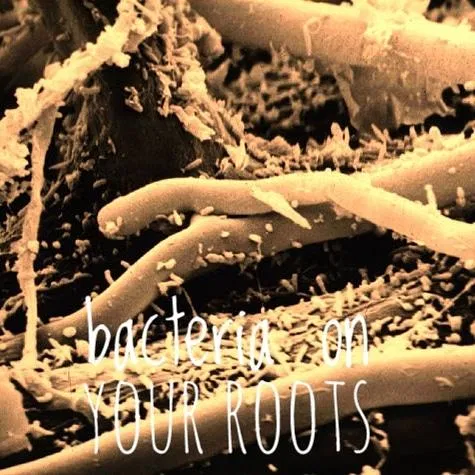
We have found that when plants are grown in our Rhizo Logic® Living Soil, they spend less energy searching for nutrients and more energy on fruit and flower production. This is because the microbes are "mining" the minerals for them in exchange for root exudates (sugars).
Lesson 2: Restoring Structure Saves Water
One of the most common questions we get at Regen Soil is: "How do I deal with drought?" The answer isn't a better irrigation system; it’s better soil.
In our analysis of soil restoration projects in Yuma County, Arizona, we saw that treatments focused on soil structure allowed for rapid restoration even with poor water quality. By increasing the organic matter and microbial activity, the soil acts as a biological sponge.
Systems-Thinking: The Sponge Effect
- Pore Space: Living soil has high porosity, allowing water to infiltrate deeply rather than running off the surface.
- Aggregates: Microbes produce "glues" (like glomalin) that bind soil particles together into aggregates. These aggregates hold water against the pull of gravity.
- Mulching & Cover Crops: Using clover or other cover crops protects the soil surface from the sun, keeping the biology alive and the moisture locked in.

Suggested Image Description: A split-screen comparison showing water pooling on top of compacted, dead soil versus water infiltrating quickly into dark, crumbly living soil.
Lesson 3: The Role of Terrabiotics (Bio-boost)
While Rhizo Logic® represents the environment (the house), Bio-boost represents the inhabitants (the workers). Under the umbrella of Terrabiotics, Bio-boost is designed to provide the microbial diversity needed to jumpstart a stalled system.
In our Bio-boost trials, we’ve seen that adding these specific microbial inoculants can speed up the decomposition of organic matter and unlock "legacy phosphorus" that has been trapped in the soil for years.
We recommend using Bio-boost during the transition phase of soil restoration. If you are moving away from synthetic fertilizers, your soil biology might be dormant or non-existent. Bio-boost acts as a biological "kickstart" to get the nutrient cycle spinning again.
Lesson 4: Data-Driven Restoration (The RSI Method)
Success in soil restoration isn't a guessing game. It requires measurement. This is why we developed the RSI Method (Regen Soil Innovations). We use real-time data to monitor the progress of our soil ecosystems.

By monitoring metrics like Electrical Conductivity (EC), temperature, and moisture through tools like the Regen Soil Pulse, we can see exactly how the living soil is responding to our interventions.
Success Story: The 58% Nutrient Loss Reduction
A commercial farmer following our restoration protocols was able to reduce nutrient losses by 58-74%. This wasn't because he used more fertilizer, but because the living soil held onto the nutrients and delivered them to the plants precisely when needed. This is the definition of efficiency in regenerative agriculture.
Tailored Advice for Every Grower
For Beginners
If you are just starting, don't overcomplicate it. Start with a high-quality medium like our 5gal Living Soil. Focus on keeping the soil moist but not waterlogged. Think of your soil as a pet; it needs air, water, and food (organic matter).
For Experienced Growers
You likely already understand the basics of N-P-K. Now, it’s time to look at the fungal-to-bacterial ratio. Different crops prefer different ratios. For example, most vegetables prefer a balance, while trees prefer fungal-dominant soils. Use our Initial Soil Health (ISH) Assessment to see where your balance currently stands.
For Commercial Operations
Scalability is the biggest hurdle in soil restoration. We suggest a phased approach. Start with a "biological bridge" where you gradually reduce synthetics while increasing Terrabiotics like Bio-boost. This prevents a "yield drag" during the transition period.
Comparison: Conventional vs. Restored Living Soil
| Feature | Conventional Soil (Dead) | Restored Living Soil (Rhizo Logic®) |
|---|---|---|
| Nutrient Delivery | Synthetic, salt-based spikes | Constant, biological cycling |
| Water Retention | Low; high runoff and evaporation | High; the "biological sponge" effect |
| Pest Resistance | Relies on chemical pesticides | Natural "systemic acquired resistance" |
| Root Health | Thin, searching, often diseased | Dense, white, microbial-coated |
| Cost | Rising annually (input-heavy) | Decreasing annually (self-sustaining) |
FAQ: Common Questions About Soil Restoration
Q: How long does it take to restore dead soil?
A: With the right approach, you can see massive improvements in a single growing season. However, true "biological maturity" often takes 3 to 5 years of consistent regenerative practices.
Q: Can I use Rhizo Logic® products with my existing fertilizer?
A: Yes, but with caution. High concentrations of salt-based fertilizers can harm soil microbes. We suggest reducing your fertilizer rates by 25-50% when you begin using Rhizo Logic® and Bio-boost, as the biology will make your remaining nutrients much more available to the plant.
Q: Is "Living Soil" the same as "Organic Soil"?
A: Not necessarily. Organic soil simply means it doesn't contain synthetic chemicals. Living Soil (Rhizo Logic®) specifically refers to the active presence of a diverse soil food web. You can have organic soil that is biologically "dead."
Q: How do I know if my soil is "living"?
A: Look for indicators like earthworms, dark color (humus), and a crumbly "chocolate cake" texture. For a more scientific answer, our Soil Health Assessments can provide a detailed microbial count.
Conclusion: Start Your Restoration Journey
The data is undeniable. The future of agriculture: and the health of our planet: depends on our ability to transition from extractive practices to regenerative ones. By embracing the principles of living soil, we can grow more food, use less water, and build a resilient ecosystem that lasts for generations.
If you are ready to stop guessing and start growing, we invite you to check out our Initial Soil Health Assessment. Let’s look at your biology together and build a custom roadmap for your soil's restoration.
Have you noticed a change in your soil structure after switching to regenerative practices? Share your success stories or questions in the comments below!
For more insights on why these systems are changing the world, read our post on why regenerative organic living systems will change the way you grow food.


