
Can Regenerative Agriculture Really Save Your Garden? 5 Success Stories and Your Top FAQs Answered
By Jeremy Standring
For decades, the "modern" approach to gardening and farming has relied on a chemical-first mindset. If a plant looks yellow, we add synthetic nitrogen. If a bug appears, we spray a pesticide. But this reactive cycle has led to a global crisis of soil restoration needs. We are seeing gardens that require more water, more fertilizer, and more work every single year just to maintain the same yields.
At Regen Soil, we believe there is a better way. We approach the garden not as a collection of individual plants, but as a complex, living ecosystem. This is the core of regenerative agriculture: a systems-thinking approach that focuses on rebuilding soil organic matter and restoring degraded soil biodiversity.
But does it actually work for the average home grower or small-scale farmer? The answer is a resounding yes. In this guide, we will explore five powerful success stories and dive deep into the science of how Rhizo Logic® Living Soil and Terrabiotics Bio-boost can transform your growing space.
What is Regenerative Agriculture?
Before we look at the results, we must define the process. Regenerative agriculture is a conservation and rehabilitation approach to food and farming systems. It focuses on topsoil regeneration, increasing biodiversity, improving the water cycle, and enhancing ecosystem services.
Unlike conventional "sustainable" agriculture, which merely seeks to maintain a status quo, regeneration seeks to improve the land. We do this by focusing on:
- Minimal Soil Disturbance: Protecting the fungal networks (mycelium) that act as the soil's internet.
- Living Roots: Ensuring the soil is never bare, providing a constant food source for microbial populations.
- Diversity: Planting a variety of species to encourage a robust soil food web.
- Biological Inputs: Replacing synthetic salts with "living" amendments like Rhizo Logic® products.
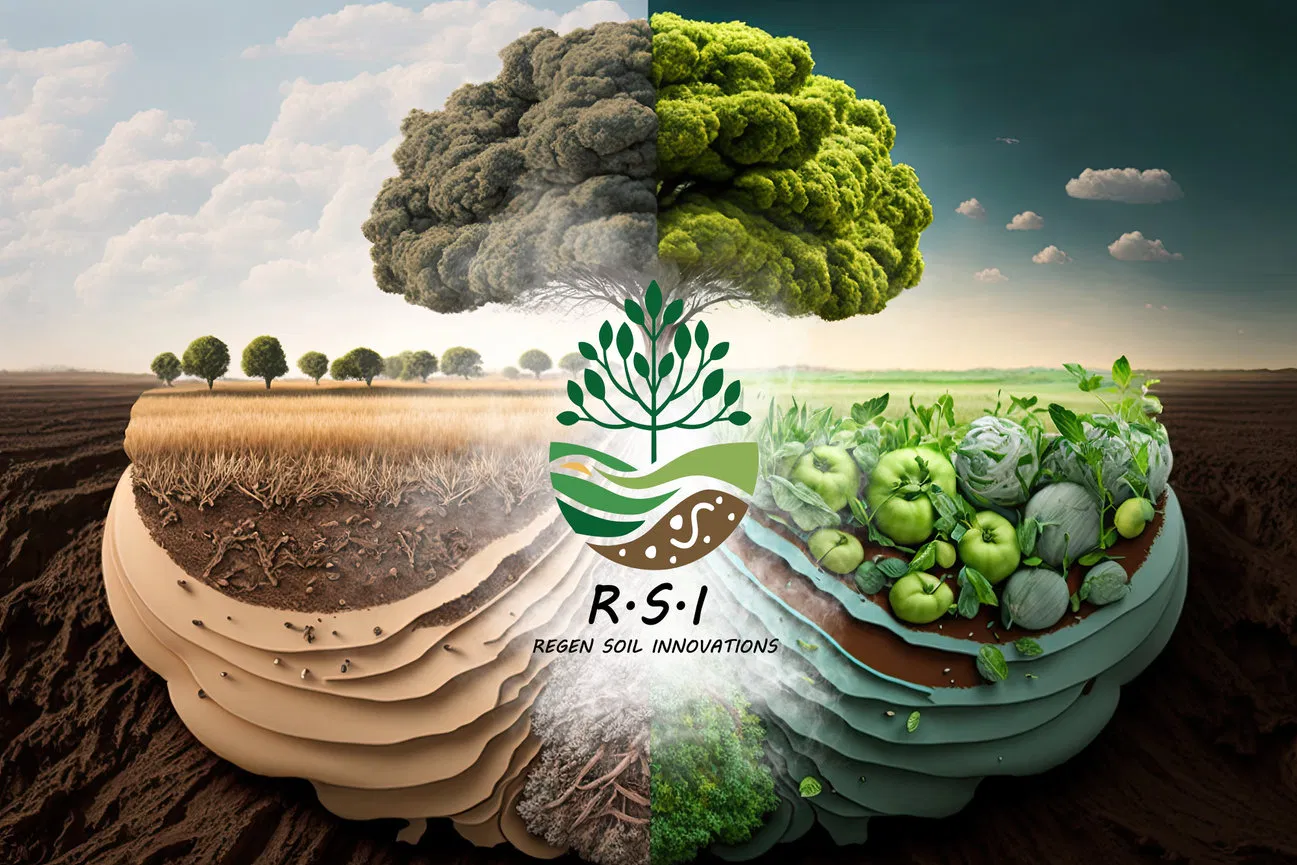
5 Success Stories: From Depleted Dirt to Living Ecosystems
To understand the impact of these principles, we look at real-world applications ranging from large-scale farms to diversified homesteads.
1. Green Meadows Farm: The Commercial Transition
In the American heartland, Green Meadows Farm represented the classic struggle of conventional agriculture. High input costs for synthetic fertilizers were eating their margins, while their soil became increasingly hydrophobic (water-repellent).
By transitioning to regenerative practices: specifically cover cropping and minimal tillage: they shifted the focus to nutrient cycling. Within three seasons, they reduced synthetic inputs by 60% while maintaining yields. The secret was the restoration of the soil’s natural ability to hold water and process minerals through biology.
2. Sunflower Fields Cooperative: Community Resilience
In rural areas where market access is difficult, a group of farmers formed a cooperative to adopt regenerative techniques. They moved away from monoculture (growing just one crop) toward a high-diversity model. By utilizing communal knowledge and focusing on soil restoration, they were able to grow premium, nutrient-dense produce that commanded a higher price in local markets. Their success proves that regenerative methods aren't just good for the earth; they are vital for economic sustainability.
3. Riverside Ranch: Mastering Water Retention
Faced with increasing drought and unpredictable weather, Riverside Ranch implemented agroforestry and rotational grazing. By integrating trees into their pasture systems, they created a microclimate that reduced evaporation. The increased organic matter in their soil acted like a giant sponge. We have found that for every 1% increase in soil organic matter, an acre of land can hold an additional 20,000 gallons of water.
4. Enos: The Closed-Loop Homestead
In 2021, a grower named Enos shifted his approach to embrace a closed-loop system. He integrated tea, kitchen gardening, and beekeeping. By using the waste from his dairy cows to feed his garden and using garden "weeds" to supplement his livestock, he created a self-sustaining cycle. His reliance on external, expensive inputs vanished, and his family’s income skyrocketed because the "system" was doing the heavy lifting, not his wallet.
5. Christine: Diversification and Profitability
Christine moved away from a coffee monoculture to a diversified system of avocados, macadamia, and bananas. This mimicry of a natural forest floor provided natural shade and significantly reduced the need for fungicides. By focusing on the Rhizo Logic® of her farm: the interaction between the roots and the microbes: she achieved Rainforest Alliance Certification, proving that high-standard regenerative practices lead to premium market access.
The Science: Why "Living Soil" is the Key
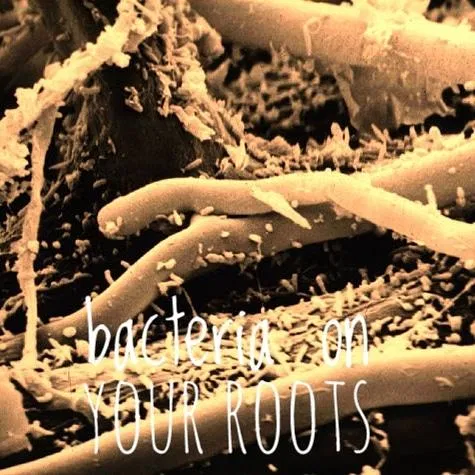
When we talk about "saving" a garden, we are really talking about saving the rhizosphere: the narrow region of soil that is directly influenced by root secretions and associated soil microorganisms.
Rhizo Logic®: The Power of Living Soil
Standard potting soils are often sterilized or "dead," relying on the grower to provide liquid nutrients. In contrast, Rhizo Logic® Living Soil is pre-colonized with a diverse array of beneficial fungi and bacteria.
This biology creates a symbiotic relationship with your plants. The plants provide sugars (exudates) to the microbes, and in exchange, the microbes mine the soil for minerals and deliver them back to the plant in a bioavailable form. This is nutrient cycling in its purest form.
Terrabiotics Bio-boost: The Microbial Recharge
Even the best soil can become "tired" after a heavy growing season. This is where Terrabiotics Bio-boost (also known as Ultra Bio Boost) comes into play. Think of this as a probiotic shot for your garden. It reintroduces high-density microbial populations that may have been depleted by extreme weather or heavy harvests.

Systems-Thinking: Beginners vs. Experienced Growers
At Regen Soil, we guide our clients through the RSI Method, which balances data with nature.
For the Beginner
If you are just starting, the most important shift is to stop seeing "pests" and "weeds" as enemies and start seeing them as indicators.
- Step 1: Stop tilling. It destroys the fungal networks you need.
- Step 2: Use a high-quality living soil base like Rhizo Logic®.
- Step 3: Keep the soil covered with mulch or living plants at all times.
For the Experienced Grower
If you already have a handle on the basics, it’s time to move toward data-driven restoration. We recommend using Soil Health Assessments to measure your microbial activity.
- Focus on Fungal-to-Bacterial Ratios: Most annual vegetables prefer a 1:1 ratio, while perennial shrubs and trees prefer fungal-dominant soil.
- Micro-Dosing Biology: Instead of heavy fertilization, use Ultra Bio Boost Soil Recharge to maintain peak biological performance.
Comparative Analysis: Conventional vs. Regenerative
| Feature | Conventional Gardening | Regenerative (Regen Soil) |
|---|---|---|
| Nutrient Source | Synthetic Salts (NPK) | Biological Nutrient Cycling |
| Water Needs | High (Due to low organic matter) | Low (Soil acts as a sponge) |
| Pest Management | Chemical Pesticides | Ecosystem Balance / IPM |
| Soil Structure | Compacted / Lifeless | Aerated / Biologically Active |
| Long-term Cost | Increasing (Inputs go up) | Decreasing (System becomes self-sustaining) |
Frequently Asked Questions (FAQs)
Q: Is regenerative agriculture more expensive to start?
A: Initially, there may be a cost to transition if your soil is completely depleted and you need to bring in Rhizo Logic® Living Soil. However, over time, your costs drop significantly because you are no longer buying bags of fertilizer or expensive pesticides. You are investing in an asset (the soil) that pays dividends.
Q: How long does it take to see results?
A: You will often see a change in plant vigor and water retention within the first 30 to 60 days. However, full soil restoration: where the ecosystem is truly self-balancing: usually takes 3 to 5 years.
Q: Can I do this in a small backyard or on a patio?
A: Absolutely. In fact, regenerative organic systems are perfect for small spaces. Check out our guide on why living systems change patio growing forever.
Q: What is the difference between Rhizo Logic and Bio-boost?
A: Rhizo Logic® is our brand for Living Soil products: the actual medium your plants grow in. Bio-boost is a Terrabiotics product designed as a "soil recharge" or microbial amendment to boost the life already present in your garden.
Q: Do I still need to weed my garden?
A: In a regenerative system, we use "cover crops" or dense plantings to outcompete unwanted plants. While you may still have some weeding to do, the goal is to reach a state where the "weeds" are actually providing value by covering the soil and feeding microbes.
The Path Forward
Regenerative agriculture isn't just a buzzword; it’s a return to the biological principles that have governed the earth for millions of years. Whether you are a commercial operator looking to increase resilience or a home gardener wanting the most nutrient-dense vegetables possible, the secret lies beneath your feet.
We are here to help you navigate this transition. From our Bio-boost microbial amendments to our comprehensive Soil Health Assessments, we provide the tools and the science to ensure your success.
What is the biggest challenge you are facing in your garden right now? Is it pests, poor drainage, or plants that just won't grow? Leave a comment below or contact us today, and let’s start your journey toward a truly living garden.


