
Can Regenerative Agriculture Really Restore Your Land? Real-World Success Stories and FAQs
By Jeremy Standring
For decades, the agricultural industry has been stuck in a cycle of extraction. We have treated soil like a sterile medium, a mere sponge for synthetic NPK fertilizers and chemical "cides." But as yields plateau and input costs skyrocket, we are seeing a global shift toward a more holistic, systems-thinking approach.
The question we hear most often at Regen Soil is: “Can regenerative agriculture actually restore my land, or is it just a buzzword?”
The answer is a resounding yes. But restoration isn’t just about stopping the bad stuff; it’s about actively rebuilding the biological infrastructure of the earth. We aren’t just growing plants; we are managing an underground economy of microbial populations. When we transition from conventional "dirt" to Living Soil, what we call Rhizo Logic®, the results are measurable, profitable, and permanent.
The Science of Restoration: Moving Beyond "Dirt"
To understand how restoration works, we have to look at the soil as a living organism. Conventional farming relies on chemical interventions to bypass the soil's natural functions. Regenerative agriculture, however, focuses on nutrient cycling and sequestration.
By introducing diverse biology and maintaining living roots in the ground, we kickstart the Rhizo Logic® process. This is where plant roots exude carbon-rich sugars to "hire" specific microbes. These microbes, in turn, mine minerals from the soil particles and deliver them back to the plant in a bioavailable form.
When you supplement this system with Bio-boost (a premier Terrabiotics solution), you aren't just adding fertilizer; you are providing the microbial "catalyst" that accelerates this restoration.
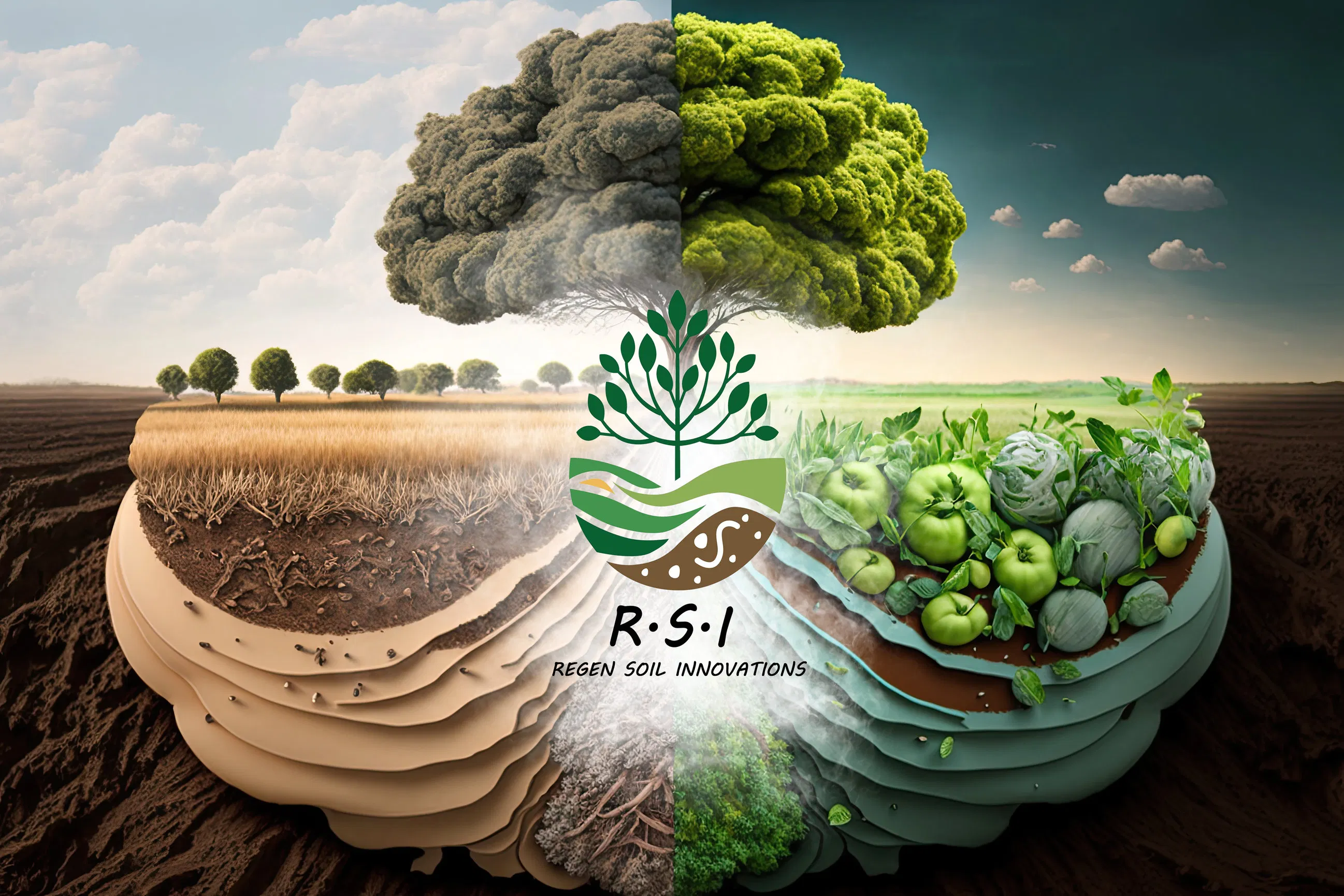
Real-World Success: From "Sick" Farms to Thriving Ecosystems
Theoretical science is great, but we know you need to see the "boots on the ground" results. Here are three case studies that prove regenerative practices can restore land across different scales and climates.
1. The Coleman Family Farm (Virginia, USA)
In 2007, the Coleman family realized their farm was "sick." Their cattle were struggling, their finances were in the red, and the land was exhausted. They made the radical choice to switch to year-round regenerative grazing.
The Results:
- Zero Hay Purchases: They haven't bought hay in over five years.
- No External Inputs: Since 2007, they have eliminated off-farm fertility and seed stock purchases.
- Systemic Resilience: By focusing on soil health, they rebuilt a community connection and created a diversified revenue stream including beef, pork, and berries.
2. Green Meadows Farm (Heartland USA)
This operation demonstrates that regenerative principles aren't just for small-scale hobbyists. By implementing cover cropping and rotational grazing on a commercial scale, they transformed their bottom line.
The Results:
- Input Reduction: A substantial decrease in the need for synthetic pesticides and fertilizers.
- Market Premium: By producing grass-fed meat and organic produce, they command higher prices than conventional neighbors.
- Profitability: They proved that restoring the soil leads directly to economic stability.
3. The Mount Kenya Highlands (Kenya)
Through the Rainforest Alliance MSuLLi program, farmers like Enos and Christine have shown that regenerative methods can thrive in tropical environments.
The Results:
- Closed-Loop Systems: Enos uses livestock manure to feed his vegetables and chicken droppings to nourish his tea.
- Diversification: Farmers moved away from monoculture coffee toward a mix of avocados, macadamia, and bananas.
- Income Stability: Christine used her increased income to invest in her children's education and real estate.
The Technical Deep Dive: Why It Works
Restoration isn't magic; it’s mechanics. When we conduct an Initial Soil Health Assessment (ISH), we are looking for specific indicators of a functioning system.
Microbial Interactions on the Root
At the heart of the Rhizo Logic® system is the relationship between roots and bacteria. When we look at a root under an electron microscope, we want to see a thick coating of beneficial bacteria. This "biofilm" protects the plant from pathogens and facilitates nutrient exchange.

Comparative Analysis: Conventional vs. Regenerative
| Feature | Conventional Agriculture | Regenerative Agriculture (Rhizo Logic®) |
|---|---|---|
| Soil Structure | Compacted, low oxygen | Aggregated, porous, high oxygen |
| Nutrient Source | Synthetic NPK (Soluble) | Microbial Cycling (Living) |
| Water Retention | Low; high runoff | High; acts like a sponge |
| Input Costs | Increasing annually | Decreasing over time |
| Ecosystem Health | Simplified/Degraded | Diverse/Vibrant |
Perspectives for Different Growers
For the Beginner (Patio & Home Gardens)
You don't need a thousand acres to see the benefits of Living Soil. By starting with a high-quality medium and avoiding "the big three" mistakes, over-watering, synthetic fertilizers, and tilling, you can grow nutrient-dense food in a small space. For a head start, check out our Ultimate Guide to Living Soil for Patio Gardens.
For Commercial Operations
The transition for a large-scale operation requires data. We use tools like the Regen Soil Pulse to monitor real-time metrics. When you see your EC (Electrical Conductivity) and moisture levels stabilizing through biological activity rather than chemical intervention, you can make confident management decisions.

Frequently Asked Questions (FAQs)
Q: How long does it take to see results?
A: You will see changes in water infiltration and plant vigor within the first 1 to 3 years. However, a total systemic restoration, where you can eliminate all off-farm inputs like the Coleman family, usually takes 5 to 7 years of consistent management.
Q: Can this really work on a large scale?
A: Absolutely. Operations the size of major cities (like Schiff Farms in Delaware) are currently transitioning. The principles of Rhizo Logic®, biology, diversity, and minimal disturbance, are universal, regardless of acreage.
Q: Is regenerative agriculture more expensive?
A: The initial investment in education and biological inoculants like Bio-boost (Terrabiotics) might feel higher than a bag of cheap urea. However, the long-term ROI is far superior because you are reducing your reliance on expensive synthetic inputs that increase in price every year.
Q: Do I need special equipment?
A: Not necessarily. Many farmers start by repurposing existing equipment for no-till or cover crop drilling. The most important "equipment" you need is a Soil Health Assessment to understand exactly what your biology needs.
Q: Does "Regenerative" mean "Organic"?
A: Not always. While most regenerative farmers avoid synthetics, the focus is on improving the soil, not just avoiding prohibited substances. You can be "Organic" but still destroy your soil structure through excessive tilling. Regenerative is about Living Soil.
Restoring Harmony with Nature
We believe that the future of farming isn't found in a laboratory, but in the complex, beautiful relationships already existing beneath our feet. By embracing a systems-thinking mindset, we can turn barren land into a carbon-sequestering, food-producing powerhouse.
If you are ready to stop "managing dirt" and start "growing soil," we are here to mentor you through the process. Whether you need a full RSI Method consultation or just want to start with a bag of Rhizo Logic® Living Soil, the path to restoration begins with a single decision to work with nature instead of against it.

What’s the biggest challenge you’re facing with your land right now? Drop a comment below or contact us directly: we’d love to help you dig into the data and find a biological solution that works for you.


