
5 Steps How to Build a Regenerative Organic Living System and Restore Dead Dirt (Easy Guide for Gardeners)
By Jeremy Standring
Let’s be honest: most "gardening" advice out there is actually just chemistry experiments disguised as hobbyism. If you’ve been dumping blue crystals on your plants and wondering why your soil looks like a cracked salt flat every July, you’ve been sold a lie. You don’t have a soil problem; you have a biology problem.
At Regen Soil, we don’t just "grow plants." We build ecosystems. We specialize in regenerative organic living systems, a fancy way of saying we get out of Mother Nature’s way and give her the tools to fix what we’ve broken. If your backyard feels more like "dead dirt" than a thriving oasis, don't worry. We can fix that.
Here is our five-step blueprint to restoring your soil’s vitality using the same principles we use in our RSI Method.
Step 1: Stop the War (Assess and Cease Disturbance)
The first rule of Soil Club? Stop hitting the soil. Every time you fire up the rototiller, you are essentially running a hurricane through a microscopic city. You’re shredding fungal hyphae, crushing the "highways" that microbes use to transport nutrients, and exposing buried carbon to oxygen, which causes it to gas off as CO2.
The "Dead Dirt" Audit
Before you add anything, you need to know what you’re working with. Is your soil hard like a brick? Does it smell like nothing? If you dig a hole, do you see worms, or just sterile, grey dust?
What to stop immediately:
- Synthetic Fertilizers: These are basically "fast food" for plants. They provide a quick hit of nitrogen but kill the long-term microbial populations that actually build soil health.
- Tilling: Put the tiller on Facebook Marketplace. We want minimal soil disturbance to preserve the delicate soil architecture.
- Bare Soil: Nature abhors a vacuum, and she hates being naked even more. Bare soil is a wound.
If you want a professional-grade starting point, we recommend an Initial Soil Health (ISH) Assessment. This isn't your standard N-P-K test from the hardware store; we look at the biology, the structure, and the potential of your specific ecosystem.

Step 2: Armor Up (Cover Your Assets)
In a regenerative agriculture framework, soil must be covered 100% of the time. This "armor" regulates temperature (keeping those microbes from cooking in the sun), retains moisture, and provides a slow-release buffet for your underground workforce.
The Sheet Mulching Method
If your dirt is truly "dead," you need to reboot it. For new beds, we love "Sheet Mulching" (sometimes called Lasagna Gardening).
- Layer 1: Mow your weeds low and leave them there.
- Layer 2: Lay down plain, non-glossy cardboard. This smothers weeds and provides a carbon source for worms.
- Layer 3: Add 2-4 inches of high-quality compost.
- Layer 4: Top it off with 3-4 inches of mulch (straw, wood chips, or shredded leaves).
By arming the soil, you’re creating a stable environment where soil restoration can actually begin. Without cover, the UV rays from the sun act as a sterilizer, killing the very life you're trying to cultivate.
Step 3: Feed the Underground Economy (Inoculate with Rhizo Logic®)
This is where the magic happens. Soil isn't just a medium to hold up plants; it is a digestive system. To turn "dirt" into living soil, you need to introduce the right biology.
While compost is great, it’s often hit-or-miss in terms of microbial diversity. This is why we developed Rhizo Logic®. Our Rhizo Logic products are specifically designed to reintroduce the "missing" microbes: the specialists that unlock phosphorus, fix nitrogen from the air, and protect roots from pathogens.
Understanding the Microbes
You have different "players" in the soil:
- Bacteria: The chemists. They break down simple sugars.
- Fungi: The engineers. They build the structures (aggregates) that allow air and water to move through the soil.
- Protozoa: The predators. They eat the bacteria and "poop" out plant-available nitrogen right at the root zone. (Check out our deep dive on protozoa for more on this).
Using our 5-Gallon Living Soil kit powered by Rhizo Logic® biology ensures that you aren't just adding "stuff" to your dirt: you’re installing a functional biological workforce.

Step 4: The Power of Living Roots (Diversity is Life)
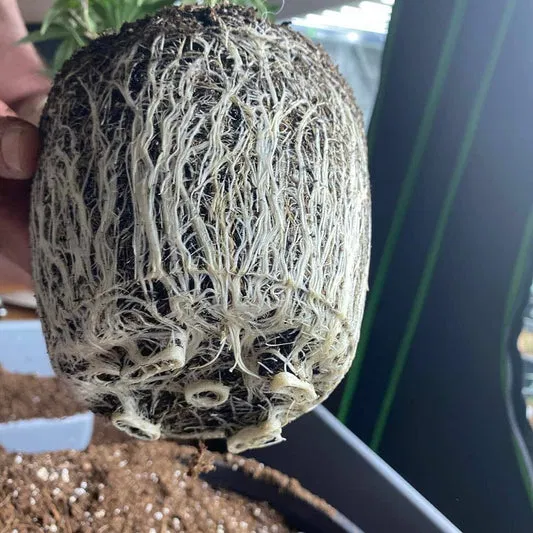
Plants and microbes have a "quid pro quo" relationship. Plants take sunlight and CO2 and turn them into liquid sugars (exudates), which they pump out through their roots. Why? To "pay" the microbes to bring them minerals. This is the Liquid Carbon Pathway.
To build a regenerative organic living system, you need living roots in the ground for as many days of the year as possible.
Don't Monocrop
If you only grow tomatoes, you only feed the microbes that like tomato "sugar." To have a resilient garden, you need diversity.
- Interplanting: Plant basil, marigolds, and alyssum among your veggies.
- Cover Crops: When a veggie comes out, put a "green manure" in. Use clover, vetch, or peas. These plants work with specialized bacteria to pull nitrogen out of the air and put it into your soil for free.
- The "Chop and Drop": Instead of pulling plants out by the roots at the end of the season, cut them at the base. Leave the roots to rot in place; they become "microbial hotels" and leave behind tiny tunnels for air and water.
Step 5: Systems Management (Watering and Patience)
The final step is moving from a "manager" to an "observer." In a true living system, the soil starts doing the work for you. However, you need to manage the transition.
Water Like a Forest
Microbes need a thin film of water to move, but they also need air to breathe. If you overwater and drown your soil, you turn it "anaerobic": which smells like rotten eggs and breeds pathogens.
- Use Drip Irrigation: Aim for consistent moisture under your mulch layer.
- Avoid Chlorine: If you can, use a filter on your garden hose. Chlorine is designed to kill bacteria in our drinking water; it does the same thing to your soil biology.
Incorporate "Livestock"
Even a small patio garden can have livestock. We’re talking about worms. A worm tower or a handful of red wigglers can accelerate the breakdown of organic matter and create "castings": the gold standard of organic fertilizer.

Why This Matters: The Big Picture
Restoring dead dirt isn't just about growing a better-looking tomato (though you definitely will). It’s about nutrient density. Most supermarket produce is grown in "dead" hydroponic-style systems where the plant is force-fed three minerals (N-P-K). But a human body needs dozens of micronutrients to thrive.
Those micronutrients only get into the plant if the living soil biology is there to mine them from the earth. When you build a regenerative system, you are quite literally growing medicine. You are moving away from "crunchy water" and toward food that actually tastes like something.
FAQs: Common Barriers to Soil Restoration
Q: How long does it take to see results?
A: You’ll see better water retention in one season. You’ll see "crumbly" soil structure and more worms in 1-2 years. A fully resilient, self-sustaining system usually takes about 3 years of consistent regenerative practice.
Q: Can I do this in pots?
A: Absolutely. In fact, it’s easier to control the biology in a container. Our Living Soil Patio Kits are designed exactly for this.
Q: Do I still need to use Bio-boost?
A: While Rhizo Logic® focuses on the living soil biology, products like Bio-boost (from our friends at Terrabiotics) can be used as a supplemental tool to provide specific enzymatic support. Think of Rhizo Logic as the workers and Bio-boost as the high-octane fuel for certain biological processes.
Q: My soil is heavy clay. Can I still do this?
A: Clay is actually a mineral goldmine; it’s just "stuck." The fungi and bacteria in a regenerative system produce "glues" (like glomalin) that bind clay particles into aggregates, creating the air space needed for roots to breathe. Don't add sand (that's how you make concrete); add biology.
Ready to Start Your Restoration Journey?
The path from dead dirt to a thriving, regenerative system doesn't require a PhD, but it does require a shift in mindset. Stop thinking like a chemist and start thinking like a biologist.
If you’re ready to stop guessing and start growing, check out our full collection of soil health tools or reach out to us for a custom assessment. Let’s bring your dirt back to life.
Got questions about your specific soil situation? Drop a comment below or contact us here. We’re here to help you grow better.


