
The Proven Living Soil Framework: 5 Success Stories from Our Soil Archives
By Jeremy Standring
At Regen Soil, we don’t just see dirt; we see a complex, breathing infrastructure that dictates the success or failure of every seed planted. The term "living soil" is often thrown around as a buzzword, but in our archives, it represents a specific, measurable framework that has transformed struggling farms into thriving ecosystems.
When we talk about Rhizo Logic®, we are referring to the logic of the rhizosphere, the interface where plant roots and soil biology communicate. This is the essence of Living Soil. On the other hand, when we look at accelerating this process, we turn to Terrabiotics, specifically products like Bio-boost, which provide the microbial fuel necessary to kickstart these biological engines.
The following framework is what we’ve used to guide hundreds of growers toward true soil restoration. It is built on five pillars that ensure your land isn't just a medium for holding plants upright, but a partner in their growth.
The 5 Pillars of the Living Soil Framework
Before we dive into the case studies, it’s important to understand the systems-thinking approach we apply to every project. We treat the soil as a living ecosystem, and these five pillars are non-negotiable:
- Prioritize Biology First: We focus on the soil food web, microbes, fungi, and protozoa, before reaching for synthetic chemistry.
- Minimize Disturbance: Whether physical (tillage) or chemical (saline fertilizers), disturbance resets the biological clock. We aim for stability.
- Continuous Living Roots: Soil life needs a constant source of carbon from root exudates. Fallow ground is starving ground.
- Species Diversity: Nature never grows a monoculture. Diversity in plants leads to diversity in microbial populations.
- Data-Driven Measurement: We move away from guesswork. Through our Initial Soil Health (ISH) Assessment, we measure exactly what is happening beneath the surface.
Story 1: Scaling Precision Biology on Row-Crop Operations
One of our most impactful cases involved a large-scale grain operation that was hitting a yield ceiling despite increasing fertilizer applications. The soil was compacted, and the water was simply running off the surface.
We implemented a data-driven strategy that integrated precision agriculture with biological inoculation. Instead of blanket-applying synthetic NPK, the grower used variable-rate technology mapped against our biological soil tests. We introduced Rhizo Logic® principles by transitioning to no-till and utilizing diverse cover crop mixes to break up compaction naturally.

The Result: Within two seasons, the farm saw a 15% reduction in input costs and a noticeable improvement in water infiltration. By using real-time monitoring, we could see the nutrient cycling improve, allowing the grower to rely on the "underground economy" of microbes rather than the local elevator’s supply.
Story 2: The Great Divide, Restoring Life to Degraded Grasslands
A ranching operation we worked with had suffered from years of overgrazing and conventional "spray and pray" management. The land was dominated by invasive weeds and bare patches of dusty earth.
Our approach here was the RSI Method. We treated the land as a whole system. We helped the owner implement managed intensive grazing, moving the cattle frequently to mimic natural herd movements. This was paired with a microbial "reboot" using Terrabiotics Bio-boost to accelerate the decomposition of organic matter and stimulate the dormant seed bank.
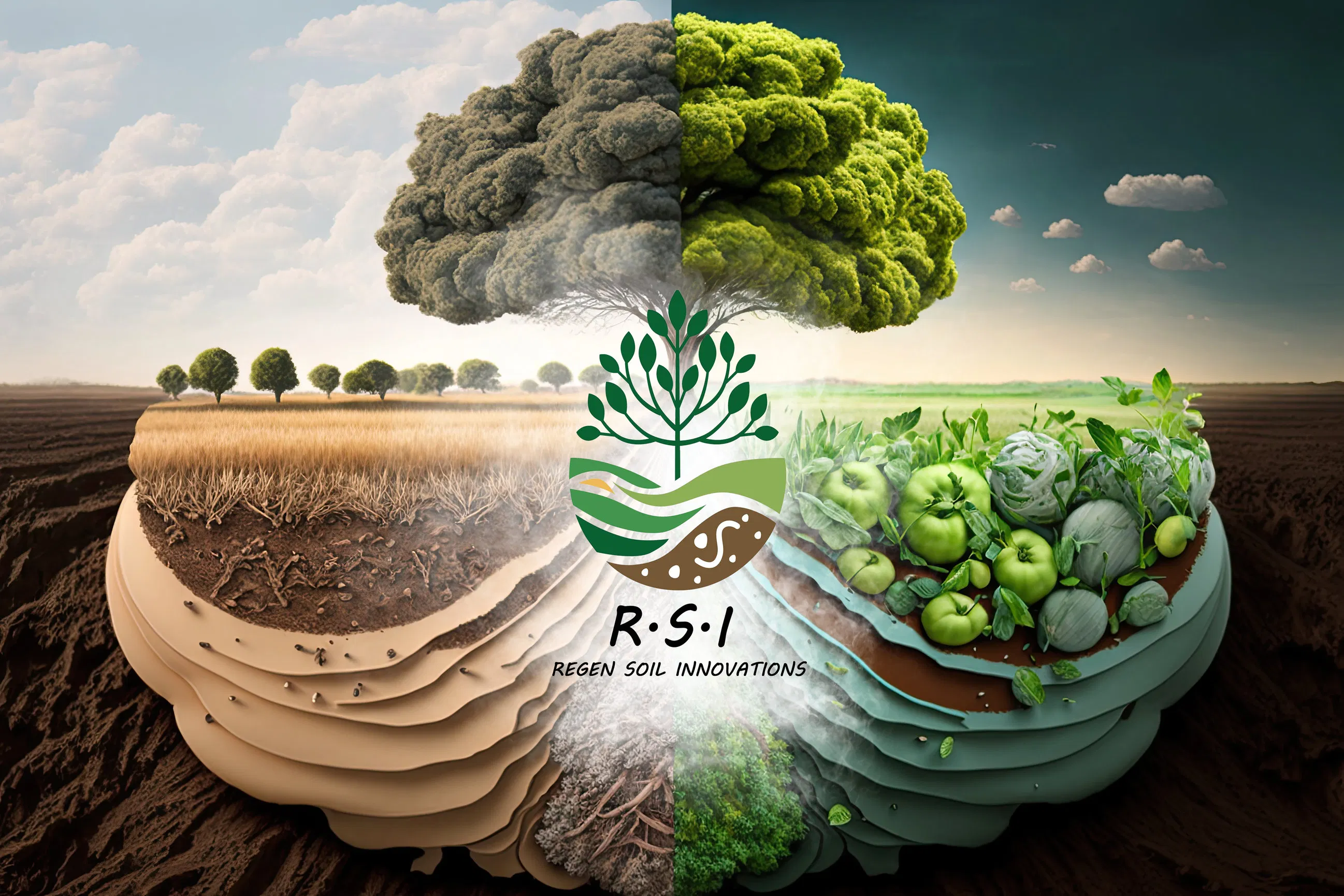
The Result: The "regeneration divide" was stark. The side-by-side comparison of the treated pastures versus the control plots showed a 40% increase in forage biomass. The soil organic matter (SOM) began to climb, and for the first time in a decade, native perennial grasses began to reappear without the need for expensive reseeding.
Story 3: Weatherproofing the Great Plains
In a region where drought is a constant threat, one of our partners wanted to "weatherproof" their farm. Their biggest challenge was moisture retention. In conventional systems, when the rain stops, the plants die because the soil has no "holding capacity."
We focused on building Soil Structure. By fostering a community of mycorrhizal fungi, we created "glomalin", a biological glue that binds soil particles into aggregates. These aggregates act like tiny sponges.
The Result: During a particularly dry July, this farm's corn stayed green for two weeks longer than the neighbors' crops. This "biological buffer" is the difference between a total loss and a profitable harvest. By shifting to a Living Soil framework, they effectively increased their soil's water-holding capacity by several thousand gallons per acre.
Story 4: Input Reduction and the "Clean" Root System
A family-owned vegetable farm was struggling with "lazy roots." Because they had been spoon-feeding plants with synthetic liquid fertilizers, the plants had never developed the deep, robust root systems needed to find their own nutrients or resist disease.
We transitioned them to our 5-Gallon Living Soil kits for their starters and applied Rhizo Logic® inoculants to their field rows. We wanted to see the "Bacteria on YOUR Roots" in action.
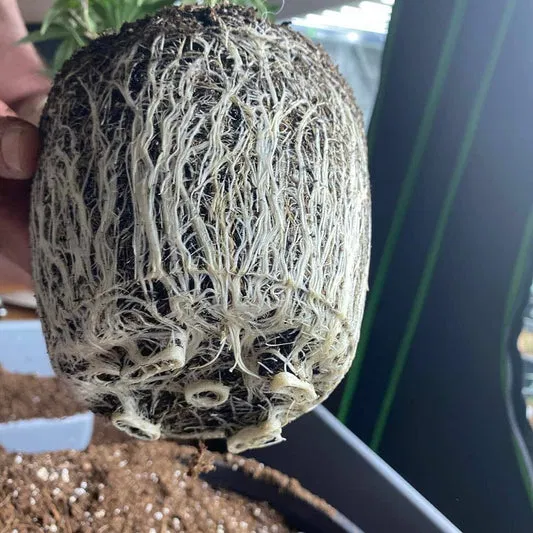
The Result: The roots transformed from thin, brown threads to thick, white, fuzzy structures coated in beneficial bacteria. These "rhizosheaths" protected the plants from soil-borne pathogens. The farm was able to eliminate two fungicide passes from their seasonal schedule, saving money and further protecting the soil microbiome.
Story 5: High-Value Crops and Terpene Density
In the world of high-value horticulture, specifically cannabis and specialty tea, quality is everything. One of our clients in the cannabis sector wanted to move away from salt-based hydroponic nutrients and into a Living Soil system.
We helped them design a no-till "living bed" system. We used a blend of compost, biochar, and Rhizo Logic® microbial cocktails. To keep the system running at peak performance, they used Terrabiotics Bio-boost to ensure the microbial populations never crashed during the heavy flowering stage.
The Result: University-backed trials on this specific site showed a 40% increase in terpene levels and a 23% increase in minor cannabinoids compared to their previous salt-based system. The flavor and aroma profile were incomparable, leading to a premium market price that more than covered the initial investment in soil restoration.
Deep Dive: The Science of the Rhizosphere
Why does this framework work across such different environments? It comes down to Nutrient Cycling. In a dead soil system, you must provide every pound of nitrogen, phosphorus, and potassium. In a Living Soil system, the microbes do the heavy lifting.

As seen in the electron microscope image above, a healthy root is not a clean surface. It is a bustling city of bacteria. These microbes solubilize minerals from the soil (which are normally unavailable to the plant) and "trade" them to the root in exchange for liquid carbon (sugars). This is the Rhizo Logic® advantage. When you feed the soil, you are feeding the engine that feeds the plant.
How to Get Started: Guidance for Every Grower
For Beginners (The Home Gardener)
Don't get overwhelmed by the jargon. Start by stopping the use of harsh "cidal" chemicals (herbicides/pesticides). Grab a 5gal Living Soil kit and witness the difference in root health for yourself. Your goal is to build a "starter colony" of biology in your backyard.
For Experienced Growers (The Market Gardener)
Focus on diversity. If you are currently using a single cover crop, try a 10-way mix. Use Bio-boost to help your soil process the extra organic matter. You already have the skills; now you need to refine the biological timing.
For Commercial Operations (Large Scale)
Measurement is your best friend. You cannot manage what you do not measure. We recommend an ISH Assessment to establish your baseline. This allows us to create a customized RSI Method plan that fits your existing equipment and acreage.

Frequently Asked Questions (FAQ)
Q: Is living soil more expensive than conventional farming?
A: Initially, there is an investment in biology and testing. However, over a 3-5 year period, the reduction in synthetic inputs and the increase in yield resilience typically lead to higher net profitability. You are moving from an "expense" model to an "asset-building" model.
Q: Can I use Rhizo Logic® products with my current fertilizer?
A: Yes, but we recommend avoiding high-salt synthetic fertilizers which can dehydrate the microbes. We often suggest a "bridge" period where we slowly reduce synthetics as the biology takes over.
Q: How long does it take to see results?
A: Biological results (like root growth) can be seen in weeks. Physical soil changes (like structure and organic matter) usually take 1-3 growing seasons to become fully apparent.
Q: What is the difference between Rhizo Logic® and Bio-boost?
A: Rhizo Logic® refers to our suite of Living Soil products and methodologies focused on the plant-soil interface. Bio-boost is a Terrabiotics product designed to provide a quick microbial "charge" to the soil, perfect for boosting nutrient cycling during critical growth stages.
Final Thoughts
The stories in our archives prove that regenerative agriculture isn't just for small hobby farms: it is a scalable, scientific, and highly profitable way to manage land. Whether you are growing corn in the Midwest or high-end botanicals on the coast, the logic remains the same: Life begets life.
If you’re ready to see what the Rhizo Logic® framework can do for your specific operation, let’s talk. We can help you navigate the transition from dirt to living soil with confidence.
Ready to start your own success story? Contact us today for a consultation or to learn more about our Soil Health Assessment services. Let’s build some soil.


