
How to Integrate Regenerative Farming Practices With Your Current Backyard Garden
By Jeremy Standring
For decades, the standard backyard gardening advice has been centered around control: kill the weeds, till the soil, and feed the plants with blue-colored synthetic powders. At Regen Soil, we believe it is time for a paradigm shift. Regenerative agriculture isn't just a buzzword for large-scale industrial farms; it is a philosophy and a set of practices that any home gardener can adopt to restore vitality to their local ecosystem.
Transitioning your garden to a regenerative system means moving away from "managing dirt" and moving toward "stewardship of life." By focusing on living soil and biological diversity, you aren't just growing vegetables: you are participating in carbon sequestration and restoring the natural nutrient cycling that has been stripped away by conventional methods.
What is Regenerative Gardening?
At its core, regenerative agriculture is a system of farming principles and practices that increases biodiversity, enriches soils, improves watersheds, and enhances ecosystem services. In a backyard context, this means integrating techniques that mimic nature rather than fight against it.
We often see gardeners frustrated by "lazy" plants that require constant watering and feeding. The reason is simple: the soil biology is dormant or dead. When you integrate our Rhizo Logic® approach: which focuses on the "Living Soil" philosophy: you are essentially hiring a microscopic workforce to do the heavy lifting for you.
Pillar 1: Transitioning to No-Till (No-Dig)
The most common mistake in traditional gardening is the annual use of a rototiller. While tilling provides a temporary "fluff" to the soil, it acts like an earthquake to the soil’s infrastructure. It shatters the delicate fungal hyphae (the internet of the soil) and collapses the pores that allow for air and water movement.
The Problem with Tilling vs. The No-Till Solution
| Feature | Traditional Tilling (A) | Regenerative No-Till (B) |
|---|---|---|
| Soil Structure | Destroyed annually; prone to compaction. | Built over time; creates stable aggregates. |
| Microbial Life | Mass mortality of fungi and earthworms. | Flourishing microbial populations. |
| Weed Pressure | Brings dormant weed seeds to the surface. | Suppresses weeds via mulch and undisturbed soil. |
| Water Retention | High runoff; soil dries out quickly. | High absorption; acts like a biological sponge. |
Instead of tilling, we recommend "sheet mulching" or "lasagna gardening." If you have an existing bed, simply stop digging. Apply a layer of high-quality compost and let the earthworms do the aeration for you. For new beds, lay down cardboard to suppress weeds and layer organic matter on top.
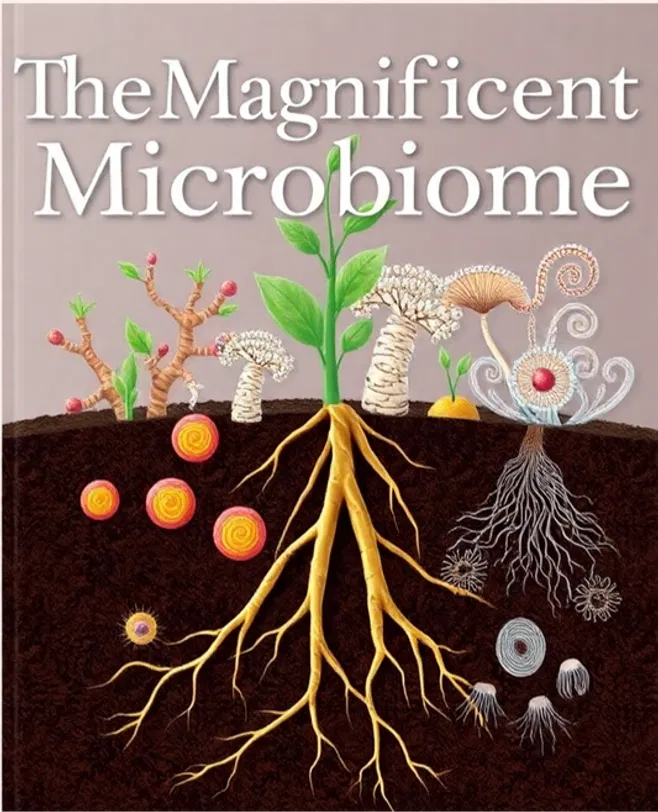
Pillar 2: Feeding the Underground Economy with Rhizo Logic®
In a regenerative system, we don't feed the plant; we feed the soil. The plant, in turn, feeds the microbes through root exudates (sugars). This relationship is what we call Rhizo Logic®.
To jumpstart a depleted backyard garden, you need to reintroduce the biology that may have been lost to synthetic fertilizers or pesticides. Using a 5-Gallon Living Soil kit is an excellent way to inoculate your existing beds with a concentrated dose of beneficial bacteria, fungi, and protozoa.
Why Microbial Diversity Matters
Plants have evolved over millions of years to trade carbon for nutrients. Without a diverse microbiome, your plants are essentially on "life support," relying entirely on the gardener for survival. A regenerative garden utilizes Living Soil to:
- Solubilize Phosphorus: Making locked-up nutrients available to roots.
- Fix Nitrogen: Taking atmospheric nitrogen and converting it into a plant-available form.
- Pathogen Suppression: Creating a "biological shield" around roots to prevent disease.
Pillar 3: Maximizing Plant Diversity (Polycultures)
Nature rarely grows in straight, single-crop rows. Monocultures (growing only one type of plant in an area) are a magnet for pests and diseases. In a regenerative backyard, we embrace the "messiness" of diversity.
Implementing Polycultures
Instead of a dedicated "tomato bed," try interplanting. We suggest mixing:
- Deep-rooted plants (like carrots or daikon) to break up subsoil.
- Legumes (peas/beans) to fix nitrogen.
- Insectary plants (alyssum, marigolds, dill) to attract predatory insects that eat your "pests."
This diversity creates a more resilient ecosystem. If one plant gets hit by a specific bug, the others remain untouched, and the beneficial insects are already on-site to handle the infestation.

Pillar 4: Keeping the Soil Covered Year-Round
Bare soil is a crime in regenerative agriculture. When soil is exposed to the sun and wind, it loses moisture, carbon is oxidized into the atmosphere, and the "biological engine" grinds to a halt.
Use Mulch and Cover Crops
- Organic Mulch: Use straw, shredded leaves, or wood chips. This regulates soil temperature and provides a slow-release food source for fungi.
- Cover Crops: When a bed is "resting" in the winter or between summer crops, sow a mix of clover, vetch, or rye. These "green manures" keep living roots in the ground, which is essential for maintaining microbial populations.
We have found that gardens utilizing cover crops require significantly less supplemental fertilizer the following season because the plants have "mined" nutrients and kept them in the upper soil profile.

Pillar 5: Enhancing the System with Bio-boost (Terrabiotics)
While the goal of regenerative gardening is to create a self-sustaining loop, many backyard soils are so degraded that they need a "bio-catalyst" to get moving. This is where Bio-boost from the Terrabiotics line comes into play.
Think of Bio-boost as a high-performance fuel for your soil microbes. By applying these specialized Terrabiotics, you are providing the necessary co-factors that stimulate dormant biology. It helps bridge the gap while your permanent soil structure is being built. You can learn more about how this fits into your routine on our Bio-boost page.
A Step-by-Step Transition Plan
If you’re ready to flip the switch from conventional to regenerative, follow this simple sequence:
Phase 1: The Assessment
Before adding anything, you need to know where you stand. We recommend an Initial Soil Health Assessment (ISH). This isn't just a standard N-P-K test; it’s a deep dive into the biological activity and structural integrity of your soil.
Phase 2: The "Chop and Drop"
At the end of your current growing season, do not pull your plants out by the roots. Cut them at the soil line. Leave the roots to rot in place (creating channels for air and water) and "chop" the tops to lay on the surface as mulch.
Phase 3: Inoculate and Protect
Apply a layer of compost or Living Soil. If your soil is particularly "dead," this is the time to apply Rhizo Logic® products to reset the microbial clock. Cover everything with 3-4 inches of mulch.

Frequently Asked Questions (FAQ)
Q: Will regenerative gardening lead to more weeds?
A: Initially, you might see some weeds as you stop tilling. However, by keeping the soil covered with mulch and cover crops, you actually suppress weed germination over time. Most "weeds" are pioneer species trying to fix bare, damaged soil. Once your soil is healthy, the weed pressure naturally drops.
Q: Can I still use organic fertilizers?
A: Yes, but you will find you need them less often. In a regenerative system, we prefer "slow" fertilizers like compost and bone meal over "fast" liquid fertilizers, as the goal is to build long-term soil wealth rather than providing a short-term spike.
Q: How long does it take to see results?
A: You will see an improvement in soil tilth and water retention within one season. However, building a truly robust "Living Soil" ecosystem is a 3-to-5-year journey.
Q: Is regenerative gardening more expensive?
A: In the long run, it is significantly cheaper. You are replacing expensive external inputs (fertilizers, pesticides) with internal biological processes. Your main "costs" become seeds for cover crops and occasional compost.
Start Your Regeneration Journey Today
Integrating regenerative practices into your backyard isn't just about growing better tomatoes: it’s about participating in a global movement to heal the planet, one square foot at a time. Whether you are a beginner or an experienced grower, the principles remain the same: disturb the soil less, cover it more, and feed the biology.
If you are unsure where to start, check out our RSI Method for a guided approach to soil restoration.
Have you tried transitioning a bed to no-till this year? We’d love to hear about your successes or challenges in the comments below! Let's grow a healthier future together.


