
The Hidden World of Soil Protozoa: Meet Your Soil's Microscopic Architects
When we talk about soil microbiology, most people immediately think of earthworms or maybe those cool-looking mushrooms popping up after a rainstorm. If you’re a bit more seasoned, you might even think of the massive networks of mycorrhizal fungi. But there is a whole world of single-celled power players that rarely get the spotlight, even though they are basically the "urban planners" of your garden’s underground city.
Meet the Protozoa.
These microscopic architects are more than just tiny dots under a microscope. They are the predatory engines driving the "poop loop" (yes, we’re going there), regulating bacterial populations, and ensuring your plants actually get the nutrients you’re paying for. At Regen Soil, we’ve seen thousands of soil samples, and we can tell you one thing for sure: if your protozoa population is crashing, your soil health is going down with it.
What Exactly Are Protozoa?
Protozoa are single-celled eukaryotic organisms. In plain English? They are complex little creatures that are way bigger than bacteria (though still invisible to your naked eye). Think of them as the lions of the Serengeti, but instead of chasing zebras, they are hunting down bacteria in the thin film of water surrounding soil particles.
In the grand scheme of beneficial soil microbes, protozoa occupy a central "hub" position. They connect the world of bacteria and fungi to the larger organisms like nematodes and worms. Without them, the soil food web is like a high-speed internet connection with a broken router, the data (nutrients) is there, but it’s not getting where it needs to go.
The "Big Three" of the Protozoa World
In any soil health assessment, we look for three main types of protozoa. Each has a different "job" and a different way of getting around.
1. Amoebae (The Shape-Shifters)
Amoebae are the most common protozoa in the soil. They don't have a fixed shape; they just sort of ooze around using "false feet" called pseudopodia. They are the slow and steady grazers of the microbial world. They wrap themselves around bacteria and digest them whole.
- Why they matter: They are incredibly resilient and can survive in drier conditions by forming a protective cyst.
2. Flagellates (The Whip-Tail Speedsters)
Flagellates use one or more whip-like tails (flagella) to propel themselves through soil water. They are smaller than amoebae but much faster.
- Why they matter: Because they are highly mobile, they can seek out bacterial colonies in tight spaces, making them excellent at nutrient cycling in the rhizosphere (the area right around the plant roots).
3. Ciliates (The Heavy Lifters)
Ciliates are the largest of the bunch and are covered in hundreds of tiny hair-like structures called cilia. They move like a many-oared Viking ship.
- Why they matter: Ciliates are the big eaters. A single ciliate can consume over five million bacteria in a single day! However, because they are larger, they need more water to move. If we see too many ciliates in a soil health assessment, it’s often a sign of anaerobic (low oxygen) or overly saturated conditions.

Caption: A microscopic view comparing the morphology of Amoebae, Flagellates, and Ciliates in a living soil sample.
The "Poop Loop": How Protozoa Feed Your Plants
This is where the magic happens. You see, bacteria are like tiny little fertilizer bags. They are packed with nitrogen and phosphorus. The problem? They don't want to give it up. They keep those nutrients locked inside their tiny bodies to grow and reproduce.
When a protozoan eats a bacterium, it’s getting way more nitrogen than it actually needs to survive. So, what does it do? It poops out the excess.
This waste is released in the form of ammonium (NH₄⁺), which is exactly what your plants are looking for. This process is the "poop loop," and it’s responsible for up to 80% of the nitrogen a plant receives in a high-functioning organic system. This is why products like our Rhizo Logic® 5gal Living Soil are so effective, they aren't just dirt; they are a pre-colonized ecosystem ready to start this cycling process on day one.
Why You Need These Microscopic Architects
Beyond just pooping out fertilizer, protozoa perform several critical "civil engineering" tasks in your soil:
- Bacterial Population Control: Without predators, bacterial populations would explode, eventually consuming all the available food and then dying off in a massive "boom and bust" cycle. Protozoa keep things steady.
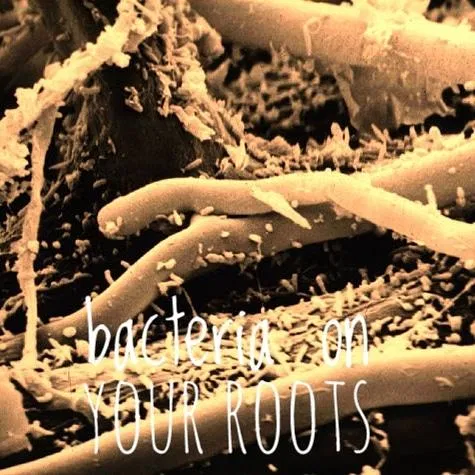
- Stimulating Plant Growth: Research shows that the presence of protozoa actually signals the plant to grow more roots. It’s like the plant knows the "grocery store" is open, so it sends out more roots to catch that released nitrogen.
- Improving Soil Structure: While they don't dig tunnels like worms, their activity stimulates bacteria to produce "glues" (polysaccharides) that hold soil particles together into aggregates. This is the foundation of a healthy living soil vs super soil structure.
How to Increase Your Protozoa Populations
If your soil is "quiet" (meaning it lacks these microbes), your plants are going to be "hungry," no matter how much bottled nutrient you pour on them. Here is how we recommend boosting the life in your soil:
1. Maintain Moisture
Protozoa live in the water film surrounding soil particles. If your soil goes bone-dry, they have to go into a dormant cyst state. Keep your soil consistently moist, like a wrung-out sponge. This is especially vital for regenerative patio container growing.
2. Add High-Quality Organic Matter
Protozoa eat bacteria, and bacteria eat organic matter. If you don't feed the "prey," the "predators" will starve. Use high-quality compost or leaf mold.
3. Use Microbial "Fuel"
To get the engine started, we often recommend Terrabiotics Bio-boost. It provides the complex carbohydrates and catalysts that trigger a microbial feeding frenzy, ensuring that both the bacteria and their protozoan predators have the energy they need to thrive.
4. Stop the Chemical Warfare
High-salt synthetic fertilizers and pesticides are like a nuclear bomb to a protozoan. These salts can physically dehydrate and kill these delicate single-celled organisms. Transitioning to a no-till farming approach is one of the best ways to protect your microscopic architects.
The Rhizo Logic® Advantage
At Regen Soil, we don't guess, we test. When we develop our Rhizo Logic® living soil blends, we are specifically looking at the balance of these microbes. We ensure there’s a diverse population of amoebae and flagellates to jumpstart that nutrient cycling.

If you aren't sure where your soil stands, our Initial Soil Health (ISH) Assessment is the gold standard. We take a literal look under the microscope to see who’s home. If we don't see protozoa, we know we have a cycling problem, and we can provide a roadmap to fix it.
Summary Checklist for Growers
| Feature | Amoebae | Flagellates | Ciliates |
|---|---|---|---|
| Movement | Oozing (Pseudopodia) | Whipping (Flagella) | Rowing (Cilia) |
| Environment | Diverse/Resilient | Rhizosphere/Tight spaces | Saturated/Wet |
| Main Diet | Bacteria | Bacteria | Bacteria (Massive amounts) |
| Soil Health Sign | Excellent nutrient cycler | High microbial activity | Potential drainage issues |
FAQs: Common Questions About Soil Protozoa
Q: Can I see protozoa without a microscope?
A: No. They are generally between 5 and 500 micrometers. For context, a human hair is about 70 micrometers wide. You’ll need at least 400x magnification to see them clearly.
Q: Will adding worms increase my protozoa?
A: Indirectly, yes! Worms break down organic matter into smaller pieces that bacteria love. More bacteria = more food for protozoa. It’s all connected.
Q: How often should I re-apply microbial inoculants?
A: In a perfectly balanced system, you shouldn't have to. However, most garden soils are far from perfect. We recommend a "boost" at the start of each season or after any major stress event (like a heatwave or a move).
Final Thoughts from Jeremy
Nature has spent millions of years perfecting this system. We don't need to reinvent the wheel; we just need to make sure the wheel has all its parts. Protozoa are the "missing link" for many gardeners who struggle with nutrient deficiencies despite adding fertilizers.
By focusing on soil microbiology and supporting these microscopic architects, you’re not just growing plants: you’re managing an ecosystem. And a managed ecosystem is a productive, resilient, and thriving one.
Ready to see what’s actually living in your dirt? Check out our Initial Soil Health Assessment or grab a bag of Rhizo Logic® Living Soil and start your regenerative journey today. If you have questions about your specific setup, drop a comment below( we love talking shop!)


