
Why Soil Archives Matter: The Science of Proving Your Soil Restoration Actually Worked
By Jeremy Standring
Let’s be honest: in the world of regenerative agriculture, "soil health" has become a bit of a buzzword. Everyone claims their dirt is getting better, their microbes are "happier," and their land is more "vibrant." But at Regen Soil, we don't really do "vibes." We do science.
If you’ve been working on soil restoration, how do you actually know it’s working? Is it because the plants look greener? Maybe. Is it because you’re seeing more earthworms? A good sign, sure. But if you want to prove to yourself, your neighbors, or your commercial auditors that you’ve successfully transitioned from inert dirt to a thriving living soil ecosystem, you need a time machine.
Since we haven’t quite perfected the DeLorean yet, we use the next best thing: Soil Archives.
What Exactly is a Soil Archive?
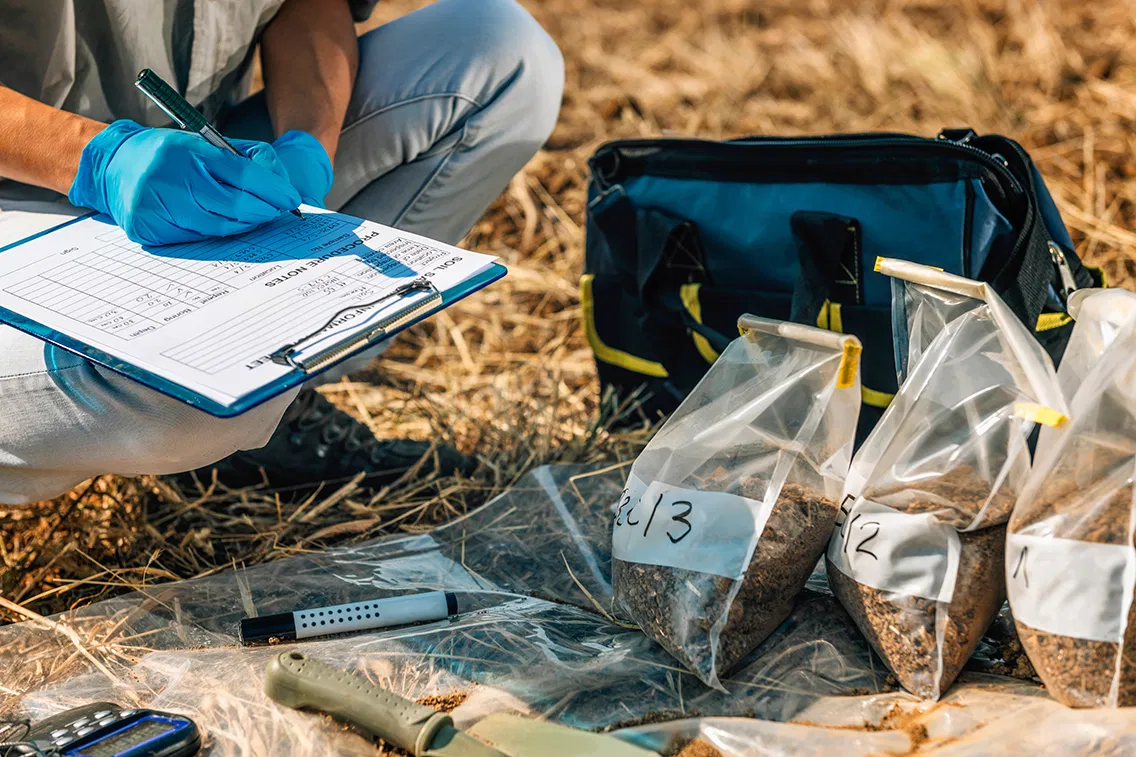
Think of a soil archive as a physical and digital "snapshot" of your land’s biological and chemical state at a specific point in time. It is a time capsule. By preserving physical samples and the associated data from before you started your restoration journey, you create a baseline.
Without a baseline, you’re just guessing. You might feel like your soil is better, but without that "Year Zero" sample to compare it against, you can’t quantify the increase in organic matter, the explosion of microbial diversity, or the sequestration of carbon.
At Regen Soil, we emphasize the importance of archiving because regenerative organic living systems are dynamic. They change. And if you aren't documenting that change, you’re missing out on the most valuable data your land has to offer.
The Science of the "Before and After"
When we talk about proving soil restoration, we are looking for measurable shifts in three key pillars:
- Physical Structure: Is your soil becoming more like a sponge and less like a brick?
- Chemical Balance: Are nutrients becoming more plant-available through biological cycling rather than synthetic inputs?
- Biological Vitality: This is where our Rhizo Logic® philosophy shines. We look for the presence of the "Magnificent Microbiome": the fungi, bacteria, and protozoa that do the heavy lifting in a living system.
Why You Can’t Rely on Memory
Human memory is notoriously biased. We tend to remember things as being worse than they were or better than they were, depending on our mood. An archive doesn't have a mood. When we conduct an Initial Soil Health (ISH) Assessment, we are essentially creating the first entry in your soil’s permanent record.
Years later, when you pull a sample of your Rhizo Logic® Living Soil and compare it to that archived "Year Zero" dust, the difference is usually staggering. We’ve seen "dead" dirt that couldn't hold an ounce of water transform into dark, rich, aggregate-heavy soil that smells like a forest floor. That’s not magic: it’s documented restoration.
Proving the Transition with the RSI Method
We’ve developed the RSI Method (Regen Soil Innovations) to bridge the gap between "thinking" your soil is healthy and "knowing" it is. Part of this method involves rigorous data collection and the physical archiving of samples.
1. The Initial Soil Health (ISH) Assessment
This is the starting line. We analyze the microbial populations, nutrient cycling capacity, and total sequestration potential. We keep these records so that every subsequent test has a point of comparison.
2. Monitoring the Pulse
In the modern age, archiving isn't just about jars of dirt on a shelf. It’s about digital data. Using tools like the Regen Soil Pulse, we can monitor real-time metrics. When you look at your historical data through an app, you can see the literal "pulse" of your restoration progress.

Why This Matters for Different Growers
Whether you are a backyard gardener or a large-scale commercial operator, soil archives serve different but equally vital purposes.
For Beginners
If you’re just starting with our Living Soil Patio Pro Kit, archiving might seem like overkill. But trust us: in six months, when your tomatoes are six feet tall and tasting like sunshine, you’re going to want to look back at the pale, sandy dirt you started with. It’s the ultimate motivation to keep going.
For Experienced Growers
For those who have been in the game for a while, archives help you troubleshoot. If your yields plateau, you can look back at your archived data. Did a specific microbial group drop off? Did the carbon-to-nitrogen ratio shift? The archive holds the answers that your current soil might be hiding.
For Commercial Operations
This is where the money is. If you are seeking regenerative certifications or looking to enter carbon credit markets, proof is the only currency. Auditors don't care about your "gut feeling." They want to see the soil archives. They want to see the year-over-year increase in soil organic carbon and the diversification of the soil food web.
The Role of Microbial Diversity
A major focus of our Rhizo Logic® products is the reintroduction of beneficial microbes. But restoration isn't just about dumping a bag of microbes and walking away. It’s about creating an environment where they can colonize and thrive.

By archiving soil during the restoration process, we can prove that the microbes in Rhizo Logic® Living Soil aren't just passing through: they are setting up shop. We can track the increase in fungal hyphae and the stabilization of bacterial colonies. This is the "living" part of living soil, and it’s the most exciting part to prove.
Systems Thinking: The Big Picture
At Regen Soil, we believe in a "systems-thinking" lens. Soil restoration isn't a linear path; it’s a web of interactions. An archive allows us to see how the whole system responds to changes.
For instance, if you apply a soil recharge product like Ultra Bio Boost (part of our Terrabiotics line), you want to see how that input influences the long-term biological trajectory of your land. Does it spark a permanent shift in nutrient cycling? Does it help the soil hold more moisture during a July heatwave? Your archives will tell the story.
How to Start Your Own Soil Archive
You don't need a multi-million dollar lab to start archiving (though we have the lab part covered if you need it). Here’s how you can start today:
- Take a "Year Zero" Sample: Before you add your first bag of Rhizo Logic® or plant your first cover crop, take a composite sample from various spots in your growing area.
- Label Everything: Date, location, and a quick note about the current state of the plants (e.g., "stunted growth," "yellowing leaves").
- Store Properly: Keep a small physical sample in a cool, dry, dark place in a breathable bag.
- Go Digital: Take photos of the soil structure and the root systems of your current plants. Save these in a dedicated folder.
- Get a Professional Baseline: For the most accurate results, book an ISH Assessment. We’ll provide a deep-dive analysis that serves as the gold standard for your archive.
Frequently Asked Questions (FAQ)
Q: Do I really need to keep physical soil samples?
A: While digital data is great, physical samples allow you to re-test the "past" using "future" technology. As soil science evolves, we may discover new markers for health that we didn't know 10 years ago. Having that old soil allows us to apply new science to old baselines.
Q: How often should I update my soil archive?
A: We recommend a deep-dive assessment at least once a year, ideally at the same time each season, to maintain consistency in your data.
Q: Is Rhizo Logic® different from Bio-boost?
A: Yes! Rhizo Logic® is our brand for Living Soil products and microbial ecosystems. Bio-boost (including Ultra Bio Boost) is a Terrabiotics product designed for soil recharging and nutrient stimulation. Both are vital, but they serve different roles in the RSI Method.
Q: Can archives help me reduce fertilizer use?
A: Absolutely. By proving that your soil’s biological nutrient cycling is improving, you can confidently scale back on external inputs without fearing a drop in yield. The archive provides the evidence that your soil is now doing the work for you.
Ready to Prove Your Success?
Regenerative agriculture is a journey, and every journey deserves a map. Soil archives are the markers on that map that show exactly how far you’ve come. If you’re ready to stop guessing and start proving that your soil restoration is working, we’re here to help.
Whether you need a full Initial Soil Health Assessment or you're ready to supercharge your biology with Rhizo Logic®, let’s get to work on building a legacy of healthy, living soil.
What’s the biggest change you’ve noticed in your soil since you started your restoration journey? Let us know in the comments below, or contact us for a personalized consultation!


