
Why Regenerative Agriculture Will Change the Way You View Your Land: 10 Expert FAQs Answered
By Jeremy Standring
At Regen Soil, we believe that the most significant shift in modern farming isn’t happening in a lab or a tractor dealership, it’s happening in the mind of the land manager. For decades, the industry has viewed soil as an inert medium, a simple "substrate" designed to hold plants upright while we pump them full of synthetic nutrition.
But there is a better way. When we talk about regenerative agriculture, we aren’t just talking about a set of checkboxes or a "low-input" farming method. We are talking about a total paradigm shift. We are moving from a "chemistry-first" model to a "biology-first" ecosystem. This transition transforms your land from a thirsty, expensive resource into a self-sustaining, carbon-sequestering powerhouse.
If you’ve been curious about making the jump to living soil and restoration, you likely have questions. We’ve compiled the top 10 expert FAQs to help you understand why this movement is the future of food and land stewardship.
1. What exactly is Regenerative Agriculture?
In its simplest form, regenerative agriculture is a holistic land management practice that leverages the power of photosynthesis and healthy soil biology to close the carbon cycle and build soil health, crop resilience, and nutrient density.
Unlike "sustainable" agriculture, which often aims to merely maintain a status quo of degraded land, regenerative agriculture focuses on improvement. It is about active restoration. We use techniques like cover cropping, no-till or reduced tillage, and diverse crop rotations to foster a thriving subterranean ecosystem. The goal is to create a system where the soil becomes more fertile and resilient every single year.
2. How does this change the way I look at my land?
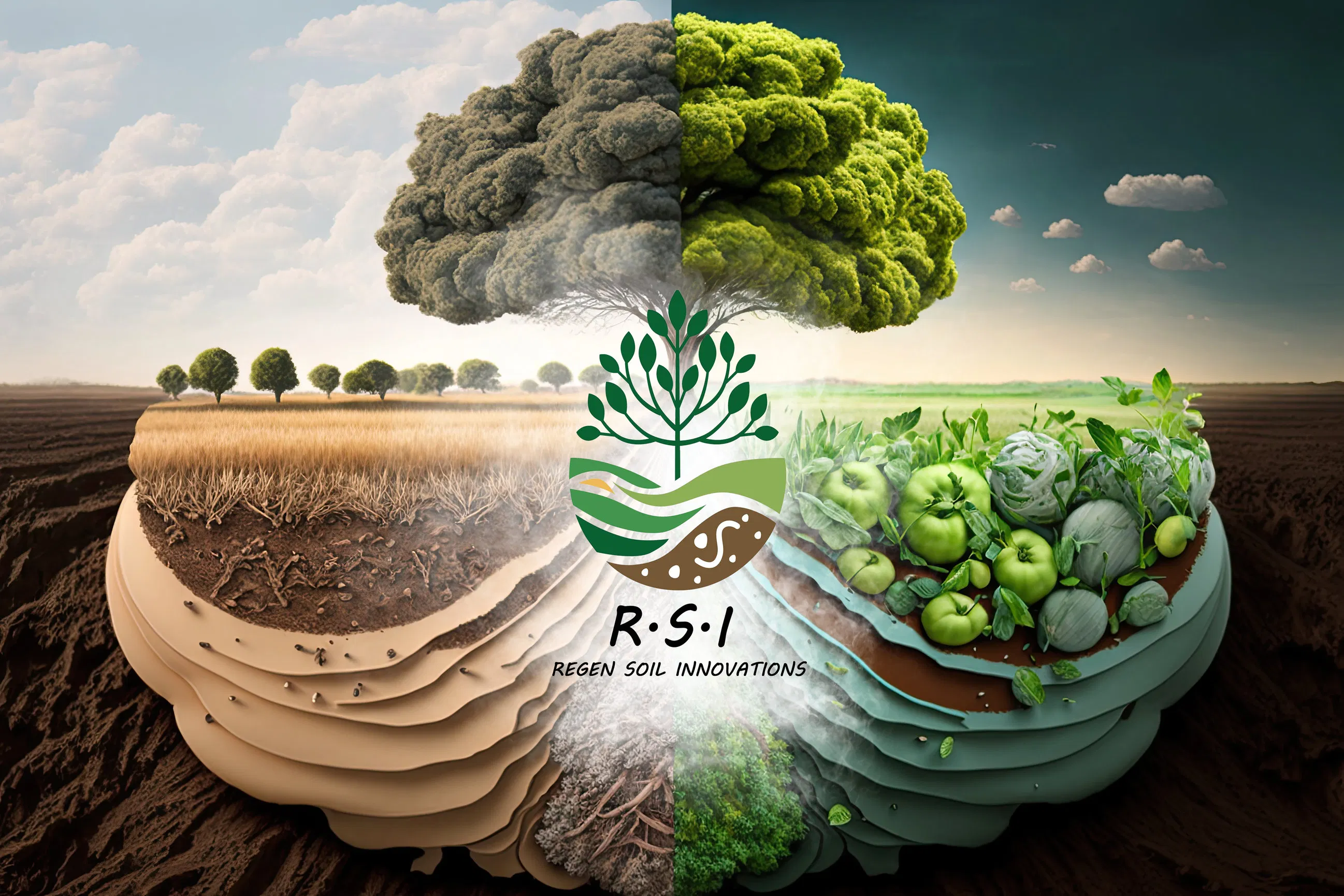
Most growers who transition to our RSI Method stop seeing their fields as "acres" and start seeing them as a complex, living community.
When you adopt a systems-thinking lens, you begin to notice:
- The Soil as a Living Organism: You stop asking "What nutrients are missing?" and start asking "Is my biology active enough to unlock what’s already there?"
- Water as a Metric of Health: Instead of just measuring rainfall, you measure infiltration. Healthy, porous soil: supported by fungal networks: acts like a sponge rather than a slide.
- Biodiversity as Insurance: You see insects and birds not as "pests" or "noise," but as indicators of a balanced ecosystem.
3. What is the difference between "Living Soil" and standard potting mix?
This is a question we get daily. Standard commercial soils are often "sterile" or contain only basic N-P-K fertilizers. Living soil, specifically our Rhizo Logic® products, is an entirely different beast.
Living soil is a functionally active ecosystem. It contains a diverse array of beneficial microbes, including bacteria, protozoa, and mycorrhizal fungi. These organisms work in a symbiotic relationship with plant roots. In a standard system, you feed the plant. In a Rhizo Logic® system, you feed the soil, and the soil feeds the plant. This leads to what we call "nutrient cycling," where biology breaks down organic matter into forms plants can actually use.
4. Do I have to stop using all synthetic fertilizers immediately?
We recommend a "transition, not a cliff" approach. While the ultimate goal of regenerative practices is to drastically reduce or eliminate synthetic dependency, doing so overnight can shock a system that has been "addicted" to chemical inputs for years.
The key is to focus on soil restoration. As we rebuild the microbial populations, the soil’s natural ability to provide nutrients increases. Tools like Bio-boost (a high-performance Terrabiotics product) can help bridge the gap. By introducing beneficial "Terrabiotics" into your system, you can stimulate the natural biological processes that eventually make heavy synthetic inputs redundant.
5. Can regenerative practices really handle large-scale commercial operations?
Absolutely. There is a common misconception that regenerative agriculture is only for small-scale market gardens or backyard "patio pros." In reality, the principles of soil health: minimal disturbance, living roots, and diversity: scale beautifully.
Large-scale row crop farmers are seeing massive success by integrating cover crops and reduced tillage. These methods lower the "cost per bushel" by reducing the need for expensive chemical applications and diesel fuel. For commercial operators, regeneration isn't just an environmental choice; it's a fiscal one.
6. How do I know if my soil is actually "regenerating"?
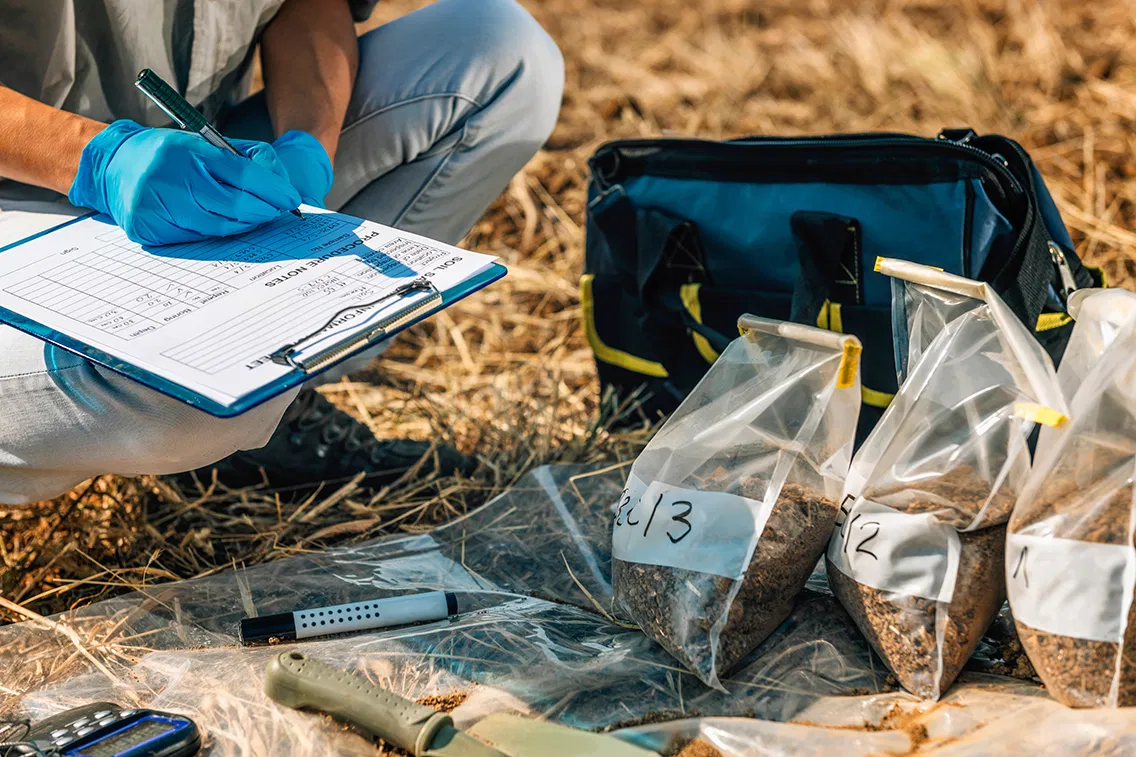
You can't manage what you don't measure. Traditional soil tests often look only at chemical levels. To truly understand your land’s health, you need an Initial Soil Health (ISH) Assessment.
An ISH assessment looks at the biological activity and structural integrity of your soil. We look for signs of a healthy "rhizosphere": the area directly around the plant roots where the most intense microbial activity occurs.
7. What is Rhizo Logic®, and why is it important?
Rhizo Logic® is our proprietary line of Living Soil products designed to jumpstart the restoration process. Think of it as an "ecosystem in a bag." While many products focus on one or two strains of bacteria, Rhizo Logic® focuses on a complex web of biology.
By using Rhizo Logic®, you are ensuring that your plants have access to a "Magnificent Microbiome" right from the start. This leads to:
- Increased root surface area.
- Better drought resistance.
- Natural suppression of soil-borne pathogens.
8. Is there a "long" transition period?
In the organic world, you often wait three years for certification. In regenerative agriculture, the "transition" is the work itself. You will often see improvements in water infiltration and plant vigor within the first season of implementing the RSI Method. However, building deep, dark, carbon-rich topsoil is a multi-year journey. We like to say that the best time to start was ten years ago; the second best time is today.
9. How does regenerative agriculture impact water usage?
This is perhaps the most critical benefit for growers in arid climates. For every 1% increase in soil organic matter (SOM), the soil can hold an additional 20,000 gallons of water per acre. By restoring the living soil structure, we create "aggregates": tiny clumps of soil held together by microbial "glues" (like glomalin). These aggregates create space for water to be stored, drastically reducing your irrigation needs and protecting your crops during heatwaves.

10. How can a beginner get started with these principles?
You don't need a thousand acres to be a regenerative farmer. You can start exactly where you are.
For the "Patio Pro":
If you are growing in containers or a small garden, start with a Living Soil Patio Pro Kit. This gives you the high-quality biology needed to see the results of regenerative growing firsthand without the steep learning curve of bulk soil mixing.
For the Experienced Grower:
If you already have established beds, consider a "recharge" approach. Instead of tilling in old roots, use Bio-boost from Terrabiotics to accelerate the decomposition of organic matter and re-inoculate the soil with fresh beneficial microbes. You can learn more about this on our Bio-boost page.
A Systems-Thinking Approach to Your Land
To wrap it up, we want you to think about your land as a biological engine. In the old model, we were the mechanics constantly replacing broken parts with chemical fixes. In the regenerative model, we are the stewards, providing the engine with the right environment to maintain and repair itself.
Whether you are looking to restore a backyard garden or transition a commercial farm, the focus must remain on the living soil. When the biology is right, everything else: yield, flavor, pest resistance, and water retention: falls into place.
Expert Summary Table: Conventional vs. Regenerative
| Feature | Conventional Farming | Regenerative (Regen Soil) |
|---|---|---|
| Soil View | Inert substrate | Living ecosystem |
| Primary Input | Synthetic N-P-K | Biological inoculants & Organic matter |
| Water Strategy | Irrigation-heavy | Infiltration & Retention-focused |
| Pest Management | Chemical suppression | Ecological balance & Natural immunity |
| Long-term Goal | Sustained yield | Increasing soil health & resilience |
If you’re ready to stop "fighting" your land and start working with it, we’re here to help. Our team specializes in soil health consulting and high-performance biological products designed to make your transition as smooth as possible.
Have more questions about your specific soil type or crop?
We’d love to hear from you. Reach out to us via our Contact Page or explore our Soil Health Blog for more deep dives into the science of the rhizosphere.
Let’s grow something better together.
: Jeremy Standring
Owner, Regen Soil


