
The Ultimate Guide to Soil Restoration: Success Stories and Your Top 10 FAQs Answered
By Jeremy Standring
At Regen Soil, we don’t just see dirt; we see a complex, living infrastructure that dictates the health of our food, our climate, and our future. For decades, industrial agriculture has treated soil as a static medium, a mere sponge for synthetic NPK fertilizers. This approach has led to widespread degradation, erosion, and the loss of the "living" component of our earth.
Soil restoration is the process of reversing this damage. It is the art and science of transitioning from "dead dirt" back to living soil. In this guide, we will explore the systems-thinking required to rebuild these ecosystems, share remarkable success stories from the field, and answer the most pressing questions we receive from growers across the globe.
The Philosophy of Restoration: Systems Over Inputs
Restoration isn't about finding a "silver bullet" product; it’s about restoring a biological system. When we talk about regenerative agriculture, we are discussing the management of a holobiont, the collective entity of the plant and its associated microbial communities.
We utilize two primary pillars in our restoration strategies:
- Rhizo Logic® (Living Soil): This focuses on the rhizosphere, ensuring the soil has the biological diversity needed for nutrient cycling and root protection.
- Bio-boost (Terrabiotics): Our approach to boosting the metabolic activity of soil microbes through targeted bio-stimulants and mineral balance.
By focusing on these biological foundations, we can restore the natural "Rhizo Logic" of the land, allowing plants to thrive with minimal external intervention.
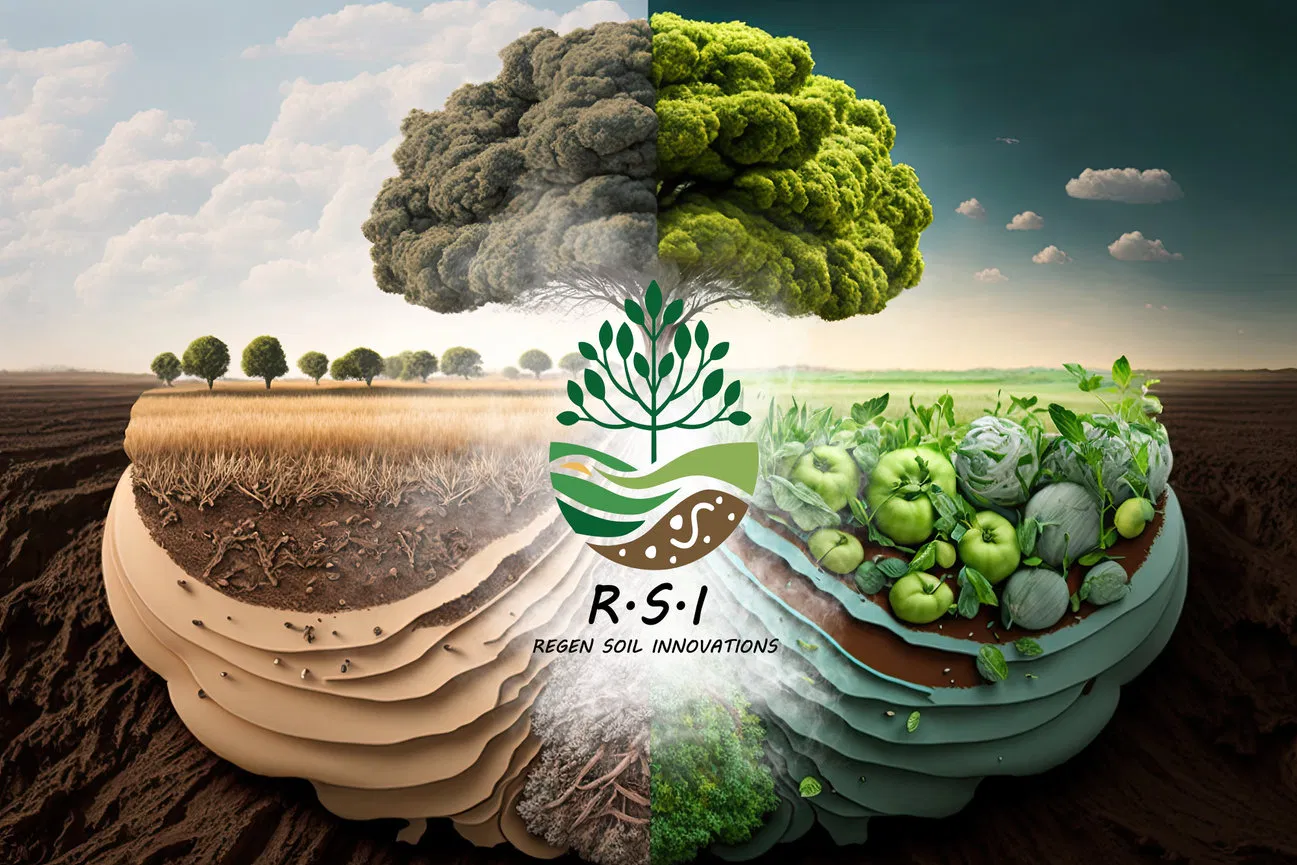
PART 1: Inspiring Success Stories in Soil Restoration
Seeing is believing. Across the world, landscapes that were once considered "lost" are being brought back to life through dedicated regenerative practices.
1. From Ash to Ecosystem: The 25-Acre Transformation
One of the most profound examples of rapid restoration occurred on a 25-acre property devastated by fire. The soil was essentially sterilized, leaving behind hydrophobic ash and zero microbial activity. By implementing a system of contour ditches (swales) to capture water and applying high-density microbe-rich compost and Rhizo Logic® inoculants, the land was transformed in under three years. Today, it is a thriving ecosystem with deep-rooted native grasses that act as a carbon sink.
2. The Loess Plateau: Large-Scale Ecological Recovery
The Loess Plateau in China was once the most eroded place on earth. Through the "Grain for Green" program, millions of hectares were restored using a combination of terracing, reforestation, and the cessation of overgrazing. This project proved that even on a continental scale, nature can heal if we provide the correct structural and biological framework. We often reference this case to show commercial operations that no project is "too big" for restoration.
3. Michael Thompson’s High-Plains Resilience
In the wind-swept plains of Kansas, farmer Michael Thompson transitioned to a no-till system integrated with diverse cover crops and rotational grazing. By focusing on soil health rather than yield at any cost, he restored the soil’s water-holding capacity. During drought years when neighbors' crops failed, Thompson’s fields remained resilient because his living soil acted as a reservoir.

PART 2: The Restoration Toolkit
To achieve results like those mentioned above, we must employ a variety of technical tools. We break these down into biological and mechanical categories.
Biological Tools: The Microbe Factor
- Microbial Inoculation: Reintroducing beneficial fungi and bacteria that have been killed off by tilling or chemicals. This is the core of our Rhizo Logic® products.
- Cover Cropping: Keeping a "living root in the ground" at all times to feed the soil microbiome through carbon exudates.
- Terrabiotics (Bio-boost): Utilizing products like Ultra Bio-Boost to provide the catalysts needed for microbes to break down organic matter and unlock minerals.
Mechanical and Structural Tools
- Water Management: Using contour swales and check dams to slow, spread, and sink rainwater into the aquifer.
- Data Monitoring: We use real-time sensors to track soil moisture, EC (electrical conductivity), and temperature. This data-driven approach allows for "precision restoration."

PART 3: Your Top 10 FAQs Answered
We receive many questions through our Initial Soil Health Assessment (ISH) consultations. Here are the top 10 questions every grower should understand.
Q1: How long does soil restoration actually take?
A: The timeline is dependent on your starting point. However, in most climates, you can see significant biological shifts in 12–24 months. Total landscape restoration (like the Loess Plateau) takes decades, but "farm-scale" profitability and resilience usually arrive within 3–5 years of consistent regenerative management.
Q2: Do I need to stop using all chemicals immediately?
A: We recommend a "tapering" approach. As you build your Rhizo Logic® (living soil) populations, the soil becomes more efficient at delivering nutrients. We help commercial growers reduce synthetic inputs by 20–30% per year until the biology can take over the heavy lifting of nutrient cycling.
Q3: What is the single most important step for a beginner?
A: Stop tilling. Tilling is like a tornado for a microbial city; it destroys the fungal hyphae and collapses the soil structure. If you do nothing else, keeping the soil undisturbed and covered will initiate the healing process.
Q4: Can desert or "sandy" soil really be restored?
A: Absolutely. Desertification is often a result of broken water and carbon cycles. By using water-retention structures and high-carbon organic amendments (like biochar and compost), we can create "oases" of fertility that eventually merge to restore larger tracts of land.
Q5: What role does water play in restoration?
A: Water is the medium of life. Without moisture, microbes go dormant or die. Restoration is as much about "water harvesting" as it is about soil. We teach the RSI Method (Regen Soil Innovations) which prioritizes keeping water in the landscape rather than letting it run off.
Q6: How does the "native seed bank" help?
A: Soil has a "memory." Thousands of native seeds lie dormant in degraded soil. Once you restore the moisture levels and the fungal-to-bacterial ratio, these native species will often germinate on their own, providing the most resilient ground cover possible for that specific bioregion.
Q7: What is the difference between restoration and regeneration?
A: Restoration is the act of bringing something back to a former state (re-establishing the baseline). Regeneration is an ongoing process where the system becomes self-healing and increasingly productive over time. We start with restoration to achieve a state of regeneration.
Q8: Is regenerative agriculture profitable for commercial operations?
A: Yes, but the profit comes from the "expense" side of the ledger. By reducing the need for expensive fertilizers, pesticides, and heavy machinery (tilling), the margins per acre often increase, even if raw yields stay the same or slightly dip during the transition.
Q9: What are the hidden costs of restoration?
A: The primary cost is management time. It takes more observation and "systems-thinking" to manage a living ecosystem than it does to follow a chemical prescription. You are trading expensive inputs for better management and knowledge.
Q10: Can "dead" soil ever fully recover?
A: Unless the soil has been contaminated with heavy metals or radioactive waste, the answer is almost always yes. By reintroducing the "soil food web": the protozoa, nematodes, fungi, and bacteria: we can jumpstart the engine of life in even the most depleted dirt.
Moving Forward: Your Path to Living Soil
Restoring the earth is the great challenge of our generation, and we are here to provide the expertise and tools to make it happen. Whether you are a backyard gardener looking to grow nutrient-dense food or a commercial farmer seeking to weather the next drought, the principles of Rhizo Logic® apply to you.
If you are ready to see what is actually happening beneath your feet, we invite you to start with an Initial Soil Health (ISH) Assessment. We will analyze your soil's current biological state and provide a roadmap for restoration that fits your specific goals.

Join the movement. Let’s turn your dirt back into living soil.
Have questions about a specific restoration project? Leave a comment below or contact us directly. We love "nerding out" on soil biology and helping you find the best path forward for your land.


