
7 Mistakes You're Making with Your Living Soil Transition (and How to Fix Them)
By Jeremy Standring
At Regen Soil, we have watched hundreds of growers and farmers attempt to move away from the "dead" dirt paradigm of synthetic fertilizers toward a vibrant, biologically active ecosystem. The transition to Living Soil, specifically a system centered on Rhizo Logic® principles, is the most rewarding shift you can make for your crops and the planet. However, it is not as simple as stopping the chemicals and hoping for the best.
Transitioning requires a fundamental shift in "systems-thinking." You are no longer a plant feeder; you are a soil steward. We see the same hurdles over and over again, mistakes that lead to stunted growth, pest outbreaks, and eventually, a retreat back to bottled nutrients.
To help you avoid these pitfalls, we have compiled the seven most common mistakes growers make when transitioning to living soil and, more importantly, the scientific solutions to fix them.
1. Overwatering: Drowning the Microbiome
The most common mistake we see is applying a "coco" or "peat-lite" watering schedule to a living soil system. In conventional grows, you water to runoff to flush out salt buildup. In a living soil environment, watering to heavy runoff actually leaches out the very biology and nutrients you are trying to cultivate.
The Technical Why: Living soil relies on aerobic (oxygen-rich) respiration. When soil remains saturated, oxygen is displaced, creating anaerobic conditions. This kills off beneficial fungi and protozoa while inviting pathogens like Pythium (root rot) and attracting fungus gnats.
The Fix: The Knuckle Test and Pulse Monitoring
- Precision Sensing: We recommend using tools like the Regen Soil Pulse to monitor moisture levels in real-time.
- The Squeeze Test: If you don't have a sensor, take a handful of soil and squeeze it. It should feel like a wrung-out sponge, moist, but not dripping more than one or two drops.
- Dry-Backs: Allow the top 1-2 inches of soil to dry before watering again to encourage roots to dive deeper for moisture.

2. The "Bottled Habit": Using Synthetic Salt-Based Nutrients
It is hard to break the habit of reaching for a bottle when a plant looks slightly yellow. However, adding synthetic salts to Rhizo Logic® living soil is like throwing a grenade into a peaceful village.
The Technical Why: High-salt fertilizers increase the osmotic pressure in the soil, which can literally dehydrate and kill the delicate microbes responsible for nutrient cycling. When you use synthetics, the plant stops communicating with the soil biology because it is being "force-fed," causing the microbial community to go dormant or die.
The Fix: Feed the Soil, Not the Plant
- Biological Recharging: Instead of reaching for N-P-K bottles, use a Terrabiotics solution like Ultra Bio-Boost Soil Recharge. This reinjects beneficial bacteria and fungi that unlock existing nutrients.
- Top Dressing: Use organic amendments like high-quality worm castings or compost to provide a slow-release buffet for the microbes.
3. Ignoring Soil Structure and Aeration
Beginners often focus so much on the "living" part that they forget the "soil" part. A transition often fails because the base medium is too dense, leading to compaction.
The Technical Why: Roots and microbes need pore space to move and breathe. Without adequate aeration (pumice, perlite, or rice hulls), the soil collapses over time, leading to "sour soil" and poor cation exchange capacity (CEC) efficiency.
The Fix: Build a Better Bed
- Aeration Ratio: Ensure your mix is at least 30% aeration material.
- No-Till Approach: Once you have a good structure, stop tilling. Tilling shreds the delicate fungal hyphae (the "internet" of the soil) that we work so hard to build.
- Mulch Layers: Use a thick layer of straw or cover crops to protect the soil surface from crusting and compaction.
4. Neglecting Microbial Diversity
Many growers think that one dose of compost tea is enough to "set it and forget it." In reality, microbial populations are constantly shifting. If you don't maintain diversity, you end up with a microbial "monoculture" that leaves your plants vulnerable.
The Technical Why: A diverse ecosystem is a resilient one. You need a balance of decomposers (bacteria/fungi), predators (protozoa/nematodes), and mutualists (mycorrhizae) to ensure a complete nutrient cycle.
The Fix: Regular Microbial Inoculation
- Diverse Sources: Don't rely on just one product. Rotate through high-quality composts, diverse teas, and specialized microbial inoculants.
- Rhizo Logic® Approach: Use a pre-colonized medium like Rhizo Logic® Living Soil to ensure you are starting with a balanced, scientifically verified microbial baseline.

5. Failing to Re-amend Between Cycles
A common myth in regenerative agriculture is that you never have to add anything to the soil again. While living soil is reusable, the plants do physically remove minerals and organic matter during their growth cycle.
The Technical Why: Plants are "mining" the soil. Over several cycles, specific trace minerals (like Boron, Manganese, or Molybdenum) can become depleted, leading to mysterious deficiencies that microbes alone can't fix.
The Fix: Data-Driven Re-amending
- Soil Testing: Don't guess: test. We highly recommend our Initial Soil Health (ISH) Assessment to see exactly what has been depleted before you start your next run.
- Targeted Minerals: Add rock dusts, basalt, or gypsum based on your specific soil test results rather than using a "one-size-fits-all" mineral mix.
6. Rushing the "Cooking" Process
When you mix fresh organic amendments into soil, a process called "cycling" or "cooking" begins. Microbes rush to break down these raw materials, which generates significant heat and can temporarily tie up nitrogen.
The Technical Why: High microbial activity during the breakdown of raw amendments creates a biological oxygen demand that can suffocate young roots. Furthermore, "hot" soil can chemically burn tender seedlings.
The Fix: The 2-Week Rule
- Patience: Let your soil sit, moist and covered, for at least 14 days after amending before planting.
- Temperature Check: Use a soil thermometer. If the internal temperature of the soil pile is higher than the ambient air temperature, it's still "cooking" and isn't ready for plants.
7. Ignoring Trace Minerals and pH Buffering
In synthetic grows, you manage pH with "pH Up" or "pH Down" liquids. In living soil, we rely on calcium carbonate and organic matter to buffer the pH naturally. Many transitioners forget to include these foundational minerals.
The Technical Why: If your soil lacks a "calcium base," the pH will swing wildly as microbes release organic acids. This locks out nutrients even if they are present in the soil.
The Fix: The Calcium Foundation
- The 70/10 Rule: Aim for a base saturation of roughly 70% Calcium and 10-15% Magnesium.
- Buffering Agents: Include slow-release calcium sources like oyster shell flour, limestone, or gypsum in your initial build.
Living Soil vs. Conventional: A Comparison Analysis
| Feature | Conventional (Salt-Based) | Living Soil (Rhizo Logic®) |
|---|---|---|
| Nutrient Delivery | Water-soluble salts (Force-fed) | Microbial cycling (On-demand) |
| Water Usage | High (Requires flushing) | Low (Retained by organic matter) |
| Complexity | High (Daily mixing/measuring) | Medium (Setup heavy, daily light) |
| Sustainability | Low (Heavy runoff/pollution) | High (Carbon sequestration) |
| Flavour/Aroma | Standard | Superior (Enhanced terpenes/Brix) |
Guide for Different Growers
For Beginners
Start small. Don't try to build a 100-gallon bed on your first day. Use a pre-blended 5gal Living Soil setup to get a feel for how the soil breathes and dries before scaling up.
For Experienced Growers
Focus on the Micro-Biotic layer. If you've already mastered the basics of organic gardening, your next level is data. Use an RSI Method approach to track your microbial biomass and adjust your Bio-boost applications based on actual biological activity.
For Commercial Operations
The transition for commercial farms is about Soil Restoration. This requires a phase-in approach where you reduce synthetic inputs by 20% each cycle while ramping up Bio-boost (Terrabiotics) applications to ensure the biology can take over the heavy lifting without a yield drop.
Frequently Asked Questions (FAQ)
Q: Does living soil smell bad?
A: Healthy living soil should smell like a fresh forest floor: earthy and sweet. If it smells like rotten eggs or ammonia, it is anaerobic (too wet) and needs more aeration.
Q: Can I use tap water?
A: Chlorine and chloramine in tap water are designed to kill bacteria: which is exactly what we are trying to grow. We recommend using a simple carbon filter or letting tap water sit out for 24 hours to dissipate chlorine.
Q: Do I need to worry about pH?
A: In a properly buffered Rhizo Logic® system, the microbes manage the pH at the root zone (the rhizosphere). As long as your water isn't extremely alkaline (above 8.5) or acidic (below 5.5), the soil will do the work for you.
Q: How do I know if my transition is working?
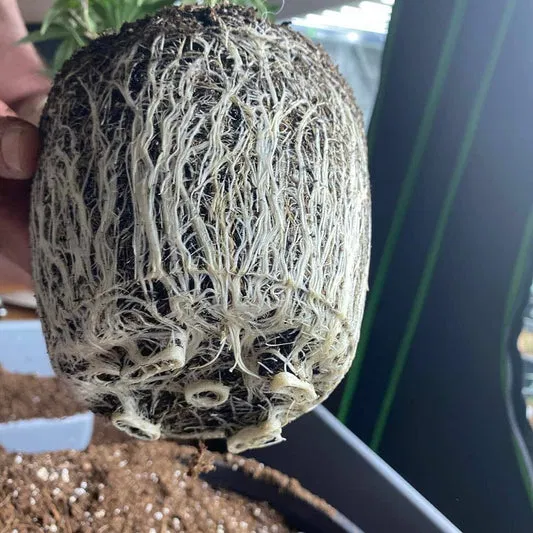
A: Look at your roots. Healthy living soil produces thick, fuzzy, white roots. If your roots are brown or slimy, you likely have an aeration or watering issue.
Join the Regeneration
Transitioning to living soil is a journey of unlearning old habits and embracing the wisdom of nature. We are here to act as your mentor through this process. If you are feeling overwhelmed by your transition, don't guess.
Reach out to us for a personalized consultation. We can help you analyze your current soil health and provide a roadmap to a thriving, regenerative future. Contact our team today and let’s grow together.


