
The Proven Living Soil Framework: Real Success Stories from the Field
By Jeremy Standring
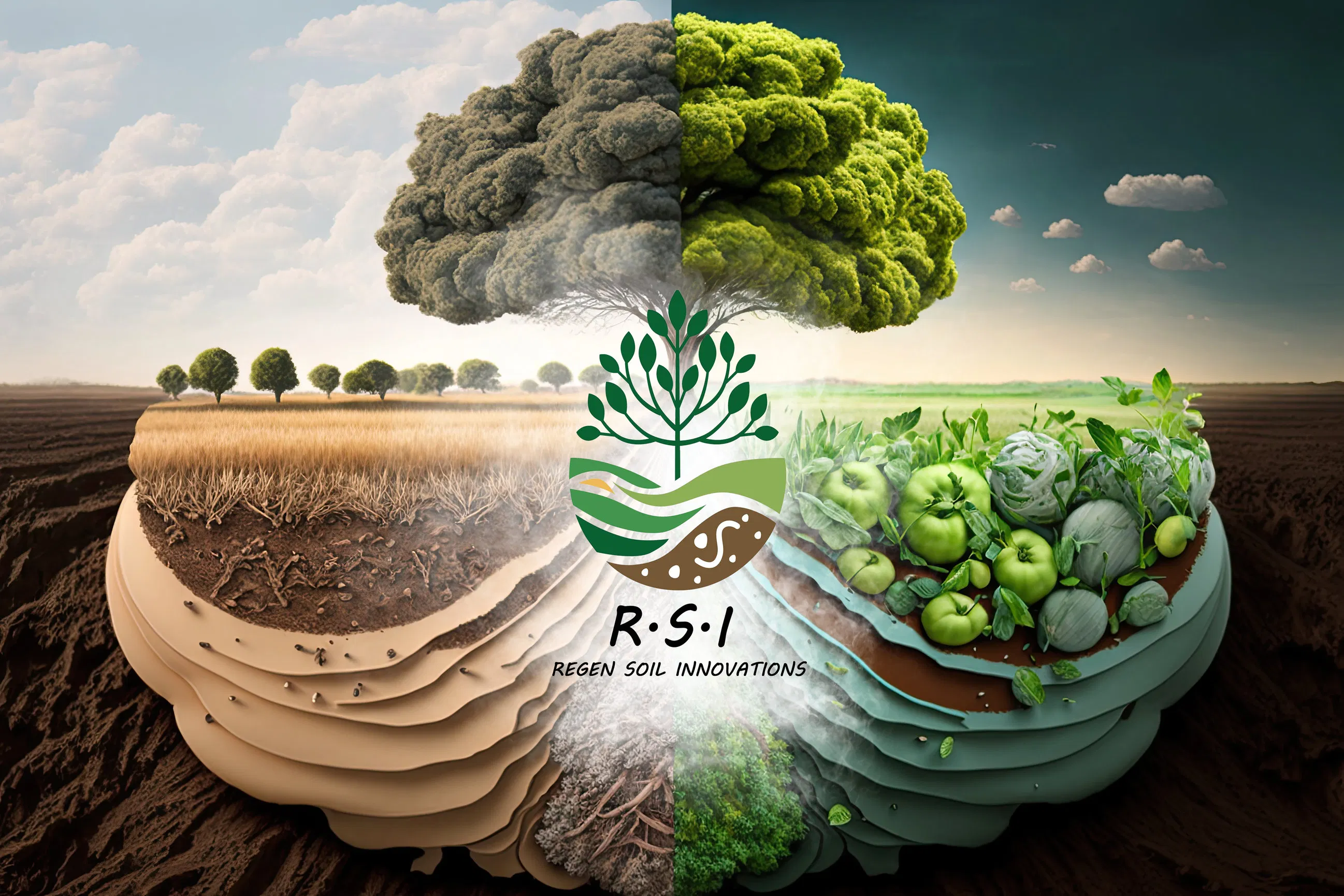
For decades, the agricultural industry has been stuck in a cycle of "input-output" thinking. You add synthetic nitrogen, the plant grows; you see a pest, you spray a toxin. At Regen Soil, we believe this linear approach is fundamentally broken. It treats the soil as a sterile medium: a mere holding tank for chemicals: rather than the vibrant, breathing ecosystem it was meant to be.
We are witnessing a global shift toward regenerative agriculture, centered on the concept of living soil. But this isn't just a trend; it is a proven framework with measurable, high-stakes results. Through our work with Rhizo Logic® (our Living Soil system) and Bio-boost (our Terrabiotics catalyst), we have seen depleted landscapes transform into high-yielding, resilient powerhouses.
In this deep dive, we’ll explore the framework that makes these transformations possible and share real success stories from the field that prove why biology always beats chemistry in the long run.
Understanding the Living Soil Framework
The "Living Soil Framework" is a systems-thinking approach that prioritizes the soil food web. Instead of feeding the plant directly with salt-based fertilizers, we focus on feeding the microbial life within the soil. These microbes, in turn, mineralize nutrients and deliver them to the plant roots in a form they can actually use.
The Core Pillars of Our Method
- Biological Inoculation: We introduce beneficial fungi, bacteria, and protozoa through Rhizo Logic® products to jumpstart the ecosystem.
- Nutrient Cycling: We utilize Bio-boost (Terrabiotics) to provide the necessary organic compounds that fuel microbial activity, ensuring that the "underground economy" of the soil remains active.
- Minimal Disturbance: We advocate for no-till or low-till practices to preserve the delicate fungal hyphae and soil structure.
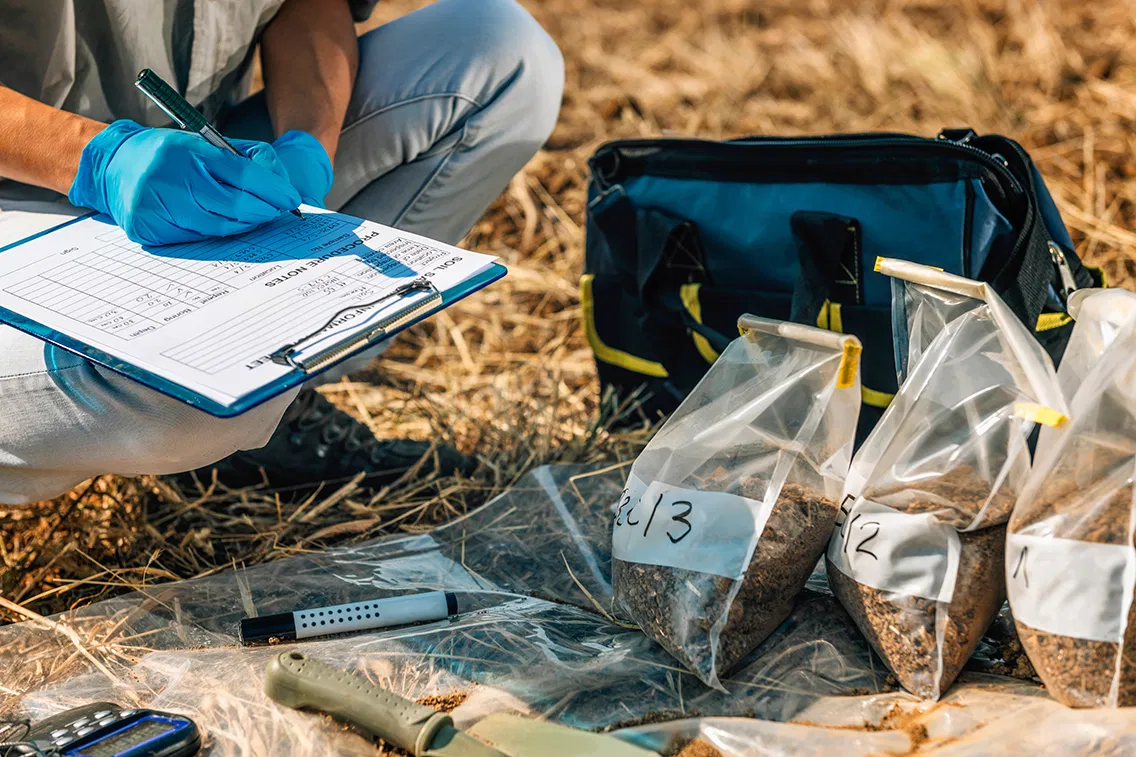
- Data-Driven Monitoring: We don't guess; we test. Using our Initial Soil Health (ISH) Assessment, we map out exactly what a specific site needs to thrive.
Success Story #1: The Commercial Pivot to Resilience
One of the most compelling cases for the Living Soil Framework comes from large-scale operations transitioning away from conventional row-cropping. Take, for example, the work of farmers like Michael Thompson in Kansas. By implementing a framework of diverse cover crops and no-till systems: principles we mirror in our RSI Method: he was able to virtually eliminate topsoil loss.
In our own consulting work, we’ve helped commercial growers reduce their reliance on commercial fertilizers by upwards of 23% in the first two seasons. By restoring the Rhizo Logic® (Living Soil) environment, these growers found that their soil became more like a sponge. During drought years, their crops remained green while neighbors' fields turned brown. This is due to the improved water infiltration and retention that only a healthy microbial structure can provide.
Success Story #2: Maximizing Potency in High-Value Crops
In the world of high-value botanicals and cannabis, the Living Soil Framework has become the gold standard for quality. Research from institutions like UC Davis has indicated that crops grown in a true living soil environment can exhibit 40% higher terpene content compared to those grown in synthetic hydroponic setups.
We worked with a boutique grower who switched from a traditional salt-fed program to a full Rhizo Logic® system. The results were staggering:
- Terpene Profiles: Increased complexity and intensity.
- Minor Cannabinoids: A 23% increase in rare compounds that are often lost in sterile environments.
- Cost Savings: A 15% reduction in overall input costs as the soil began to "self-regulate."
Success in this sector proves that when you give the plant a natural, biologically diverse home, it expresses its full genetic potential.
The Science: Why Biology Wins
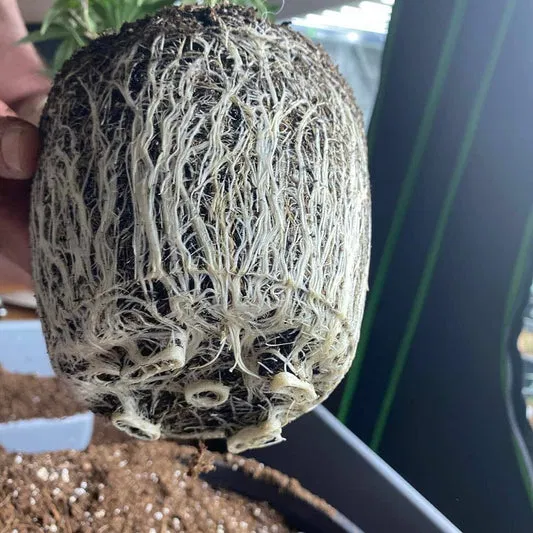
To understand these success stories, we have to look at the Rhizosphere: the narrow region of soil directly influenced by root secretions. This is where the magic happens.
Microbial populations don't just sit there; they are active architects. Beneficial bacteria coat the roots, acting as a microscopic shield against pathogens. Fungi, specifically Mycorrhizae, extend the reach of the root system by hundreds of times, mining for phosphorus and water in places the plant could never reach on its own.
The Terrabiotics Advantage
This is where Bio-boost (Terrabiotics) comes into play. Think of Bio-boost as the high-energy fuel for the microbes we introduce with Rhizo Logic®. Without a food source (Terrabiotics), the biology can go dormant. By combining these two systems, we create a self-sustaining cycle of nutrient cycling and carbon sequestration.
Learn more about the science of Bio-boost here.
Data-Driven Restoration: The Regen Soil Pulse
One of the biggest barriers to adopting regenerative agriculture has been the "invisible" nature of soil health. You can't see a protozoa with the naked eye. That’s why we’ve integrated real-time monitoring into our framework.
Using the Regen Soil Pulse device and our mobile interface, we can track moisture, temperature, and electrical conductivity (EC) in real-time. This allows us to see exactly how the microbial life is responding to our interventions.

Implementing the Framework: A Guide for Every Scale
Whether you are a backyard enthusiast or a large-scale producer, the principles remain the same.
For Beginners (The Patio Gardener)
You don't need a tractor to practice regenerative agriculture. Our Ultimate Guide to Living Soil for Patio Gardens explains how to use our 5gal Living Soil kits to grow nutrient-dense food in small spaces. The key is to stop using synthetic "plant food" and start using biology.
For Experienced Growers
If you already have a system in place, the next step is optimization. This usually involves an ISH Assessment to identify microbial gaps. We often find that "organic" growers have high nutrient levels but low microbial diversity, leading to "nutrient lockout." Adding a targeted inoculation of Rhizo Logic® can unlock those bound-up minerals.
For Commercial Operations
Scalability is the focus here. We focus on the RSI Method, which integrates biological inputs with existing machinery. The goal is to build soil restoration into the standard operating procedure, reducing long-term overhead and increasing land valuation.
Comparing the Systems: Living Soil vs. Conventional
| Feature | Conventional (Salt-Based) | Living Soil (Rhizo Logic®) |
|---|---|---|
| Nutrient Source | Synthetic Salts | Microbial Mineralization |
| Water Retention | Low (Requires frequent irrigation) | High (Bio-structure holds water) |
| Plant Immunity | Low (Requires pesticides) | High (Systemic Acquired Resistance) |
| Long-term Cost | Increasing (Input costs rise) | Decreasing (Soil becomes fertile) |
| Environmental Impact | Runoff / Degradation | Sequestration / Restoration |
Frequently Asked Questions (FAQ)
Q: How long does it take to see results with the Living Soil Framework?
A: While some microbial benefits (like improved water uptake) can be seen in weeks, a full soil restoration usually takes 1–3 growing seasons to reach peak equilibrium.
Q: Is Rhizo Logic® the same as compost?
A: No. While high-quality compost is great, Rhizo Logic® is a scientifically formulated living soil medium designed with specific microbial ratios to optimize the rhizosphere. It is a precise tool, whereas compost can vary wildly in quality.
Q: Does Bio-boost replace my fertilizer?
A: Bio-boost (Terrabiotics) is designed to feed the soil biology. In a healthy living soil system, the biology provides the nutrients. However, during the transition phase, we often recommend a hybrid approach until your microbial populations are fully established.
Q: Can I use living soil in containers?
A: Absolutely. In fact, containers often benefit the most from living soil because they are prone to drying out and nutrient leaching: two problems that the microbial structure of Rhizo Logic® helps solve.
Start Your Restoration Journey
The success stories we see every day aren't accidents; they are the result of working with nature instead of against it. By adopting the Living Soil Framework, you aren't just growing a better plant: you are participating in the restoration of our planet's most precious resource.
Are you ready to see what your soil is truly capable of? We recommend starting with an Initial Soil Health Assessment to get a baseline of your current biology. Let’s stop treating your ground like dirt and start treating it like the living ecosystem it is.
What has been your biggest challenge in transitioning to regenerative practices? Leave a comment below or reach out to us directly: we’d love to help you map out your success story.


