
Soil Restoration Matters: 5 Real-World Case Studies on Reversing Topsoil Depletion
By Jeremy Standring
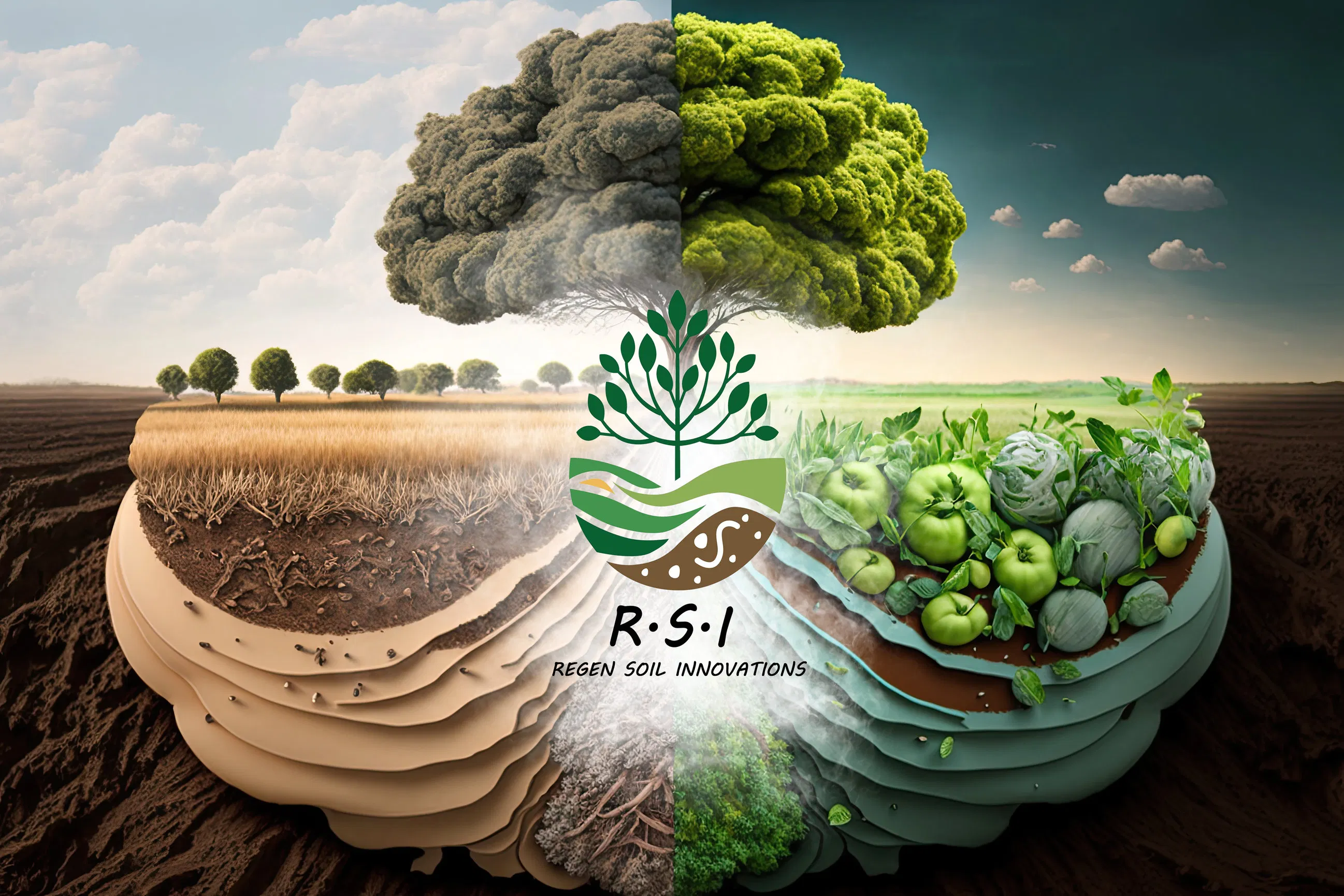
We are currently facing a global crisis that often goes unnoticed because it happens beneath our feet. Topsoil depletion isn’t just a "farming problem"; it is a foundational threat to our food security, water quality, and climate stability. At Regen Soil, we view soil not as a medium to hold plants upright, but as a complex, living biological engine. When that engine breaks down due to industrial tillage and chemical over-saturation, the results are catastrophic: erosion, nutrient leaching, and the eventual "death" of the land.
However, the tide is turning. Through regenerative agriculture and a focus on living soil, we are seeing remarkable recoveries across the globe. By shifting our perspective from "feeding the plant" to "feeding the soil microbiome," we can reverse decades of damage.
In this article, we will examine five real-world case studies that demonstrate the power of soil restoration, the technical principles behind them, and how tools like Rhizo Logic® and Bio-boost are playing a role in this global transition.
The Science of Living Soil: A Systems-Thinking Approach
Before we dive into the case studies, we must understand what we are restoring. Healthy topsoil is characterized by flocculation (soil crumbs), high organic matter, and a diverse community of microorganisms.
When we talk about Rhizo Logic®, we are referring to the science of Living Soil. This involves managing the soil food web: bacteria, fungi, protozoa, and nematodes: to ensure that nutrients are cycled naturally without the need for synthetic salts. In contrast, our Bio-boost products fall under the category of Terrabiotics, which are designed to kickstart these biological processes in depleted environments.
Case Study 1: The Whiting Farm – Economic and Biological Recovery
The Whiting Farm serves as a quintessential example of how a "biologically complete" approach can save an operation on the brink of collapse. For years, the farm struggled with rising fertilizer costs and mounting manure management fees. Their fields had stopped responding to traditional inputs, and animal health was declining.
The Intervention
The owners transitioned away from synthetic fertilizers and adopted a restoration strategy focused on high-quality microbial inoculants. They focused on rebuilding the fungal-to-bacterial (F:B) ratio, which is a critical metric we track in our ISH Assessment.
The Results
- Financial Stability: By eliminating high-cost synthetics and reducing veterinary bills, the farm regained profitability.
- Soil Structure: The soil began to hold more water, reducing runoff and erosion during heavy rains.
- Animal Vitality: Forage grown in restored soil was more nutrient-dense, leading to healthier livestock.
This case study proves that soil restoration isn’t just an environmental "feel-good" project: it is a vital economic strategy for commercial operations.
Case Study 2: Market Garden Makeover – 72% Yield Increase in Sweden
In the temperate climate of Stockholm, Sweden, a market garden sought to increase its output without expanding its footprint. The soil was historically overworked and lacked the microbial diversity necessary for high-performance organic vegetable production.
The Technical Strategy
The restoration involved the application of biologically complete compost and liquid microbial extracts. This is similar to the methodology we use with our Bio-boost (Terrabiotics), which introduces the beneficial microbes necessary for nutrient solubilization.
The Outcome
In just the first growing season, the garden saw an average 72% increase in yields across eight different crop types. By focusing on the Rhizo Logic® principles: ensuring the roots were surrounded by beneficial bacteria and mycorrhizal fungi: the plants were able to access "locked" minerals in the soil that were previously unavailable.

Case Study 3: Bandipur Tiger Reserve – Ecosystem-Scale Restoration
Soil restoration isn't limited to farms; it is the cornerstone of forest conservation. The Bandipur Tiger Reserve in South India faced severe degradation due to invasive species and soil compaction. The "soil" had become little more than hard-packed dirt, unable to support native flora.
The Restoration Method
Since 2008, restoration teams used "assisted natural regeneration." This included:
- Rainwater Harvesting: Using swales and trenches to slow down water and allow it to penetrate the soil profile.
- Invasive Species Removal: Allowing native "pioneer" species to return.
- Microbial Recovery: As native plants returned, their root exudates began to feed the soil microbiome, naturally rebuilding topsoil depth over time.
The Results
After five years, the plots showed a 60% recovery in plant cover. More importantly, over 350 native plant species re-established themselves, proving that once the soil's biological foundation is restored, the entire ecosystem follows.
Case Study 4: Transitioning Monocultures to Regenerative Systems
We often work with growers who have spent decades using conventional NPK (Nitrogen, Phosphorus, Potassium) methods. In one significant commercial trial, we observed a transition from a chemical-dependent monoculture to a regenerative "living soil" system.
The "Why" Behind the "How"
Conventional farming often leads to Nitrogen leaching. In this case study, the soil had become "lazy": the plants stopped producing root exudates because they were being "spoon-fed" salts. By introducing Rhizo Logic® inoculants, we re-engaged the plant-microbe feedback loop.
Comparative Analysis: Conventional vs. Regenerative
| Feature | Conventional (Salt-Based) | Regenerative (Living Soil) |
|---|---|---|
| Water Retention | Low (high runoff) | High (sponge-like structure) |
| Nutrient Cycling | Dependent on external inputs | Microbe-driven (self-sustaining) |
| Soil Life | Depleted (fungicides/salts) | Thriving (high microbial diversity) |
| Carbon Sequestration | Negative (releasing CO2) | Positive (building soil carbon) |

Case Study 5: Small-Scale Mastery – Operation Green Relief
At Regen Soil, we believe restoration starts at every scale. Through our Operation Green Relief initiative, we’ve documented how small-scale cannabis and vegetable home growers can reverse soil depletion in their own backyards or grow rooms.
The Focus
Many home growers experience "second-run syndrome," where the soil performs well the first time but fails during the second cycle. This is due to the depletion of the microbial "bank account."
The Solution
By using a combination of 5-Gallon Living Soil and regular applications of Terrabiotics (Bio-boost), growers have been able to reuse their soil indefinitely. This mimics the natural forest floor, where organic matter is constantly recycled into plant-available nutrients.
Deep Dive: Monitoring the Restoration Progress
How do we know if soil restoration is actually working? We don't guess; we measure. Using data-driven tools is essential for any serious restoration project. We utilize real-time monitoring to track the "pulse" of the soil.
Key Metrics to Track
- Electrical Conductivity (EC): Measures the salt/nutrient levels.
- Volumetric Water Content (VWC): Measures how much water the soil can actually hold.
- Temperature: Microbial activity is highly sensitive to soil temperature.

By monitoring these metrics, as seen in our soil health tracking, we can adjust our biological applications to ensure the ecosystem remains in balance.
FAQ: Common Questions on Reversing Topsoil Depletion
1. How long does it take to restore "dead" soil?
While Mother Nature takes centuries to build an inch of topsoil, human-assisted soil restoration can show significant biological results in a single growing season. True structural changes usually take 3 to 5 years of consistent regenerative practices.
2. Can I use Bio-boost and Rhizo Logic® together?
Absolutely. While Rhizo Logic® represents the philosophy and the microbial species within our Living Soil, Bio-boost (Terrabiotics) provides the specific catalysts and nutrients needed to wake up those microbes and accelerate the restoration process.
3. Is soil restoration possible in dry climates?
Yes. In fact, it is even more critical. Healthy soil with high organic matter acts as a sponge. By increasing soil organic matter by just 1%, the soil can hold an additional 20,000 gallons of water per acre.
4. Do I need to stop using all fertilizers immediately?
We recommend a "tapering" approach for commercial operations. As you build the soil's biological capacity with our RSI Method, you can slowly decrease synthetic inputs until the soil food web is capable of doing the heavy lifting.
Start Your Restoration Journey Today
The evidence is clear: topsoil depletion is reversible. Whether you are managing a 1,000-acre farm, a community forest, or a backyard garden, the principles of regenerative agriculture apply. By focusing on the biology, we aren't just growing plants; we are rebuilding the foundation of life on Earth.
If you are ready to stop treating your soil like dirt and start treating it like a living ecosystem, we are here to help. Start with an Initial Soil Health Assessment to see exactly what your land needs.
What's the biggest challenge you've faced with your soil? Let us know in the comments below, and let's find a biological solution together.


