
Soil Archives Secrets Revealed: What Experts Don’t Want You to Know About Your Dirt’s History
By Jeremy Standring
If you walked into a storage closet at the University of Illinois a few years ago, you might have thought you stumbled into a grandmother’s forgotten pantry. Rows upon rows of dusty mason jars lined the shelves. But these weren't filled with peaches or pickles. They were filled with dirt.
Specifically, they were filled with soil samples dating back to 1862.
At Regen Soil, we spend a lot of time looking forward, developing the next generation of regenerative organic living systems. But to know where we’re going, we have to understand where we’ve been. The "secrets" buried in these soil archives aren't a conspiracy in the tinfoil-hat sense; they are a quiet, scientific revelation of just how much we have lost in the pursuit of industrial efficiency.
The Mason Jar Time Machine: A Glimpse into 1862
When researchers rediscovered over 8,000 mason jars containing Illinois soil from the mid-19th century, they didn’t just find old dirt. They found a biological blueprint. These samples represent a time before the widespread use of synthetic fertilizers, before heavy mechanized tillage, and before the chemical "revolution" that turned our vibrant ecosystems into sterile growing mediums.
What did the "experts" (or at least the industrial status quo) overlook? They overlooked the baseline.
Most modern agricultural studies only go back 30 or 40 years. By that point, the soil was already significantly degraded. These archives show us that the topsoil thickness, carbon content, and microbial populations of the past were exponentially higher than what we consider "healthy" today.
We are essentially trying to run a marathon on a set of lungs that have been smoking two packs a day for a century. To fix it, we need to understand the Rhizo Logic® of the past.
The Secret Ingredient: It’s Not the N-P-K
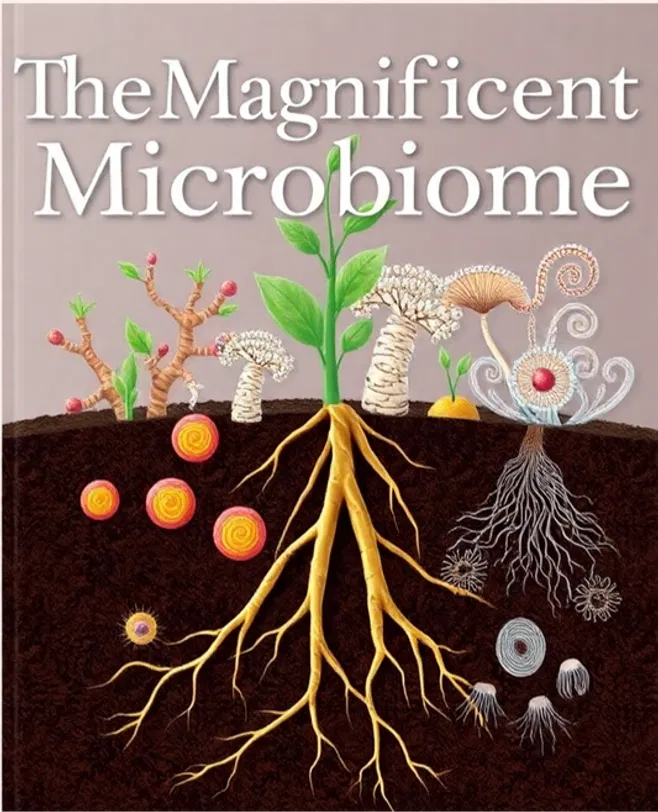
If you’ve spent any time in a garden center, you’ve been told that plants need Nitrogen, Phosphorus, and Potassium (N-P-K). This is the "Big Three" of conventional wisdom. However, soil archives reveal a different story.
Historical soil wasn't rich because people were dumping bags of 10-10-10 on it. It was rich because of nutrient cycling driven by a complex underground economy of bacteria, fungi, and protozoa.
What the Archives Showed Us:
- Carbon Sequestration: Soil from the 1800s held significantly more organic carbon. This carbon didn't just feed plants; it acted as a sponge for water and a home for microbes.
- Microbial Diversity: Modern "dirt" is often a monoculture of a few hardy bacteria. Historical soil was a thriving metropolis of specialized organisms that we are only now beginning to re-identify.
- Mineral Availability: Because the biology was intact, plants could access "locked" minerals in the sand, silt, and clay, minerals that modern plants can't reach without chemical help.
This is why we emphasize the RSI Method. It’s not about adding more chemicals; it’s about restoring the biological infrastructure that once existed naturally.
The CSIRO Files: A Century of Chemicals
Halfway across the world, the CSIRO National Soil Archive in Australia holds over 100,000 samples spanning a century. These samples have revealed a darker secret: the accumulation of the "Uninvited Guests."
As we moved through the 20th century, soil archives show a steady increase in:
- Microplastics: Even in remote agricultural areas.
- Pesticide Residues: Long-forgotten chemicals like DDT still leave "fingerprints" in the soil profile.
- Radiation Fallout: Traces of weapons testing from the mid-century are literally baked into the dirt layers.
When we talk about soil restoration, we aren't just talking about adding compost. We are talking about biological remediation, using the power of living soil to break down these legacy contaminants and return the system to its original state of harmony.
Dirt vs. Living Soil: Why Your Supermarket Salad is "Crunchy Water"
We’ve mentioned this before in our guide on the empty plate problem, but it bears repeating: the loss of soil history is directly linked to the loss of human health.
Archives show that the nutrient density of our crops has plummeted over the last 100 years. If the soil doesn't have the microbial "machinery" to process minerals, those minerals never make it into the plant, and they never make it into you.
When you use a Rhizo Logic® approach, you aren't just growing a plant; you are rebuilding a prehistoric biological engine. Products like our 5 Gallon Living Soil are designed to bypass the century of degradation and jumpstart that ancient, high-performance ecosystem in your own backyard or patio.
How to Unlock the Secrets of Your Own Soil
You don’t need a 150-year-old mason jar to understand your dirt’s history. You just need the right data.
For Beginners: The "Look and Feel" Test
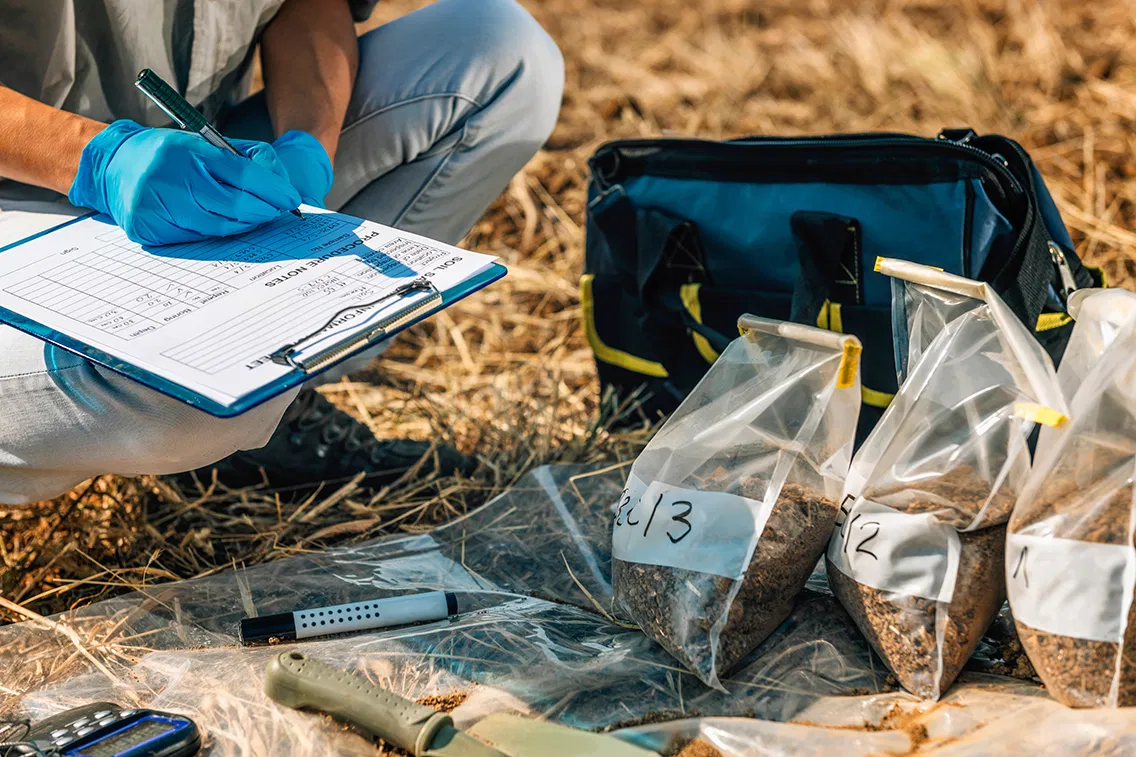
Before you dive into lab work, look at your soil. Is it pale and dusty? Does it form a hard crust when dry? That is "dirt", soil that has lost its history and its life. Healthy soil should look like dark chocolate cake and smell like a forest floor after rain. That smell is geosmin, a byproduct of healthy soil bacteria (Actinomycetes).
For Experienced Growers: The Initial Soil Health Assessment
If you’re serious about restoration, you need an ISH Assessment. This is where we use modern science to look at your soil’s current state and compare it to the biological ideal. We look at the fungi-to-bacteria ratio and the presence of those "Microscopic Architects" like protozoa.
For Commercial Operations: Systems Thinking
For large-scale restoration, we look at the entire ecosystem. This involves analyzing sequestration rates and implementing long-term strategies that move away from synthetic inputs and toward Terrabiotics solutions, such as Bio-boost, to enhance the existing biological potential.
FAQ: Secrets of the Soil Archives
Q: Is it true that soil can "remember" what was grown on it? A: In a way, yes. This is called the "soil legacy effect." The microbial communities that form around specific plant roots can persist for years, influencing the success of whatever is planted next.
Q: Can I restore my soil if it has been chemically treated for decades? A: Absolutely. It takes time, but by reintroducing living soil components and supporting them with products like our Bio-boost, you can kickstart the natural remediation process.
Q: Why don't big fertilizer companies talk about soil archives? A: Because if you realize that the soil can feed itself through biological nutrient cycling, you stop buying a pallet of synthetic fertilizer every spring. It’s a business model conflict.
Q: What is the most important thing found in old soil archives? A: The realization that we have lost roughly 50% of our topsoil in the last 150 years. That is a staggering statistic that should motivate every grower to pivot toward regenerative practices.
The Path Forward: Regeneration is History in Reverse
The "secrets" of the soil archives tell us that we’ve been heading the wrong way, but they also give us a map to get back. We aren't trying to go back to 1862: we’re trying to take the biological wisdom of 1862 and pair it with the data-driven precision of 2026.
By monitoring your progress with tools like the Regen Soil Pulse, you can see the real-time return of moisture retention and nutrient availability.

Whether you are a hobbyist with a patio garden or a commercial farmer looking to save your land, the goal is the same: stop treating your soil like a blank slate and start treating it like a living archive.
Want to know what your soil is hiding? Let’s start with a deep dive into your own dirt’s biology. Check out our Initial Soil Health Assessment or contact us today to talk about how we can help you rewrite your land’s history.
Let’s grow something that actually matters.
: Jeremy Standring Owner, Regen Soil


