
Sand to Soil Part 4: Step 1: Building a Foundation with Compost
By Jeremy Standring
In our last few sessions, we took a long, hard look at the "dead sand" problem. We measured it with the Bluelab Pulse and the MicroBIOMETER, and the results were exactly what we expected: low nutrients, nearly zero water-holding capacity, and a microbial population that was practically nonexistent. It was, quite literally, a pot of lifeless minerals.
Today, we change that. We are moving from the diagnostic phase into the active remediation phase.
If you’ve been following along with our "Sand to Soil" series, you know that our goal isn't just to keep plants alive; it's to build a thriving, self-sustaining ecosystem inside a 5-gallon Living Roots cloth pot. To do that, we need a foundation. In the world of soil health, that foundation is compost.
Why Compost is the First Step in Remediation
When we look at sandy soils, we see a "leaky bucket." The particles are large, the pores are massive, and there is nothing for water or nutrients to "stick" to. If we just poured liquid fertilizers or microbial teas into pure sand, they would wash right out the bottom before the plant or the biology could ever use them.
By mixing in microbe-rich compost, we are fundamentally changing the physics, chemistry, and biology of the substrate.
- Physics: Compost adds fine organic fibers and particles that fill those giant gaps between sand grains. This creates smaller pore spaces that hold onto water through capillary action.
- Chemistry: Organic matter provides "docking stations" (cation exchange sites) for nutrients. Instead of washing away, minerals like potassium, calcium, and magnesium latch onto the compost.
- Biology: High-quality compost is a living "starter culture." It’s packed with the bacteria, fungi, protozoa, and nematodes that we need to kickstart nutrient cycling.
Finding the Magic Ratio: The 70/30 Rule
One of the most common questions we get at Regen Soil is: "How much compost do I actually need?"
If you use too little, the sand stays a desert. If you use too much, you can actually run into drainage issues or nutrient imbalances, depending on the compost's source. For our "Sand to Soil" experiment, we are using a 70/30 ratio: that’s 70% garden sand and 30% high-quality, microbe-rich compost by volume.
Recommended Ranges for Different Scenarios:
- For Beginners: Start with a 20% to 30% mix. It is the "goldilocks zone" for most sandy soils. It provides enough organic matter to see an immediate difference without over-complicating the drainage.
- For Experienced Growers: If you are building a living soil system from scratch, you might push toward 40%, but only if your compost is exceptionally well-aged and stable.
- For Commercial Operations: At scale, we often look at 2-inch top-dressings incorporated into the top 6 inches of soil, which usually works out to a similar volume percentage in the root zone.
The Physical Transformation: From Dust to Crumb
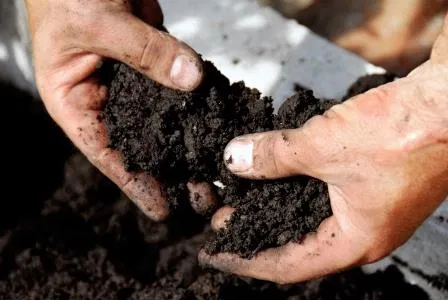
As we mix the compost into our cloth pot, the first thing you’ll notice is the visual change. The pale, monochromatic tan of the sand begins to darken. That deep brown or black color is the visual representation of organic carbon.
When you run your hands through the original sand, it slides through your fingers like an hourglass. But once the compost is incorporated, the texture changes. It starts to feel "crumbly." In soil science, we call this aggregation. The organic glues in the compost, along with the microbial biofilms, start to bind the sand grains together into small clumps.
These clumps: or aggregates: are the "buildings" of the soil city. They create a structured environment where roots can breathe (aeration) and microbes can hide from predators.

Biological Inoculation: Seeding the Ecosystem
We aren't just adding "dirt" to the sand; we are performing a biological transplant. This is where the Rhizo Logic philosophy really comes into play.
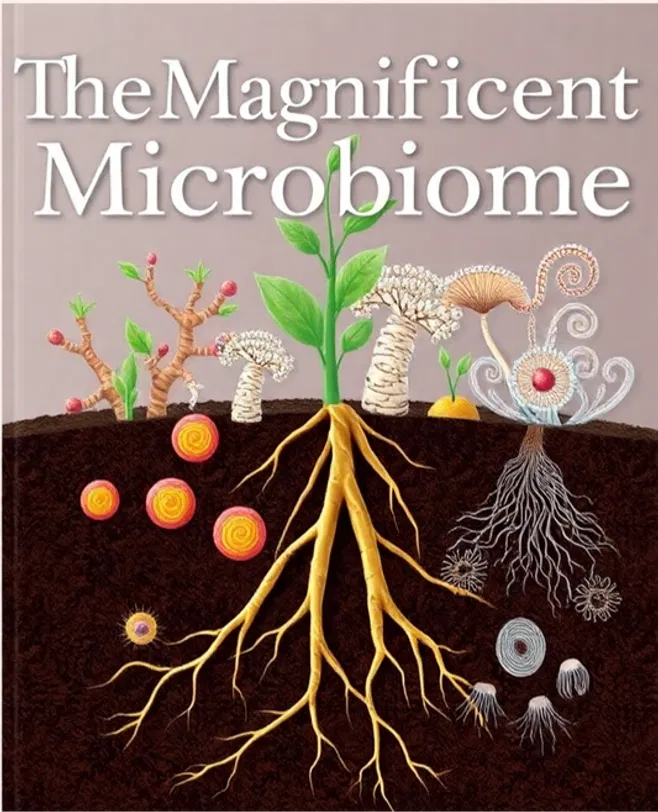
Sandy soil is a terrible home for a soil microbiome because it dries out too fast. Microbes are aquatic organisms: they live in the thin films of water surrounding soil particles. By adding compost, we are creating a permanent "wetland" at a microscopic level.
What are we introducing?
- Beneficial Bacteria: The fast-movers that begin breaking down organic matter immediately.
- Fungal Spores and Hyphae: The long-term builders. While sand has almost zero fungal presence, the compost introduces the fungi needed to eventually build the massive networks that transport phosphorus and water to your plants.
- Carbon-Based Food: The compost itself is the "pantry." It contains the complex carbons that keep microbes fed until we get our living roots (the cover crops) established.
Step-by-Step: How We Mixed Our Pot
If you're doing this at home, the process is straightforward but requires thoroughness.
- Layering: We didn't just dump the compost on top. We added it in layers: a few inches of sand, then a few scoops of compost.
- Mechanical Mixing: We used our hands to toss the mix, ensuring there were no "pockets" of pure sand. In a 5-gallon Living Roots pot, this takes about five minutes of focused work.
- Hydration: Once mixed, we slowly hydrated the pot. You’ll notice that the water doesn't just blast through the bottom like it did in Episode 1. It soaks in. The compost is doing its job, acting like a sponge.
Measuring the Initial Impact
Even before we add our biological "jump start" (compost teas) or our legume seeds, the measurements have already shifted.
We inserted the Bluelab Pulse into the new 70/30 mix to check our baseline again.
- VWC (Volumetric Water Content): This spiked significantly. The soil can now hold a reservoir of water that wasn't possible 10 minutes ago.
- EC (Electrical Conductivity): We saw a slight rise here as well. The compost brings in its own soluble salts and nutrients, giving us a "base layer" of fertility.
This is the "foundation" stage. We haven't built the house yet, but we've poured the concrete. The sand is no longer just an inert substrate; it is now a habitat.
Deep Dive: Why "Any Old Compost" Won't Do
We need to be careful here. Not all compost is created equal. If you use "green" or unfinished compost that is still hot, it will actually pull nitrogen away from your plants as it continues to break down. This is called nitrogen tie-up.
For soil remediation, we recommend compost that is:
- Dark and Earthy Smelling: It should smell like a forest floor, not ammonia or rotten eggs.
- Stable: It shouldn't generate heat when piled up.
- Microbe-Rich: Ideally, it has been tested for microbial diversity.
If your compost is low-quality, you're just adding "less-sandy sand." But if it's high-quality, you're adding life.
What’s Next in the "Sand to Soil" Series?
Now that we have our physical structure and our initial microbial inoculation, we need to wake everyone up. In the next episode, we’re going to hit this pot with a biological "jump start": compost teas and extracts.
We’ll show you how to coat every single one of those sand grains and compost fibers with a liquid film of active, hungry microbes. Then, we’ll finally get some "skin in the game" by planting our legume cover crops.
The transformation from "sand" to "soil" is officially underway.
Frequently Asked Questions
Q: Can I just put a layer of compost on top of my sand instead of mixing it?
A: You can, and that’s called "top-dressing." While it works over time as earthworms pull it down, for rapid remediation of pure sand, mixing it into the root zone (top 6–8 inches) provides much faster results for water retention and microbial colonization.
Q: Is 30% compost too much for potted plants?
A: For a Living Roots cloth pot, 30% is excellent. These pots provide superior aeration, so the risk of the soil becoming "mucky" or anaerobic is much lower than in a plastic pot.
Q: How do I know if my sand is "garden sand" or something else?
A: Most garden sand or "all-purpose" sand has a variety of particle sizes. Avoid "play sand," which is often too fine and can pack down like concrete when mixed with organic matter.
Want a personalized plan for your soil?
Whether you're dealing with beach sand or heavy clay, we can help. Check out our Initial Soil Health Assessment to get a scientific breakdown of exactly what your land needs to thrive.
Leave a comment below! Are you fighting with sandy soil in your backyard? Tell us what you’ve tried and let’s get those microbes working for you.


