Sand to Soil Part 3: The 5-Step Roadmap to Living Soil
By Jeremy Standring
In our previous two installments of the "Sand to Soil" series, we established a sobering reality: raw garden sand is essentially a graveyard for plants. We used the Bluelab Pulse and the MicroBIOMETER to prove that this medium has almost no nutrient-holding capacity (low EC), no ability to retain water (low VWC), and a microbial population so small it’s practically non-existent.
If you’re just joining us, the goal of this experiment is to take a 5-gallon Rhizo Logic® cloth pot filled with inert, "dead" sand and transform it into a thriving, biologically active ecosystem using purely organic, regenerative methods.
Today, we are laying out the full roadmap. Before we get our hands dirty in the upcoming episodes, you need to understand the "why" behind the "how." We aren't just adding "dirt" to sand; we are building a biological habitat. To do that, we follow a specific 5-step remediation strategy designed to shift the environment from a leaky system to a living soil food web.
The Problem: The "Leaky Straw" Dilemma
In sandy soils, the particles are large and the pores are even larger. When you pour water or liquid nutrients into sand, it’s like trying to drink through a straw with holes in it: everything vanishes before the plant can use it. This lack of structure means there is no "home" for biology. Without a home, microbes die. Without microbes, nutrients aren't cycled. It is a downward spiral of infertility.
To reverse this, we use a systems-thinking approach. We aren't just treating symptoms; we are rebuilding the engine.
Step 1: Compost: Building Structure, Food, and Habitat
The absolute foundation of our remediation is high-quality, microbe-rich compost. In our 5-gallon experiment, we aren't replacing the sand; we are amending it. We typically recommend a ratio of 20% to 40% compost by volume for extremely sandy soils. For this specific pot, we are aiming for roughly 30%.
Compost serves three critical functions in our roadmap:
- Physical Structure: Compost provides the "glue." The organic fibers and humic substances fill the giant pores between sand grains, creating smaller pockets that can actually hold onto water and soluble nutrients.
- Biological Inoculation: Sand is sterile. Compost is a city of life. By mixing it in, we are introducing thousands of species of bacteria, fungi, protozoa, and beneficial nematodes.
- The "Larder": Compost is made of organic carbon. This is the primary food source and habitat for the microbes we are about to wake up.
Without this step, any biological treatments we add later would simply wash away. We must build the house before we invite the guests.
Step 2: Teas and Extracts: The Biological "Jump Start"
Once we have the habitat (compost) mixed with the substrate (sand), we need to populate it quickly. Think of compost as the "infrastructure" and compost teas or extracts as the "workforce."
At Regen Soil, we use these liquid biologicals to deliver a massive concentration of active microbes directly to the root zone.
- Compost Extracts are generally used to wash microbes off high-quality compost into a liquid form for a quick drench.
- Compost Teas go a step further by "brewing" the liquid with oxygen and food catalysts to multiply the microbial populations exponentially.
This step ensures that every grain of sand and every fiber of compost is coated in a biofilm of beneficial life. This is what we call "liquid gold" for soil restoration. If you're interested in the nuances of this process, you can read more about brewing liquid gold here.
Step 3: Legume Cover Crops: Living Roots and Nitrogen
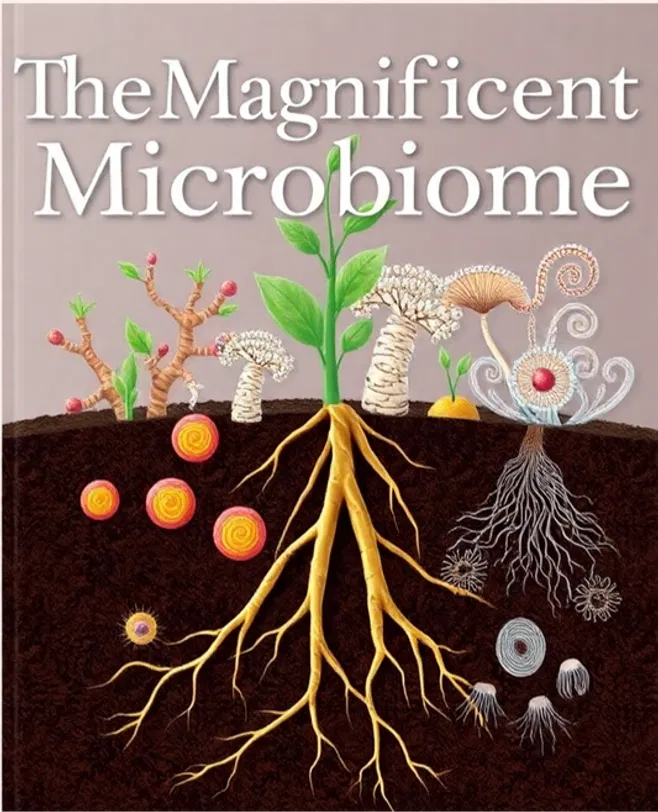
A soil without a living root is a soil that is slowly dying. In the regenerative world, we know that living roots are the primary energy source for the soil microbiome.
For this experiment, we are planting a legume cover crop. Legumes (like clover or vetch) are unique because they form a symbiotic relationship with Rhizobium bacteria. These bacteria take nitrogen from the air and "fix" it into a form the plant can use.
More importantly, the roots of these plants release exudates: sugars, amino acids, and organic acids. These exudates act as a "dinner bell" for the microbes we introduced in Step 2. The plant feeds the microbes, and in exchange, the microbes protect the plant and mine nutrients from the sand and compost. This cycle is the heartbeat of soil health.
Step 4: Organic N–P–K: Balanced Support
While we are huge proponents of biology, we aren't "anti-nutrient." However, the source of those nutrients matters immensely. We avoid high-salt synthetic fertilizers because they can dehydrate microbes and disrupt the delicate fungal networks we are trying to build.
Instead, we use a certified organic, balanced N–P–K fertilizer. We also incorporate specialized products like Terrabiotics Bio-boost to provide the trace minerals and catalysts that biology needs to thrive. The goal here is "moderation." We provide enough nutrients to support the initial flush of plant growth and microbial activity, allowing the system to eventually become self-sustaining.
Step 5: Continuous Measurement: The Proof
We don't believe in "guesswork" at Regen Soil. The final step in our roadmap is constant monitoring. Using the Bluelab Pulse and the MicroBIOMETER, we will track the transformation in real-time.

We will be looking for specific indicators of success:
- Increasing EC (Electrical Conductivity): Proving that the soil is now holding onto and cycling nutrients rather than letting them leach.
- Stable VWC (Volumetric Water Content): Showing that our structure can hold moisture even in dry conditions.
- Fungal-to-Bacterial (F:B) Ratio: This is the big one. In raw sand, fungi are non-existent. As we remediate, we want to see those fungal hyphae expanding, as they are the true "architects" of long-term soil fertility and carbon sequestration.
Summary for Different Growers
For Beginners
If you are just starting with sandy soil, don't get overwhelmed. Start with Step 1. Adding 2-4 inches of high-quality compost to your beds and mixing it in is the single most effective thing you can do to stop the "leaky straw" effect.
For Experienced Growers
Focus on Step 3 and Step 5. Once you have your organic matter up, the goal is to keep it alive. Using cover crops to ensure there is always a living root in the ground will prevent your microbial populations from crashing between seasons. Use a MicroBIOMETER to check your F:B ratio; if it's too bacterial, you may need more woody mulch or specialized fungal inoculants.
For Commercial Operations
Data-driven soil health assessments are your best friend. By measuring your baseline and tracking the impact of biological inputs, you can reduce your reliance on expensive synthetic fertilizers and move toward a more resilient, low-input system that produces higher-quality yields.
What’s Coming Next?
The plan is set. The roadmap is clear. In Episode 4, we move from theory to action. We will be physically mixing our microbe-rich compost into the Rhizo Logic® cloth pot and taking our first post-amendment measurements.
We’re going to show you exactly how the physics of the sand changes the moment that organic carbon is introduced.
Have you ever tried to grow in pure sand? What was your biggest struggle? Let us know in the comments below, or contact us for a personalized consultation on your soil restoration journey.
Frequently Asked Questions (FAQ)
Q: Can I just use store-bought bagged compost?
A: You can, but the quality varies wildly. Look for compost that smells like a forest floor, not like ammonia or sulfur. At Regen Soil, we advocate for "microbe-rich" compost, which often means it has been aged properly and hasn't been sterilized by excessive heat or chemicals.
Q: How long does it take for sand to become "living soil"?
A: You will see physical changes (water retention) instantly after adding compost. However, a fully functional microbial ecosystem with strong fungal networks usually takes 3 to 6 months of active management with living roots and biological inoculants to truly stabilize.
Q: Do I need to keep adding compost every year?
A: Eventually, if you use cover crops and mulch correctly, the system becomes more self-sustaining. However, in the early years of sandy soil restoration, a "top-dress" of compost each season is highly recommended to replenish the organic matter that microbes consume.
Q: Is organic N-P-K enough for heavy feeders?
A: When your biology is working correctly, it "unlocks" minerals already present in the soil. You’ll find that you need less raw N-P-K because the delivery system (the microbes) is much more efficient than a human with a fertilizer bag.