
How to Integrate Regenerative Farming Practices With Your Home Garden
By Jeremy Standring
At Regen Soil, we believe that the revolution of our food system doesn’t start in a boardroom or even on a 1,000-acre industrial farm, it starts in your backyard. Regenerative agriculture is often discussed in the context of large-scale carbon sequestration and livestock management, but the core principles are entirely scalable. Whether you have a quarter-acre plot or a few raised beds on a patio, you can transition from being a "gardener" to a "steward of a living ecosystem."
In this guide, we will break down the technical "why" behind regenerative practices and provide a practical roadmap to help you restore your soil’s biological vitality.
Understanding the Regenerative Shift: A vs. B
To understand why we advocate for regenerative methods, we must first look at the traditional "extractive" model of gardening versus the "restorative" model.
| Feature | Conventional Gardening | Regenerative Gardening |
|---|---|---|
| Soil Disturbance | Annual tilling or double-digging. | No-till or minimal disturbance. |
| Fertility | Synthetic NPK fertilizers. | Living soil, compost, and microbes. |
| Pest Management | Chemical pesticides/herbicides. | Biodiversity and predatory insects. |
| Water Usage | High evaporation; frequent watering. | High retention through organic matter. |
| Goal | Maximum yield at any cost. | System health and soil restoration. |
We view the soil not as a medium to hold plants upright, but as a complex digestive system. When we treat it with chemicals and till it constantly, we are essentially putting that system on life support.
1. Minimize Soil Disturbance (The No-Till Transition)
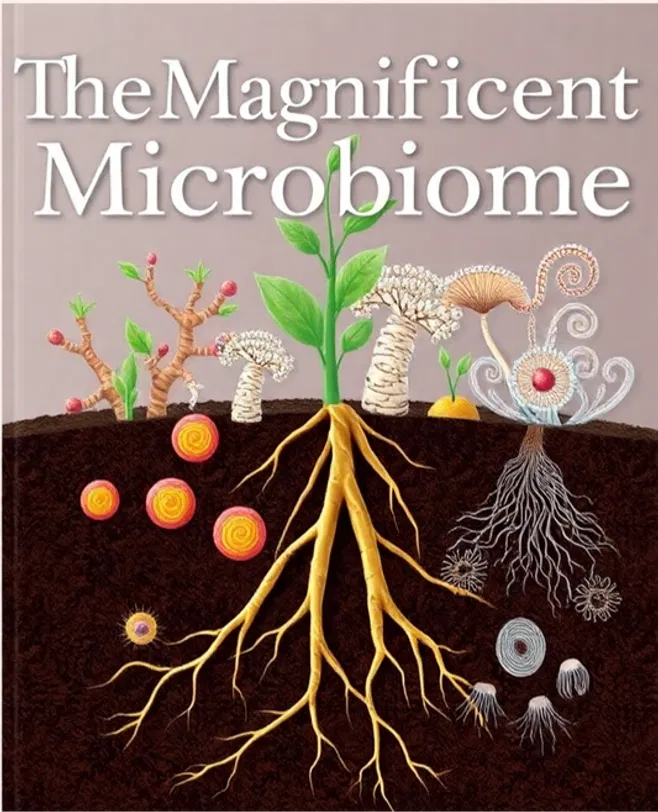
The first rule of regenerative farming is to stop destroying the "underground city." Soil is home to vast networks of mycorrhizal fungi and beneficial bacteria. Every time you turn the soil with a tiller or a spade, you shatter these fungal highways and expose delicate microbes to UV rays and oxygen, which causes them to die off and release stored carbon into the atmosphere.
Practical Steps for Your Garden:
- Broadforking instead of Tilling: If your soil is heavily compacted, use a broadfork to gently lift and aerate the soil without flipping the layers. This maintains the vertical integrity of the soil horizons.
- Sheet Mulching: To start a new bed, don't dig up the grass. Use the "lasagna" method: lay down plain brown cardboard (remove the tape!) and pile 4–6 inches of high-quality compost on top.
- Root Termination: When a crop is finished, don't pull it out by the roots. Cut the stem at the soil line. The dying roots become food for microbes and create "biopores" for water and air to travel through.
For those starting with depleted ground, using a pre-colonized medium like our Rhizo Logic® Living Soil can bypass years of "waiting" for the biology to return on its own.
2. Armor the Soil: Keep it Covered
Nature abhors a vacuum, and it hates bare soil. Bare soil is a "wound" that leads to erosion, compaction from rain, and the death of surface-level biology. In regenerative systems, we use "armor" to protect the soil.
Using Organic Mulches
We recommend a "brown-to-green" mulch strategy. Cover your soil with wood chips, straw, or shredded leaves. This layer regulates soil temperature, keeping your plants' roots cool in the summer and warm in the winter. As this mulch decomposes, it feeds the detritivores (like earthworms) that pull nutrients down into the root zone.
Cover Cropping for the Home Garden
You don't need a tractor to plant cover crops. If a bed is going to be empty for more than three weeks, sow a quick-growing crop like Buckwheat or Crimson Clover.
- Benefits: They prevent weeds, fix nitrogen, and keep living roots in the soil to feed the rhizosphere (the area immediately surrounding plant roots).
3. Foster Biodiversity: Polycultures vs. Monocultures
Industrial farming relies on monocultures (growing one thing), which are essentially "all-you-can-eat buffets" for specific pests. Regenerative gardening mimics the chaos of nature.
We suggest practicing "Interplanting":
- Instead of a row of kale, plant kale mixed with marigolds (to deter pests), alyssum (to attract hoverflies), and onions (to mask the scent of the kale).
- Perennial Integration: Integrate berry bushes and fruit trees into your vegetable patches. These deep-rooted plants bring up minerals from deep in the subsoil that annual vegetables can't reach.
4. Feed the Microbiome (Rhizo Logic® and Bio-boost)
In a regenerative system, we don't feed the plant; we feed the soil. The plants then trade sugars (exudates) with microbes in exchange for nutrients. If your soil has been treated with chemicals in the past, your "microbial bank account" might be empty.
To kickstart this process, we utilize specialized inoculants.
- Rhizo Logic®: This represents the pinnacle of Living Soil technology. It is a biologically active medium designed to provide an immediate home for beneficial fungi and bacteria.
- Bio-boost (Terrabiotics): For existing gardens, we recommend a "recharge" approach. Products like Ultra Bio-boost Soil Recharge act as a microbial stimulant, reintroducing the diversity needed for effective nutrient cycling.

5. Integrating Natural Cycles and "Animals"
While you might not have room for a cow, every garden can integrate "micro-livestock."
- Vermicomposting: Worms are the ultimate soil restorers. A small worm bin can turn your kitchen scraps into "black gold", vermicompost rich in growth hormones and beneficial microbes.
- Encouraging Beneficials: By creating "insect hotels" or leaving a small pile of brush in the corner of the yard, you invite the predators (spiders, lacewings, ladybugs) that do the work of pesticides for free.
The First-Year Roadmap: How to Start Today
Transitioning to regenerative gardening is a marathon, not a sprint. Here is how we recommend you handle your first twelve months:
- Phase 1 (Assessment): Conduct an Initial Soil Health Assessment. You need to know your baseline biology before you can fix it.
- Phase 2 (Establishment): Stop tilling. Apply a thick layer of compost and mulch. If your soil is dead, integrate Rhizo Logic® into your planting holes to create "islands" of life.
- Phase 3 (Maintenance): Use Bio-boost (Terrabiotics) every 2–4 weeks during the growing season to ensure the microbial populations stay active and diverse.
- Phase 4 (Winterizing): Never leave the garden "clean" for winter. Leave the dead stalks up for solitary bees and keep the soil covered with mulch or a winter cover crop like cereal rye.

Frequently Asked Questions (FAQ)
Q: Won't no-till gardening make my soil too hard for roots to grow?
A: Actually, it’s the opposite. Tilling creates a "hardpan" layer just below the reach of the tiller. In a regenerative system, earthworms and deep-rooted plants do the "tilling" for you, creating a porous, sponge-like structure that is much easier for roots to penetrate.
Q: How do I handle weeds without tilling or herbicides?
A: We use "shading" and "smothering." By keeping the soil covered with mulch or dense plantings, weed seeds never get the sunlight they need to germinate. Any weeds that do pop up are usually easy to pull by hand because the soil is so loose and biologically active.
Q: Is "Living Soil" just fancy compost?
A: No. While compost is a component, Living Soil (like our Rhizo Logic® line) is a precisely balanced ecosystem. It contains specific ratios of peat or coco coir, aeration components (like perlite or pumice), and a diverse consortium of microbes, fungi, and organic amendments designed to sustain life long-term.
Start Your Restoration Journey
Integrating regenerative farming into your home garden is about more than just growing better tomatoes: it’s about participating in the healing of the planet. By focusing on soil restoration and the Magnificent Microbiome, you create a garden that is resilient to drought, resistant to pests, and incredibly nutrient-dense.
We are here to help you every step of the way. If you’re ready to see what's actually happening beneath the surface, check out our Soil Health services or reach out to us directly through our Contact Page.
What’s the biggest challenge you’ve faced in your garden this year? Let us know in the comments below, and let’s grow together!


