How to Integrate Regenerative Farming Practices With Your Existing Backyard Garden
By Jeremy Standring

At Regen Soil, we don’t just view gardening as a hobby; we see it as an act of ecological restoration. While many home gardeners aim for "sustainability," we believe the goal should be regeneration. Sustainability implies maintaining a status quo that is often already degraded. Regeneration, however, focuses on active healing, reversing topsoil depletion and rebuilding the complex biological networks that make life possible.
Integrating regenerative farming practices into your existing backyard garden doesn't require a tractor or a 100-acre plot. It requires a shift in perspective. We must stop thinking about feeding plants and start thinking about feeding the soil. By adopting a systems-thinking approach, you can transform your backyard into a carbon-sequestering, nutrient-dense powerhouse.
Understanding the Regenerative Philosophy
Regenerative agriculture is built on five core principles that we apply to every project, whether it’s a commercial farm or a small patio garden:
- Minimize Soil Disturbance: Protecting the physical structure and microbial habitats.
- Maximize Biodiversity: Mimicking nature’s variety to build resilience.
- Keep Soil Covered: Preventing erosion and moisture loss.
- Maintain Living Roots: Ensuring a constant supply of liquid carbon (exudates) to soil microbes.
- Integrate Animals: Utilizing natural nutrient cycling (where practical).
By following these principles, we shift away from reliance on synthetic "cures" and toward a self-sustaining ecosystem.
Step 1: Assessing Your Current Context
Before you pick up a shovel (or, ideally, put it down), you must understand what you are working with. Every backyard has its own unique "context", sun patterns, water drainage, and, most importantly, the current state of its microbial populations.
We recommend starting with a professional Initial Soil Health (ISH) Assessment. Most standard soil tests only look at NPK (Nitrogen, Phosphorus, Potassium) levels. Our assessment goes deeper, evaluating the soil biology and physical structure to provide a personalized restoration roadmap. If you can’t measure it, you can’t manage it effectively.
Step 2: Transitioning to No-Till and Living Soil
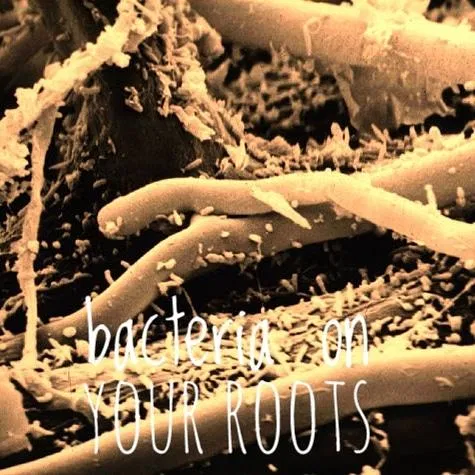
The most common mistake we see in backyard gardens is the annual tilling of the soil. While tilling may provide a temporary flush of nutrients by breaking down organic matter, it essentially "bombs" the soil's microbial city. It destroys fungal networks (mycorrhizae) and collapses the pore spaces needed for air and water.
The No-Till Method
Instead of tilling, we advocate for minimal disturbance.
- Sheet Mulching: If you are starting a new bed, use the "lasagna" method. Lay down plain cardboard to smother weeds and layer compost and mulch on top.
- Broadforking: For existing beds with compaction, use a broadfork to gently lift and aerate the soil without flipping the layers. This preserves the vertical integrity of the soil horizons.
The Role of Rhizo Logic®
To jumpstart a degraded system, you need more than just dirt; you need Living Soil. Our Rhizo Logic® Living Soil is designed to introduce a high-performance community of beneficial microorganisms directly into your garden. Unlike sterile bagged soils, Rhizo Logic acts as a biological "starter culture," inoculating your backyard with the microbes necessary for nutrient cycling and disease suppression.
Step 3: Keeping the Soil Covered and Roots Alive
In nature, bare soil is a wound. We should never see bare earth in a regenerative garden.
Advanced Mulching Techniques
Mulch acts as the soil’s "skin." It regulates temperature, retains moisture, and provides food for the decomposer food web. We recommend using organic materials like straw, wood chips, or shredded leaves.
- Pro Tip: In a vegetable garden, use "chop and drop" techniques. When a plant’s life cycle ends, cut it at the base, leave the roots in the ground to decompose, and drop the foliage on the surface as mulch.
Cover Cropping for the Homeowner
Cover crops aren't just for farmers. Small-scale plantings of crimson clover, buckwheat, or cereal rye between your vegetable rows or during the winter months keep living roots in the ground. These roots pump sugars into the soil, feeding the microbes even when you aren't growing a harvestable crop.

Comparative Analysis: Traditional vs. Regenerative Gardening
To help you understand the shift, we have compared the two approaches below:
| Feature | Traditional Gardening | Regenerative Gardening |
|---|---|---|
| Fertility | Synthetic NPK fertilizers (Salt-based) | Biological nutrient cycling & Bio-boost |
| Soil Prep | Annual rototilling | No-till / Mulching |
| Pest Control | Chemical pesticides | Biodiversity & Natural predators |
| Water Use | High (evaporation from bare soil) | Low (retention through organic matter) |
| Carbon Impact | Carbon source (releases CO2) | Carbon sink (sequestrates CO2) |
| Plant Health | "Fast food" growth (weak cell walls) | Nutrient-dense, resilient growth |
Deep Dive: Why Biology Beats Chemistry
We often get asked why we prefer products like Ultra Bio-boost over standard liquid fertilizers. The answer lies in the Rhizosphere.
Plants have evolved for millions of years to trade carbon (sugars) for nutrients provided by microbes. When we apply synthetic salts, the plant stops "hiring" microbes because it is being force-fed. This weakens the plant's immune system and kills off the microbial workforce.
Our Ultra Bio-boost (a Terrabiotics product) is a soil recharge designed to support the Magnificent Microbiome. It provides the food sources and humic substances needed to wake up the biology in your soil, ensuring that the nutrient loop remains closed and efficient. You aren't just adding nutrients; you are restoring the sequestration capacity of your land.
Tailored Guidance for Every Grower
For the Beginner
- Start Small: Convert one bed to no-till this season.
- Focus on Compost: Begin a small compost pile to recycle your kitchen scraps.
- The Patio Solution: If you have limited space, our Living Soil Patio Pro Kit provides everything needed to experience regenerative success in containers.
For the Experienced Gardener
- Inoculate: Integrate Rhizo Logic® into your potting mixes and garden beds to enhance fungal diversity.
- Polycultures: Move away from single-crop rows. Plant "guilds" (like the Three Sisters) where plants support each other’s growth.
- Water Management: Install rain barrels and swales to capture and sink water into your living soil.
For Commercial/Market Gardeners
- Data-Driven Decisions: Utilize our Soil Health Consulting to optimize your transitions on a larger scale.
- Biological Consistency: Use Ultra Bio-boost at scale to maintain high microbial activity across high-intensity production beds.
Frequently Asked Questions (FAQ)
Q: Won't no-till gardening make my soil too hard for roots?
A: Actually, the opposite is true. Tilling creates a "hardpan" layer just below the reach of the tines. In a no-till system, earthworms and fungal hyphae create microscopic channels that allow roots to penetrate deeper than they ever could in tilled soil.
Q: Is Rhizo Logic® different from regular organic compost?
A: Yes. While compost is great for organic matter, Rhizo Logic® is specifically formulated living soil with a stabilized community of beneficial microbes. It is a precision tool for restoration, whereas compost can vary wildly in quality and microbial content.
Q: Can I use Bio-boost with my existing fertilizers?
A: We recommend transitioning away from synthetic fertilizers. However, Ultra Bio-boost works excellently alongside organic amendments to help the soil process those nutrients more effectively.
Final Thoughts: The Path Forward
Regenerative gardening is a journey, not a destination. As you observe your soil becoming darker, crumblier, and more full of life, you will realize that you are no longer just a gardener: you are a land steward.
We are here to partner with you on this journey. Whether you need a full Soil Health Assessment or just the right Living Soil to get started, the team at Regen Soil is ready to help you rebuild the earth from the ground up.
Have you tried transitioning a portion of your garden to no-till? Share your successes and challenges in the comments below, or contact us for a personalized consultation.


