
Biochar Secrets Revealed: What Most People Get Wrong About This Soil Supercharger
If you’ve been hanging around the regenerative agriculture scene for more than five minutes, you’ve probably heard people talking about biochar like it’s some kind of magic pixie dust for the Earth. "Just toss it in the dirt," they say. "It’ll fix everything from your tomato yields to your credit score."
Well, at Regen Soil, we like to keep things a bit more grounded in reality, literally. My name is Jeremy Standring, and I’ve spent years digging through the science of soil microbiology to understand what actually moves the needle. While biochar is a superpower for your garden, most people are using it all wrong. In fact, if you just dump raw biochar into your beds, you might actually kill your plants in the short term.
Today, we’re peeling back the curtain on this ancient soil tech. We're going to talk about why biochar isn't just a sponge, why it’s actually a biological "coral reef," and how to use the Rhizo Logic® system to turn it into a powerhouse of soil microbial diversity.
What Is Biochar, Anyway? (Hint: It’s Not Just Charcoal)
Before we get into the secrets, let’s clear up the identity crisis. Biochar isn’t just the stuff left over from your Sunday BBQ. It is organic material (like wood chips, agricultural waste, or even manure) that has been heated in a low-oxygen environment through a process called pyrolysis.
This process burns off the volatile gases and leaves behind a skeleton of pure carbon. This carbon skeleton is incredibly stable. While compost breaks down in a year or two, biochar can hang out in your soil for hundreds, even thousands of years. It is essentially "permanent fertilizer" infrastructure.
The "Coral Reef" Analogy
We often tell our clients at Regen Soil to think of biochar as a coral reef for the soil.
Imagine the ocean: a flat, sandy bottom doesn't host much life. But drop a coral reef in there, full of nooks, crannies, and protective structures, and suddenly, the place is teeming with fish. Biochar does the exact same thing for beneficial soil microbes. Under a microscope, a single grain of biochar looks like a high-rise apartment complex. It provides the physical housing that soil microbiology needs to hide from predators, stay hydrated, and trade nutrients.

Secret #1: Biochar Is a Battery, Not Just a Sponge
Most "experts" describe biochar as a sponge. They say it holds water and nutrients. While that’s true, recent research has revealed something far cooler: Biochar acts as a biological battery.
Biochar facilitates direct electron transfer. In the complex world of the soil food web, microbes are constantly moving electrons around to break down organic matter and cycle nutrients. Biochar acts as a conductor, allowing microbes to swap electrons much more efficiently than they could in plain dirt.
According to recent studies, this "electron highway" can account for up to 40% of the pollutant removal and nutrient cycling in treated soil. It’s not just sitting there holding things; it’s actively participating in the chemical conversations of your garden. This is why it’s such a critical component of the RSI Method.
Secret #2: The "Great Biochar Blunder" (Don’t Use It Raw)
This is where 90% of home gardeners mess up. They buy a bag of raw biochar, till it into their garden, and then wonder why their plants turn yellow and stunted two weeks later.
Raw biochar is "hungry." Because it has a massive surface area and a high Cation Exchange Capacity (CEC), it will immediately start sucking up every bit of nitrogen, phosphorus, and moisture it can find to fill its empty "apartments." If you put it in the ground empty, it will rob those nutrients directly from your plants' roots.
We call this "charging" or "innoculating" the biochar. You never, ever put raw biochar into a living system without filling it up first.
How to Properly "Charge" Your Biochar
To get the most out of your Rhizo Logic® Organic Living Soil, you need to pre-load your biochar with life and fuel. Here is the Regen Soil pro-tip for charging:
- The Biological Soak: Submerge your biochar in a nutrient-rich liquid. We recommend using a high-quality compost tea or a dedicated microbial catalyst.
- Add the Heavy Hitters: This is where you use products like Bio-Boost from Terrabiotics. Bio-Boost is designed to kickstart microbial activity. By soaking your biochar in a solution of Bio-Boost and water, you are essentially moving a thriving colony of beneficial soil microbes into those "apartments" before they hit the soil.
- Wait: Let it sit for at least 48 hours (a week is better). You want the microbes to move in, unpack their bags, and start reproducing.

Caption: A macro shot of biochar being "charged" in a nutrient-dense microbial tea.
Secret #3: It’s About Diversity, Not Just Quantity
People often ask us, "How much biochar should I add?"
The answer isn't about volume; it’s about soil microbial diversity. Biochar is the tool we use to stabilize that diversity. When you use our 5-Gallon Living Soil kits, the biochar is already integrated and balanced. It acts as the anchor for the fungi and bacteria that make Rhizo Logic® products so effective.
Without the carbon structure of biochar, your microbial populations can fluctuate wildly with the weather. If it gets too dry, they die. If it gets too wet, they drown. Biochar provides a "buffer zone" where soil microbiology can retreat during harsh conditions and bounce back faster.
Why Biochar Is the Key to Regenerative Gardening
At Regen Soil, our mission is to move away from the "Empty Plate Problem", the fact that our food is losing its nutrient density because our soil is dying. (You can read more about that here).
Biochar is a key pillar of regenerative agriculture because it solves two problems at once:
- Carbon Sequestration: It takes carbon that would have been released into the atmosphere and locks it in the ground for centuries.
- Soil Health: It creates a permanent habitat for the microscopic architects of our soil.
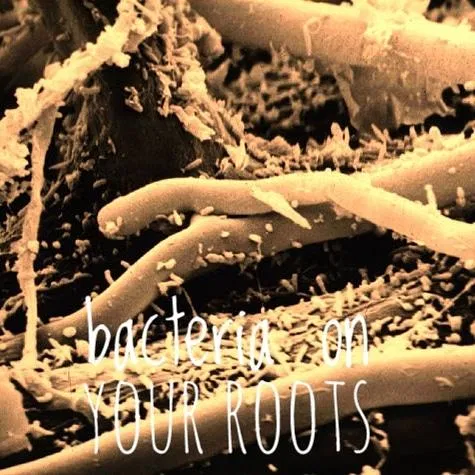
When you look at a healthy root ball, the kind we aim for with our Initial Soil Health Assessments, you’ll see a massive network of white fuzzy roots (mycelium) and soil aggregates. Biochar provides the scaffolding for that entire structure to grow.
Common Biochar Myths (Debunked)
-
Myth: Biochar is a fertilizer.
- Reality: Biochar is a catalyst and a habitat. It holds fertilizer and makes it more available to plants, but by itself, raw wood biochar has very little N-P-K value.
-
Myth: All biochar is the same.
- Reality: The quality depends on the "feedstock" (what it was made from) and the temperature of the pyrolysis. Low-quality biochar can contain heavy metals or tars. Always source from reputable suppliers who understand living soil systems.
-
Myth: You have to add it every year.
- Reality: Once it’s in there, it’s in there. Unlike compost, biochar doesn't disappear. You are building a permanent reef.
How to Get Started with Biochar the Right Way
If you’re ready to stop guessing and start growing, here is the Regen Soil game plan for integrating biochar into your system:
- Assess Your Current Soil: Don't fly blind. Get an ISH Assessment to see what your microbial levels actually look like.
- Choose the Right Base: If you're starting a new garden or patio project, use a base like our Rhizo Logic® Organic Living Soil. We’ve already done the hard work of balancing the biochar and charging it with the right biology.
- Top Dress and Charge: If you have existing beds, mix your biochar with high-quality compost and a dose of Bio-Boost before applying it as a top dress.
- Think Long Term: Remember, you are building an ecosystem, not just feeding a plant.

Biochar is one of the most powerful tools in our arsenal for restoring the Earth’s vitality. When used correctly as part of a Rhizo Logic® system, it transforms "dirt" into a thriving, self-regulating living organism.
Want to dive deeper into the world of soil restoration? Check out our Complete Guide to Biochar for a technical breakdown, or see a real-world transformation in our Case Study: Transforming Sterile Sand into a Living Ecosystem.
Frequently Asked Questions
Q: Can I make my own biochar?
A: Yes, but it's tricky. If you don't get the temperature high enough, you end up with charcoal that still has resins and tars, which can inhibit plant growth. It’s usually better to buy high-quality, sustainably sourced biochar.
Q: How long does biochar take to "work"?
A: If you charge it properly with Bio-Boost and high-quality biology, you’ll see results in the first season. If you put it in raw, you might see a dip in growth for the first few months followed by an explosion of growth a year later once it finally fills up with nutrients.
Q: Is biochar safe for all plants?
A: Absolutely. From cannabis to kale, every plant benefits from a more stable and diverse soil microbiology.
Q: Does biochar change the pH of my soil?
A: Most biochar is slightly alkaline. This is great for acidic soils, but if you have very alkaline soil already, you’ll want to balance your charging solution with something slightly acidic like humic acid.
What do you think? Have you tried using biochar in your garden and had mixed results? Or are you ready to start building your own underground "coral reef"? Drop a comment below or reach out to us for a personalized soil strategy!


