
7 Mistakes You’re Making with Regenerative Agriculture (and How to Fix Them)
By Jeremy Standring
Regenerative agriculture is more than just a buzzword; it is a fundamental shift in how we interact with the Earth. At Regen Soil, we view it as a holistic system designed to restore soil health, enhance biodiversity, and improve the water cycle. However, transitioning from conventional methods to a truly regenerative framework is rarely a straight line.
We have spent years consulting with home growers and commercial operations alike, and we see the same stumbling blocks repeatedly. These errors often stem from a "replacement" mindset, trying to swap a synthetic bottle for an organic one without changing the underlying management philosophy. To help you avoid these pitfalls, we have compiled the seven most common mistakes we see in the field and the science-backed ways to fix them.
1. Skipping the Initial Site and Soil Assessment
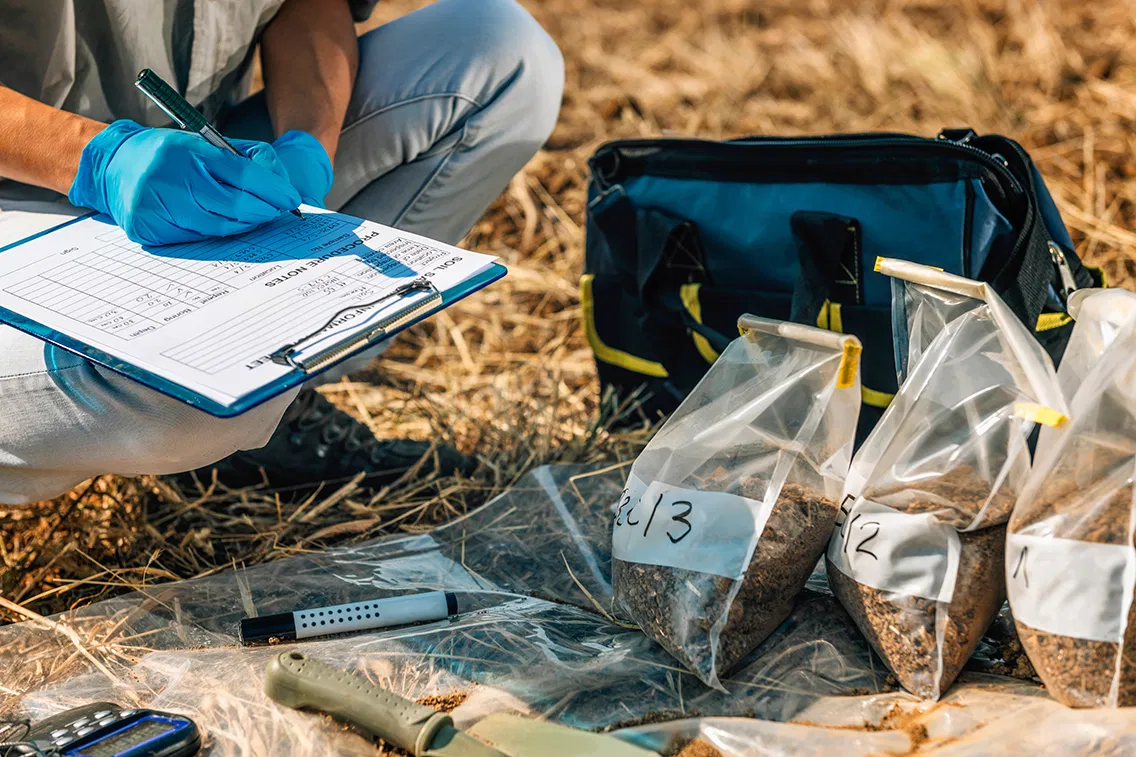
The most common mistake is jumping into planting or amending without a baseline. You cannot manage what you do not measure. Many growers assume they know their soil because they’ve worked it for years, but regenerative success relies on understanding the microbial populations and chemical composition currently at play.
The Fix: We recommend performing a comprehensive Initial Soil Health (ISH) Assessment. This isn't just a standard N-P-K test. It looks at the biological activity and physical structure of your soil. By utilizing the RSI Method, we can identify specific deficiencies in your living soil ecosystem before you spend a dime on seeds or inputs.
2. Over-Tilling and Breaking Soil Aggregates
Tillage is the fastest way to destroy soil structure. When you turn the soil, you shatter the delicate networks of mycorrhizal fungi and expose buried organic matter to rapid oxidation. This releases carbon into the atmosphere and kills the very "architects" that create aeration and water-holding capacity.
The Fix: Transition to a "No-Till" or "Low-Till" system. Instead of mechanical disturbance, use biological tools. Roots are nature’s tillers. By maintaining living roots in the ground year-round, you encourage the formation of stable soil aggregates. If you are dealing with heavy compaction, consider a broadfork or specialized cover crops with deep taproots rather than a rototiller.
3. Treating the Microbiome as an Afterthought
In the world of regenerative agriculture, the microbes are the employees, and the soil is the factory. A mistake we often see is focused solely on mineral inputs while ignoring the Rhizo Logic® (our signature approach to Living Soil). Without a thriving microbial community, those minerals remain "locked" and unavailable to the plant.
The Fix: Focus on soil restoration through biological inoculation. We utilize products like Bio-boost (from the Terrabiotics line) to jumpstart the biological engine.
Microbial Diversity: Why It Matters
- Nutrient Cycling: Microbes break down organic matter into plant-available forms.
- Pathogen Suppression: A diverse microbiome creates competition that keeps "bad" fungi like Grey Mold at bay.
- Structure Building: Fungal hyphae and bacterial glues (glomalin) bind soil particles together.

4. Lack of Botanical Diversity (Monocropping)
Nature abhors a vacuum, and it also abhors a monoculture. If you are only growing one type of plant, you are only feeding one type of microbe. This leads to a "biological bottleneck" where certain nutrient pathways become stagnant.
The Fix: Implement a robust cover cropping strategy. Diversity above ground equals diversity below ground. We have found that mixing legumes (for nitrogen fixation), brassicas (for soil tilth), and grasses (for biomass) creates a synergistic effect. For those in the cannabis space, check out our guide on cover crops for cannabis to see how intercropping can enhance your primary harvest.

5. Mismanaging Water and Infiltration
Many growers confuse "wetting the soil" with "hydrating the ecosystem." In degraded soils, water often runs off the surface or leaches through too quickly, carrying valuable nutrients with it. This is usually due to a lack of organic matter and poor pore space.
The Fix: Increase your Soil Organic Matter (SOM). For every 1% increase in SOM, the soil can hold an additional 20,000 gallons of water per acre. Use mulches and living covers to protect the soil surface from the "hammering" effect of raindrops, which causes surface crusting. Monitoring is key here; we use real-time data to ensure moisture levels stay within the "Goldilocks" zone for microbial activity.

6. Using "Organic" Inputs Like Synthetic Ones
Just because a fertilizer is OMRI-listed doesn't mean it's being used regeneratively. If you are "spoon-feeding" plants high-dose organic salts, you are teaching the plants to be lazy. When a plant gets easy nitrogen, it stops sending exudates (sugars) into the soil to trade with microbes. This effectively shuts down the Rhizo Logic® of the soil.
The Fix: Shift from "Feeding the Plant" to "Feeding the Soil." Use slow-release organic matter, compost teas, and microbial stimulants. The goal is to facilitate a relationship where the plant asks the soil for what it needs, and the microbes provide it in exchange for carbon. This creates a much more resilient plant with a superior terpene and secondary metabolite profile.
7. Expecting Overnight Results (The Patience Gap)
Conventional farming offers instant gratification through synthetic boosts, but it’s a "boom and bust" cycle. Regenerative agriculture is a long-term investment. We often see growers give up in year two because they don't see massive yield increases immediately.
The Fix: Redefine success. Look at the "leading indicators" of soil health rather than just the final weight.
- Is the soil color getting darker?
- Are you seeing more earthworms?
- Is your water infiltration rate improving?
Regeneration is a compound interest game. By the third or fourth year, the reduced input costs and increased resilience usually far outweigh the initial "transition period" hurdles.
Comparison: Conventional vs. Regenerative Management
| Feature | Conventional Approach | Regenerative Approach (Regen Soil) |
|---|---|---|
| Primary Goal | Maximize immediate yield | Restore ecosystem function/vitality |
| Fertility | Synthetic N-P-K salts | Microbial nutrient cycling & organic matter |
| Pest Control | Chemical pesticides (Reactive) | Biodiversity & plant health (Proactive) |
| Soil Structure | Mechanical tillage | Living roots & fungal networks |
| Water Use | High irrigation/High runoff | High retention/Closed-loop cycling |
Frequently Asked Questions (FAQ)
Q: Can I use Bio-boost with my existing nutrient line?
A: Yes. Bio-boost (part of our Terrabiotics line) is designed to enhance nutrient uptake efficiency. However, we recommend phasing out high-salt synthetics as your biological activity increases to avoid harming the microbes.
Q: Is Rhizo Logic® the same as just adding compost?
A: Not quite. While compost is great, Rhizo Logic® refers to our specific methodology of managing Living Soil through targeted microbial consortia and precise environmental controls to maximize the plant-root-soil interface.
Q: How long does soil restoration take?
A: You will see biological changes within weeks, but physical soil structure changes typically take 1–3 years of consistent regenerative management to become "self-sustaining."
Q: Is regenerative agriculture only for large farms?
A: Absolutely not. These principles apply to everything from a 5-gallon living soil home grow to thousand-acre commercial operations. The "system" remains the same; only the scale changes.
Moving Forward with Regeneration
Regenerative agriculture is a journey of unlearning as much as it is of learning. It requires us to step back and observe the natural systems that have been perfecting themselves for millions of years. By avoiding these seven mistakes, you are placing yourself on a path toward true sustainability and superior crop quality.
If you are ready to stop guessing and start growing with precision, we are here to help. Whether you need a deep dive into fungal/bacterial ratios or a full site assessment, the team at Regen Soil has the expertise to guide your transition.
What’s the biggest challenge you’ve faced in your regenerative journey? Drop a comment below or reach out to us directly( let’s grow together.)


