
Why Regenerative Organic Living Systems Will Change the Way You Look at "Dirt" Forever
If you’ve ever walked through a forest and wondered why the floor feels like a plush velvet rug while your backyard garden feels like a brick, you’ve already encountered the difference between living soil and "dirt."
At Regen Soil, we spend a lot of time talking about the ground beneath our feet. To most people, it’s just something to keep the grass upright or something to wash off the dog’s paws. But if you want to understand the future of food, the health of our planet, and why your homegrown tomatoes might be lacking that "soul-satisfying" flavor, you need to stop looking at it as a substrate and start seeing it as a civilization.
Welcome to the world of Regenerative Organic Living Systems. It’s messy, it’s microscopic, and it’s about to change everything you thought you knew about agriculture.
It’s Not a Substrate; It’s a Civilization
The biggest mistake in modern gardening and industrial farming is the "Empty Vessel" theory. This is the idea that soil is just an inert medium: a placeholder for roots: where we dump synthetic NPK (Nitrogen, Phosphorus, Potassium) and hope for the best.
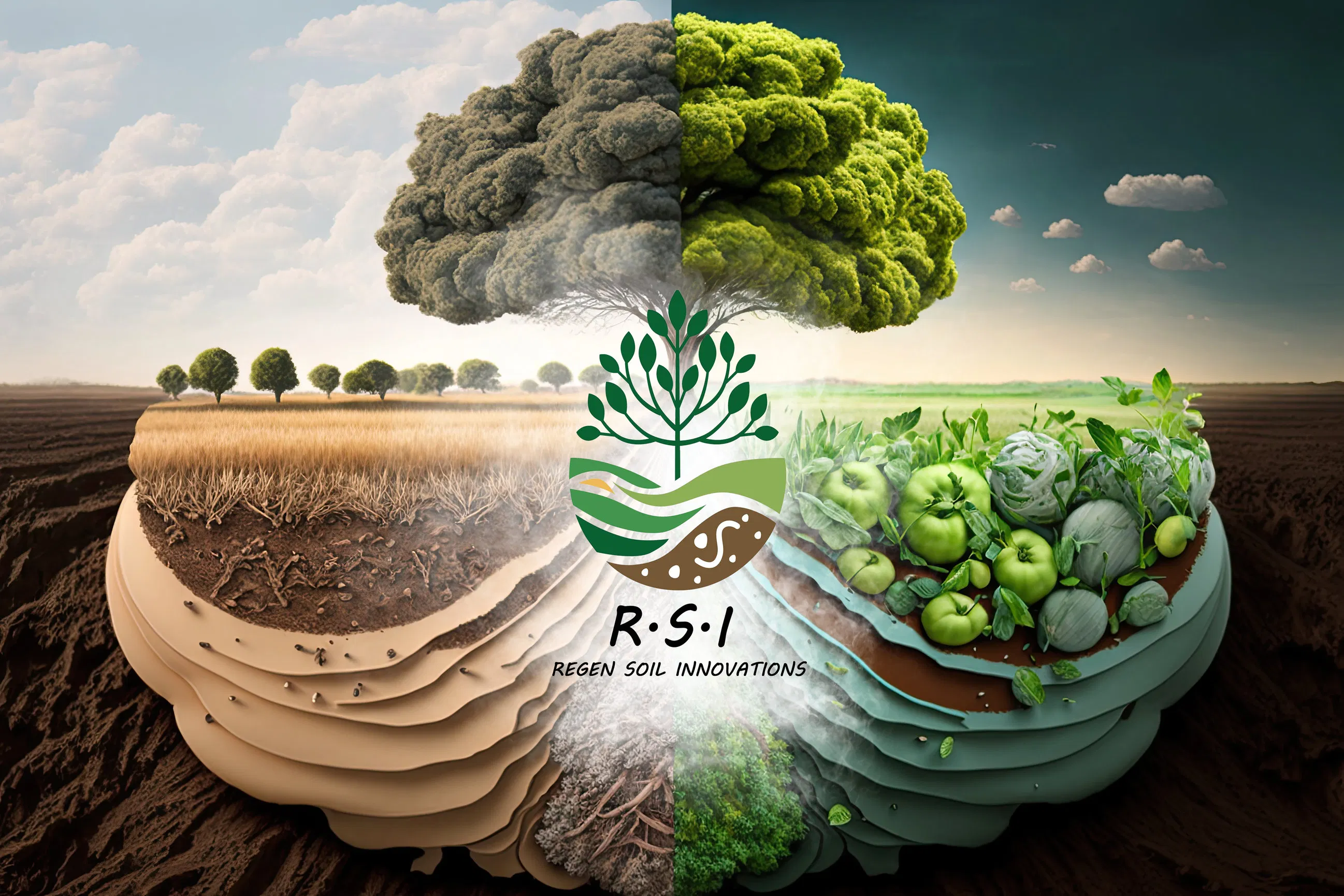
Regenerative agriculture flips this script. We view the soil as a complex adaptive system. It’s a dynamic, breathing ecosystem where plants, fungi, bacteria, and protozoa are constantly negotiating, trading, and building. When we treat soil like dirt, we destroy the infrastructure of this microscopic city. When we treat it as a living system, we’re essentially acting as the mayor of a thriving underground metropolis.
The Problem with "Dirt"
"Dirt" is what happens when soil loses its biological soul. It’s a collection of mineral particles (sand, silt, clay) without the life force to hold them together.
- Compaction: Without biology, the soil collapses.
- Erosion: Dirt washes away in the rain; living soil holds onto its structure.
- Dependency: Dirt requires constant chemical inputs because it can’t feed itself.
If you’re struggling with your garden, you might be interested in our deep dive on Living Soil vs. Super Soil to see where the industry usually gets it wrong.
Rhizo Logic®: The Underground Internet
At the heart of our philosophy is Rhizo Logic®. This isn't just a catchy brand name; it’s the science of the rhizosphere: the narrow region of soil directly influenced by root secretions and associated soil microorganisms.
Think of the plant as the "host" of a very exclusive party. The plant pumps out exudates (sugars and proteins) into the soil to attract specific bacteria and fungi. In exchange for these "snacks," the microbes go out and mine minerals, fight off pathogens, and bring water back to the plant. This is the ultimate win-win scenario.
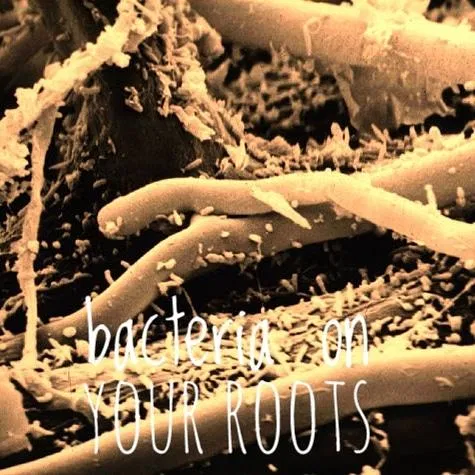
When we use Rhizo Logic® products, we aren’t just "fertilizing." We are inoculating and supporting this biological exchange. We are providing the "logic" back to the roots so they can function the way nature intended for millions of years before we showed up with bags of synthetic salts.
Why the "Extractive" Model is Failing Us
For the last century, agriculture has been extractive. We take nutrients out of the soil, ship them away as food, and "replace" them with synthetic chemicals. But you can't replace a living ecosystem with a laboratory chemical any more than you can replace a forest with a plastic Christmas tree.
This extraction has led to what we call The Empty Plate Problem. Because the soil is dead, the plants are "starving" for micronutrients, even if they look big and green. As a result, the food we eat today has significantly lower mineral content than it did 50 years ago. You can read more about why supermarket produce is losing its nutrients here.
The Pillars of Regenerative Organic Living Systems
To transition from a "dirt" mindset to a "living system" mindset, we follow a few non-negotiable rules. These aren't just suggestions; they are the laws of the land.
- Minimize Disturbance: Stop tilling! Every time you turn the soil, you’re basically running a giant blender through a coral reef. It destroys the fungal networks (mycelium) that act as the soil’s nervous system.
- Keep it Covered: Nature abhors a vacuum. Bare soil is a crime in the regenerative world. Use mulch or cover crops to protect the "skin" of the earth.
- Maximize Biodiversity: A monoculture is a desert in disguise. We want different types of roots, different types of microbes, and different types of insects.
- Maintain Living Roots: Roots feed the soil. If there are no roots in the ground, the microbes starve and the "city" goes dark.
- Incorporate Biology: Use high-quality compost, vermicompost, and microbial inoculants like our Bio-Boost to recharge the system.
Tailored Strategies: Who Are You Growing For?
Whether you're a hobbyist with a few pots or a large-scale commercial operator, the principles remain the same, though the scale changes.
For the Home Gardener (The Beginner)
If you're just starting, don't overcomplicate it. Your goal is to stop killing the good guys. Switch to a no-till approach and start using a high-quality 5-gallon living soil setup. Focus on observing your plants. Are the leaves vibrant? Is the soil spongy? You are learning to be a biological steward.
For the Experienced Grower
You likely already know about pH and NPK. Now it’s time to graduate to Soil Health Assessments. At Regen Soil, we use the ISH Assessment to look under the hood. We don't just look at the chemistry; we look at the protozoa, the nematodes, and the fungal-to-bacterial ratios. This is where you fine-tune your ecosystem for maximum terpene production or crop yield.
For Commercial Operations
Efficiency is the name of the game. Regenerative systems actually lower your long-term costs by reducing the need for pesticides and synthetic fertilizers. By building a resilient soil structure, you also reduce your water usage: a critical factor in our changing climate.
The "Why" Behind the "How": Carbon Sequestration
Here is the cool part: when you build living soil, you are literally pulling CO2 out of the atmosphere and "planting" it in the ground.
Plants breathe in carbon dioxide. Through photosynthesis, they turn that carbon into sugars. They pump those sugars into the soil to feed the microbes (the Rhizo Logic® process). Those microbes then turn that carbon into stable organic matter. Regenerative agriculture is one of the most effective tools we have to fight climate change because it turns our farms and gardens into massive carbon sinks.

Practical Evidence: The RSI Method
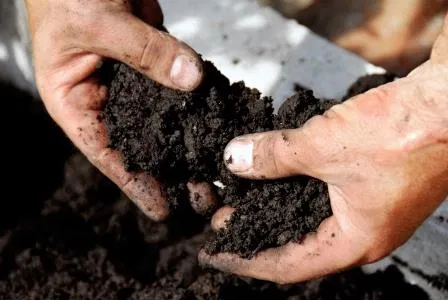
We don't just talk the talk; we've developed the RSI Method. This is our proprietary approach to soil restoration. We’ve seen dead, clay-heavy fields transformed into crumbly, dark, chocolate-cake-like soil in just a few seasons.
It starts with an initial assessment, followed by a customized biological roadmap. We don't believe in "one size fits all" because every piece of land has a different history and a different microbial "zip code."
Frequently Asked Questions
Q: Is regenerative organic the same as "organic"?
A: Not quite. "Organic" usually just means you aren't using prohibited synthetic chemicals. You can still farm "organically" while tilling the life out of the soil and destroying biodiversity. Regenerative goes a step further by actively improving the land rather than just avoiding toxins.
Q: Can I really grow big yields without synthetic fertilizers?
A: Absolutely. In fact, some of the highest-quality, most nutrient-dense crops in the world come from living soil systems. Once the biology is balanced, the plants have access to a "buffet" of nutrients 24/7, rather than being "force-fed" salts once a week.
Q: How long does it take to see results?
A: You’ll see changes in plant health almost immediately after introducing microbial boosts. However, true soil restoration: the kind that changes the actual structure of your earth: is a multi-year journey. Think of it as an investment in a 401(k) for your land.
Join the Revolution
The shift from "dirt" to "living system" is more than a gardening trend; it's a fundamental change in how we relate to the planet. By embracing Regenerative Organic Living Systems, we are choosing health, resilience, and flavor over extraction and depletion.
Are you ready to stop treating your soil like dirt? We’re here to help you navigate the microscopic world. Check out our soil health services or meet Jeremy to learn more about our mission at Regen Soil.
What’s your biggest struggle with your soil? Drop a comment below or reach out for a consultation. Let’s bring your soil back to life!


