
The Ultimate Guide to Soil Health Assessment: Everything You Need to Succeed with Regenerative Farming
By Jeremy Standring
At Regen Soil, we believe that the foundation of every successful agricultural venture: whether it is a backyard organic garden or a large-scale commercial operation: lies in the complex, biological engine beneath our feet. For too long, conventional agriculture has treated soil as an inert medium, a mere anchor for plants to be force-fed synthetic NPK.
Regenerative agriculture flips this script. It recognizes soil as a dynamic, living ecosystem. To manage this ecosystem effectively, we must first understand it. This requires more than a simple pH test; it demands a comprehensive Soil Health Assessment. In this guide, we will walk you through the frameworks, technical indicators, and practical steps necessary to diagnose your soil and chart a path toward true soil restoration.
Understanding the "Systems-Thinking" Approach to Soil
When we assess soil health, we aren't just looking at nutrient levels. We are looking at the Rhizosphere, the narrow region of soil directly influenced by root secretions and associated soil microorganisms. We view soil through three interconnected pillars:
- Biological Vitality: The presence and activity of bacteria, fungi, protozoa, and nematodes.
- Physical Structure: How soil particles are arranged, affecting aeration, water infiltration, and root penetration.
- Chemical Balance: The availability of essential minerals and the absence of toxicities.
In a healthy system, these pillars work in harmony with nature. For example, fungi produce glomalin, a biological "glue" that creates physical aggregate stability, which in turn allows for better chemical exchange. By focusing on living soil, we move away from reactive "problem-solving" and toward proactive ecosystem management.
Comparison: Laboratory Analysis vs. In-Field Assessment
A common question we receive is: "Do I need a lab test, or can I just look at my soil?" The answer is that we recommend a combination of both. Each provides different layers of data.
In-Field Visual Assessment (The "Hands-On" Method)
- Pros: Immediate results, zero cost, fosters a deep connection with the land.
- Cons: Subjective, cannot measure specific nutrient concentrations or microscopic microbial ratios.
- Best for: Weekly monitoring, checking for compaction, and observing residue breakdown.
Laboratory Soil Health Analysis (The "Scientific" Method)
- Pros: Precise data on active carbon, microbial biomass, and mineral availability. Provides a baseline for long-term tracking.
- Cons: Financial investment, time delay for results.
- Best for: Seasonal benchmarking, identifying hidden deficiencies, and designing precise restoration protocols.
We suggest using our Initial Soil Health (ISH) Assessment to bridge the gap between these two methods, ensuring you have a data-backed roadmap for your specific environment.
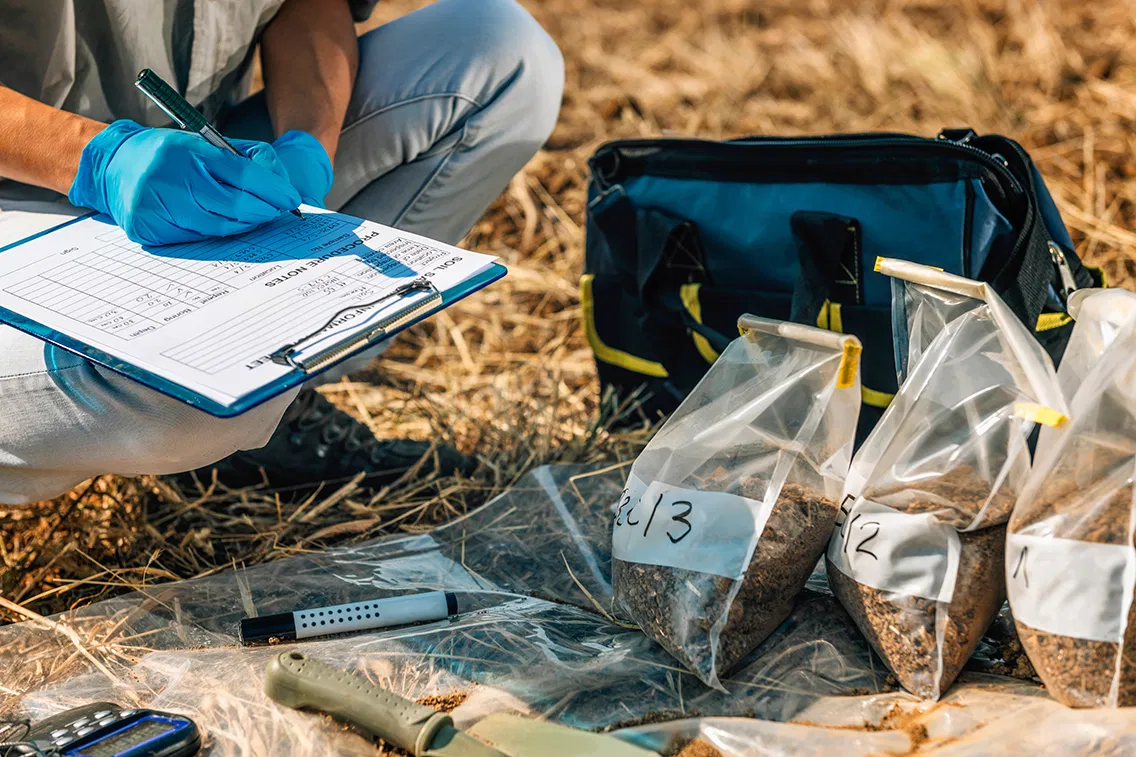
Step-by-Step Guide to In-Field Assessment
Before sending samples to a lab, we encourage every grower to perform a "spade test." Here is how we recommend you conduct your own in-field assessment:
1. The Smell Test
Healthy soil should have a rich, earthy aroma. This scent comes from actinomycetes, a group of soil bacteria that produce geosmin. If your soil smells sour, metallic, or like rotten eggs, it is likely anaerobic (lacking oxygen), which indicates a collapse in physical structure.
2. Root Architecture Observation
Carefully dig up a plant and examine the roots. We look for dense, white root growth and the presence of a "rhizosheath": soil that clings to the roots. This indicates active microbial interaction. If the roots are brown, stunted, or growing horizontally, you are likely facing compaction issues.
3. Soil Structure and Aggregation
Break a clump of soil apart. Does it crumble like chocolate cake (good aggregation), or does it break into hard, sharp-edged plates (compaction)? Aggregate stability is critical for nutrient cycling and water retention.
Deep Dive: The Microscopic Architects of Soil Health
While physical observations are vital, the real magic happens at the microscopic level. To truly succeed with regenerative agriculture, you must understand the role of soil biology.
The root microbiome consists of billions of organisms that act as the plant’s external digestive system. Beneficial bacteria and fungi solubilize minerals, making them "bioavailable" to the plant. This is the core philosophy behind our Rhizo Logic® line of living soil products. By introducing diverse microbial populations, we kickstart the natural processes that have been suppressed by conventional tillage and chemical use.

Key Indicator: Active Carbon
One of the most important metrics in a Soil Health Assessment is Active Carbon (permanganate oxidizable carbon). Unlike total organic matter, which can take years to change, active carbon represents the fraction of organic matter that is readily available as a food source for microbes. It is a "leading indicator" that tells us if your management practices are trending toward sequestration or depletion.
Strategies for Different Growers
For Beginners
If you are just starting, don't get overwhelmed by the jargon. Focus on keeping the soil covered. Use cover crops or mulch to protect the soil surface from erosion and temperature spikes. Start with a high-quality living soil like our 5gal Living Soil to see the difference that biological diversity makes firsthand.
For Experienced Growers
For those already practicing organic methods, the next step is optimization. We recommend monitoring your fungal-to-bacterial (F:B) ratios. Most vegetable crops prefer an F:B ratio near 1:1, while perennial systems lean more fungal. You can influence these ratios through specific compost teas or by using Bio-boost, a Terrabiotics product designed to stimulate microbial activity and enhance nutrient cycling.
For Commercial Operations
In a commercial setting, efficiency and ROI are paramount. We utilize real-time data monitoring to ensure stability. Tools like the Regen Soil Pulse provide instant feedback on moisture, temperature, and electrical conductivity (EC), allowing for precision management of large-scale soil restoration projects.

The Transition: From Depletion to Regeneration
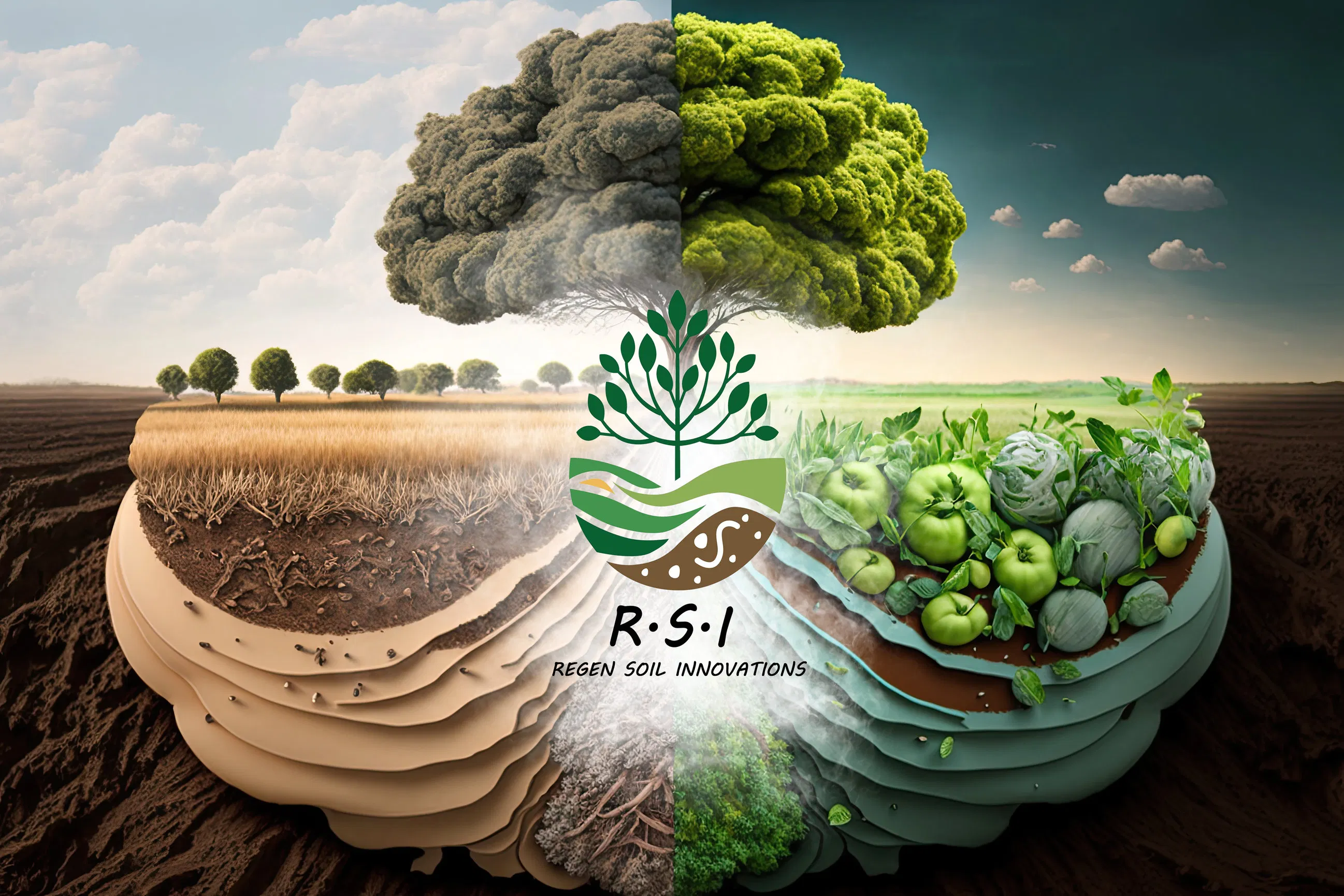
The goal of a Soil Health Assessment is to facilitate a transition. On the left, we often see degraded soils: capped surfaces, no visible life, and a reliance on synthetic inputs. On the right, through the RSI Method, we see a thriving ecosystem capable of self-regulation.
Frequently Asked Questions (FAQ)
Q: How often should I perform a Soil Health Assessment?
A: We recommend a comprehensive laboratory assessment once a year, preferably in the spring or fall when microbial activity is peak. In-field visual checks should be done monthly during the growing season.
Q: Can I restore soil that has been treated with chemicals for years?
A: Absolutely. Soil restoration is a journey, not an overnight event, but by introducing Rhizo Logic® microbes and organic matter, we have seen remarkable turnarounds in just one or two seasons.
Q: What is the difference between Bio-boost and Rhizo Logic?
A: Rhizo Logic® refers to our brand of Living Soil products which focus on establishing the microbial foundation. Bio-boost is a specific Terrabiotics product used to provide a concentrated "boost" of biological catalysts to accelerate plant growth and soil activity.
Q: Does soil texture (clay vs. sand) affect my assessment?
A: Yes. Indicators like available water capacity and aggregate stability are scored differently based on your soil’s texture. We always identify your soil class as the first step in any assessment.
Moving Forward with Regen Soil
Assessing your soil health is the first step in reclaiming the vitality of your land. By moving away from a "chemical-first" mindset and embracing the complexity of living soil, you are ensuring the long-term sustainability of your garden or farm.
If you are ready to take a deep dive into your soil's potential, we invite you to explore our Initial Soil Health Assessment or browse our blog for more technical guides on regenerative practices.

What have you noticed in your soil lately? Have you seen an increase in earthworms or a change in soil color? Share your observations in the comments below, or reach out to us for personalized guidance on your regenerative journey. Together, we can restore the earth, one handful of soil at a time.


