
The Ultimate Guide to Soil Health Assessment: Everything You Need to Succeed with Regenerative Agriculture
By Jeremy Standring
For decades, the standard approach to soil management was simple: test for Nitrogen (N), Phosphorus (P), and Potassium (K), then apply synthetic fertilizers to fill the gaps. But as we move further into 2026, the agricultural community has realized that this reductive "chemistry-only" view is incomplete. To truly achieve soil restoration, we must view the soil as a living, breathing ecosystem rather than a sterile medium for chemical reactions.
At Regen Soil, we believe that you cannot manage what you do not measure. A comprehensive soil health assessment is the cornerstone of regenerative agriculture. It provides the data necessary to transition from high-input dependency to a self-sustaining system driven by living soil. In this guide, we will break down the essential metrics, the tools of the trade, and the "why" behind biological monitoring.
Why Traditional Testing Falls Short
Standard soil tests often focus on "plant-available" nutrients. While useful, these tests offer a mere snapshot of a single moment in time. They fail to account for the microbial populations that unlock minerals tied up in the soil profile.
In a regenerative system, we aren't just looking at what is in the soil; we are looking at how the soil functions. Does it cycle nutrients efficiently? Does it hold water during a drought? Does it resist erosion during a flood? To answer these questions, we must look beyond chemistry and into the physical and biological realms.

The Three Pillars of Soil Health Assessment
We categorize soil health into three distinct but interconnected pillars. A true assessment must evaluate all three to provide a holistic view of the ecosystem.
1. Physical Indicators: The Infrastructure
Physical health relates to the soil’s structure and its ability to provide habitat for roots and microbes.
- Aggregate Stability: This measures how well soil particles stay together when exposed to water. High stability means less crusting and better infiltration.
- Infiltration Rate: The speed at which water enters the soil. Poor infiltration leads to runoff and wasted resources.
- Bulk Density and Compaction: We use penetrometers to identify "hardpans" that restrict root growth and oxygen exchange.
2. Chemical Indicators: The Nutrient Pool
While we move away from chemistry-exclusive models, chemical balance remains vital for biological activity.
- pH Levels: Extreme acidity or alkalinity can "lock up" nutrients and kill beneficial microbes.
- Cation Exchange Capacity (CEC): This measures the soil's ability to hold onto essential nutrients.
- Electrical Conductivity (EC): An indicator of salinity and nutrient concentration.
3. Biological Indicators: The Engine Room
This is the heart of living soil. Biology is what differentiates a handful of dirt from a thriving ecosystem.
- Soil Organic Matter (SOM): The carbon-based reservoir that feeds life and stores water.
- Soil Respiration: A measure of CO2 burst, indicating how active your microbial communities are.
- Microbial Diversity: The balance between fungi and bacteria. High-functioning regenerative systems often require a higher fungal-to-bacterial ratio.
In-Field vs. Laboratory Assessments
We recommend a hybrid approach. In-field tests provide immediate feedback and allow for rapid adjustments, while laboratory tests offer the technical depth required for long-term planning.
The Power of Field-Based Observation
You don't always need a lab to see if your soil is improving. We encourage every grower to perform a "Spade Test" annually. By digging a 12-inch pit, you can observe:
- Root Architecture: Are roots growing deep and straight, or are they hitting a compaction layer and turning sideways?
- Color and Smell: Healthy, carbon-rich soil is dark and has a pleasant, earthy aroma (geosmin), signaling active Rhizo Logic® processes.
- Macrofauna: The presence of earthworms is a primary indicator of biological health.

Advanced Laboratory Metrics: The Haney Test
When we conduct an Initial Soil Health Assessment, we often utilize the Haney Test. Unlike conventional tests, the Haney Test uses nature’s own extractants (organic acids) to determine what is truly available to the plant. It calculates a "Soil Health Score" by integrating microbial respiration with water-extractable organic carbon and nitrogen. This tells us exactly how much "fuel" is in the microbial tank.
Comparative Analysis: Conventional vs. Regenerative Assessment
| Feature | Conventional Soil Test | Regen Soil Health Assessment |
|---|---|---|
| Primary Focus | N-P-K Levels | Biological Function & Ecosystem Health |
| Nutrient View | Chemical Extraction | Bio-Availability & Microbial Cycling |
| Water Logic | Irrigation Requirements | Infiltration & Water Holding Capacity |
| Management Goal | Short-term Yield | Long-term Soil Restoration & Resilience |
| Cost Logic | Low upfront, high input costs | Investment in data to reduce input costs |
The Role of Living Soil and Terrabiotics
Once an assessment identifies a biological void, we must take action to restore the "engine." This is where specific interventions come into play.
Rhizo Logic®: Establishing the Living Soil Foundation
If your assessment shows low microbial diversity or poor root colonization, we look toward Rhizo Logic®. This isn't just a fertilizer; it is a complex of living biology designed to jumpstart the soil's natural cycles. By introducing beneficial microbial populations, we help the plant build a robust "Rhizosphere": the area of soil directly influenced by root secretions.

Bio-boost: The Terrabiotic Catalyst
For soils that have existing biology but lack the "energy" to perform, we recommend Bio-boost (also known as Terrabiotics). While Rhizo Logic provides the life, Bio-boost acts as the high-octane fuel for those microbes. It enhances the soil's metabolic rate, accelerating the breakdown of organic matter and the sequestration of carbon.
Systems Thinking: Managing the Transition
Regenerative agriculture is a journey, not a destination. We use the RSI Method (Regen Soil Innovations) to guide our clients through this transition. The process follows a logical flow:
- Assess: Establish the baseline using the metrics discussed above.
- Intervene: Apply living soil products like Rhizo Logic® Living Soil or Terrabiotics to address deficiencies.
- Monitor: Use digital sensors and repeat testing to track progress.
- Refine: Adjust management practices (like cover cropping or reduced tillage) based on real-time data.
Roadmap for Beginners and Commercial Operations
For Beginners: Start with a spade and a bucket. Learn to identify the physical signs of health. If you are growing in containers or small plots, consider our 5-gallon Living Soil kits to see the difference biology makes firsthand.
For Experienced Growers: It is time to move into data-driven precision. Integrating real-time moisture and EC sensors can help you see how your soil restoration efforts are impacting water efficiency daily.
For Commercial Operations: Focus on the Haney Test and PLFA (Phospholipid Fatty Acid) analysis. These provide the scientific rigour needed to justify the reduction of synthetic N-P-K and the transition to biological inputs on a large scale.
Frequently Asked Questions (FAQ)
Q: How often should I perform a full soil health assessment?
We recommend a deep-dive laboratory assessment once every 2–3 years, supplemented by annual in-field visual checks and "CO2 burst" respiration tests.
Q: Can I do these assessments in the winter?
Biological assessments are best performed when the soil is active (above 55°F). Testing frozen or dormant soil will give you skewed results regarding microbial activity.
Q: Is "Living Soil" the same as organic soil?
Not necessarily. Organic soil refers to the absence of synthetic chemicals. Living Soil refers to the presence of active, diverse microbial communities. You can have an "organic" soil that is biologically dead.
Q: Will testing help me save money on fertilizer?
Absolutely. Many of our clients find that after a proper assessment, they can reduce their nitrogen applications by 20-40% because they are finally accounting for the nutrients being cycled by the biology.
Take the First Step in Your Restoration Journey
Understanding your soil is the most important investment you can make in your land. Whether you are a backyard gardener or a broad-acre farmer, the principles of regenerative agriculture remain the same: feed the soil, and the soil will feed the plant.
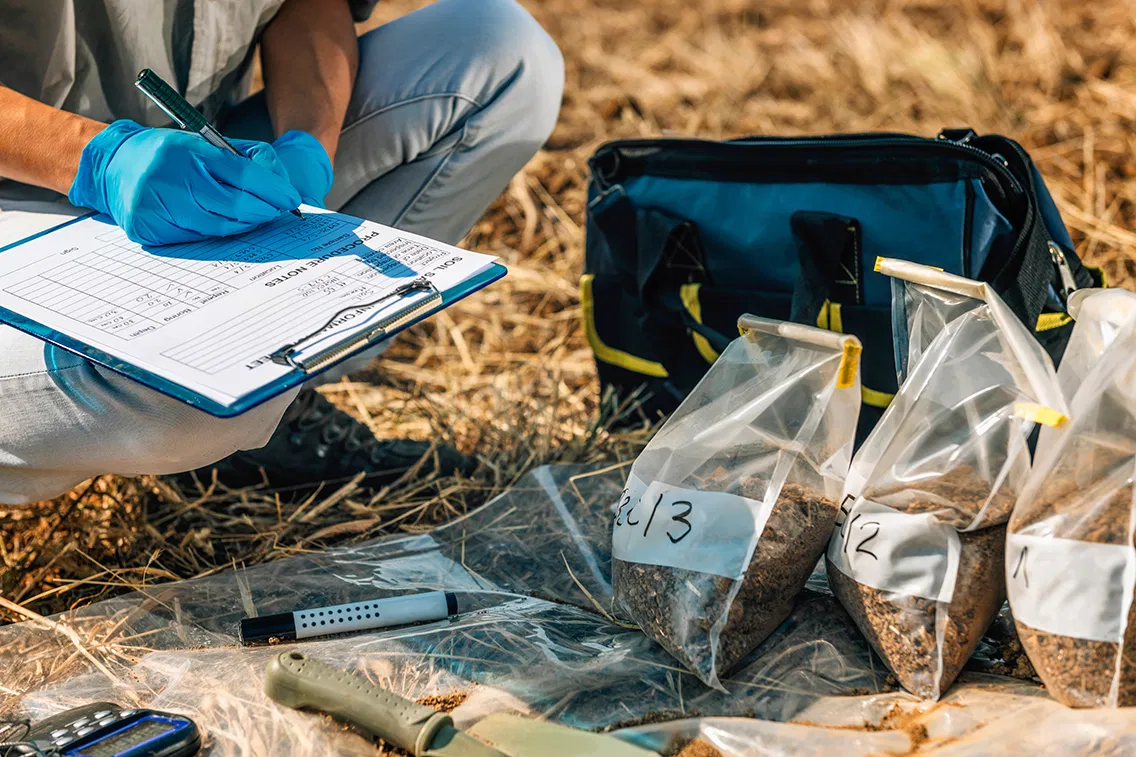
If you’re ready to move beyond basic chemistry and embrace the power of biology, we are here to help. Our team can assist you in interpreting complex lab results and designing a custom restoration plan tailored to your specific environment.
What is the biggest challenge you've faced when trying to understand your soil's health? Leave a comment below, or contact us directly to start your Initial Soil Health Assessment.


