The Proven Soil Restoration Framework: 5 Real-World Success Stories That Actually Worked
By Jeremy Standring
For decades, the narrative around agriculture has been one of extraction. We take from the land, apply synthetic inputs to replace what’s lost, and hope for a yield that pays the bills. But at Regen Soil, we look at things differently. We don’t see soil as a passive medium for holding up plants; we see it as a complex, breathing biological engine. When that engine breaks down, through erosion, chemical dependency, or compaction, you can’t just put more fuel in the tank and expect it to run. You have to restore the mechanics of the ecosystem.
We call this regenerative agriculture, and it’s not just a buzzword. It is a systematic approach to rebuilding the "living" component of your land. Whether you are managing a 5,000-acre commercial operation or a backyard patio garden, the framework for success remains remarkably consistent.
In this guide, we’re going to pull back the curtain on the RSI Method (Regen Soil Innovations) and share five real-world success stories where this framework turned "dirt" back into living soil.
The Regen Soil Restoration Framework
Before we dive into the success stories, it is critical to understand the framework we use to achieve these results. Soil restoration isn’t guesswork; it’s a sequence of biological and chemical interventions.
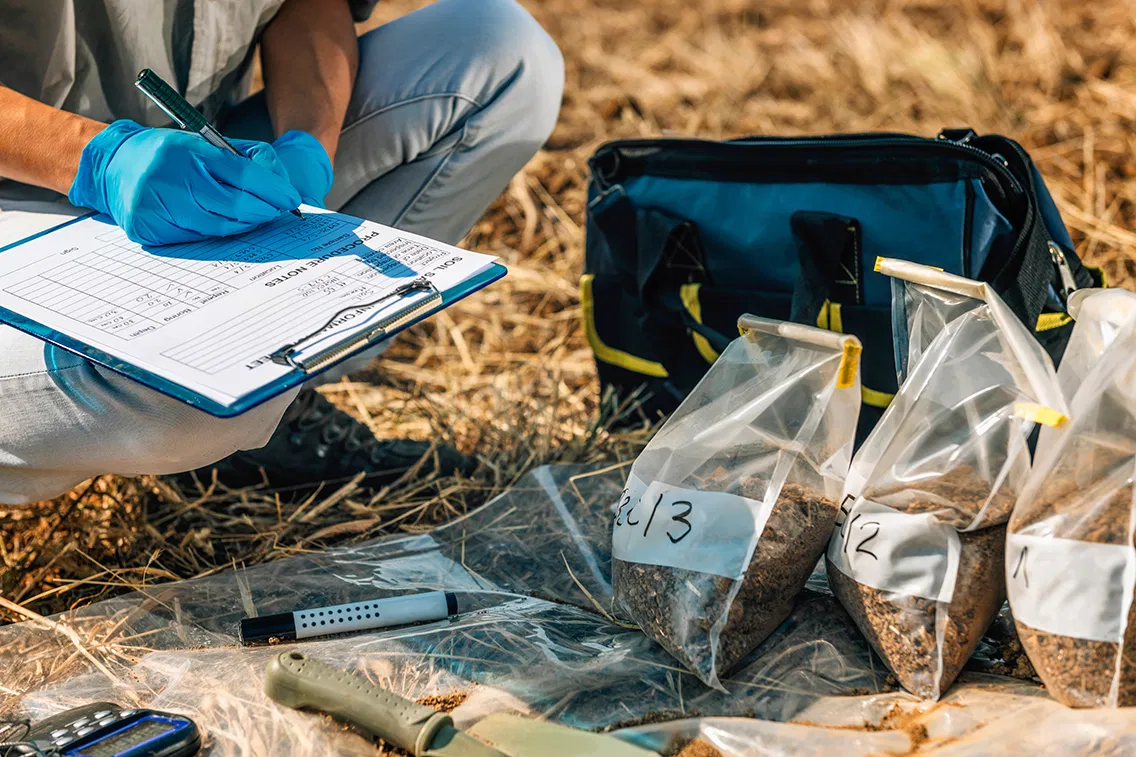
- The Initial Soil Health (ISH) Assessment: We start by measuring the baseline. You cannot manage what you do not measure. This involves looking at microbial populations, nutrient cycling capacity, and organic matter levels.
- Biological Inoculation (Rhizo Logic®): Most degraded soils are "biologically apathetic." We reintroduce specialized microbial communities, specifically fungi and beneficial bacteria, to restart the nutrient cycle. We call our living soil products Rhizo Logic®.
- Nutrient Density & Support (Bio-boost): Microbes need food and a stable environment. We utilize Bio-boost (our Terrabiotics line) to provide the secondary metabolites and micronutrients that act as a catalyst for microbial growth.
- Systems Monitoring: Using tools like the Regen Soil Pulse, we monitor moisture, temperature, and EC (Electrical Conductivity) to ensure the environment stays hospitable for the new biology.
- Adaptive Management: We adjust practices (like cover cropping or reduced tillage) based on real-time data.
5 Real-World Success Stories
1. Circolar4Umus (Italy): Reversing Hilly Erosion
In Grezzana, Italy, farmers faced a massive challenge: steep terrain and significant soil loss. The traditional methods were failing, and the topsoil was literally washing away with every heavy rain.
The Solution: The team implemented a circular economy framework. They didn't just stop the erosion; they rebuilt the soil structure using vermicomposting and biochar. By creating a "closed-loop" system where bio-waste was converted into soil amendments, they restored the soil's aggregate stability.
The Result: The integration of bio-waste and specialized microbial support allowed the hillsides to hold water more effectively, reducing runoff by over 40% and creating a stable base for reforestation and viticulture.
2. The Quipar Valley Project (Spain): Large-Scale Aquifer Recovery
Spanning 30,000 hectares, the Quipar Valley was a textbook case of industrial degradation. High nitrate pollution and aquifer depletion were threatening the region's entire agricultural future.
The Solution: We often talk about regenerative agriculture on a small scale, but Quipar proved it works at a massive scale. By shifting to a framework focused on biological nitrogen fixation rather than synthetic applications, they reduced nitrate leaching into the groundwater.
The Result: Soil organic matter increased across the valley, leading to significantly better water infiltration. This slowed the depletion of the local aquifer and proved that large-scale soil restoration is the only path to long-term water security.
3. Ryan Britt (USA): The Precision Data Model
Ryan Britt is a farmer who understands that "gut feeling" isn't enough in the 21st century. His challenge was optimizing inputs across a diverse landscape where some areas were thriving and others were stagnant.
The Solution: Ryan utilized a grid-based Initial Soil Health Assessment. By mapping the microbial and chemical needs of specific zones, he could apply biologicals like our Rhizo Logic® products only where they were needed most.
The Result: This precision approach allowed for a significant reduction in commercial fertilizer costs while increasing crop diversity and resilience. Ryan’s farm became a lighthouse for data-driven soil health.
4. The Gezer Region (Israel): Collaborative Restoration
In Israel, the Gezer Regional Council manages over 1,200 hectares. The challenge here wasn't just the soil, it was the coordination between dozens of different stakeholders with different goals.
The Solution: They built a collaborative stakeholder platform. By standardizing their soil restoration framework, focusing on living soil principles, everyone from the municipality to the individual farmer was working toward the same biological targets.
The Result: The region saw a massive spike in community awareness and a measurable improvement in soil vitality across shared lands. This proved that soil restoration is as much a social effort as it is a biological one.
5. The Reddick Family (USA): No-Till and Drought Resilience
The Reddick family faced a recurring nightmare for many farmers: drought. In degraded soil, water just sits on top or runs off, never reaching the roots.
The Solution: They transitioned to a strict no-till system combined with diverse cover cropping. By focusing on the "underground economy", the relationship between roots and fungi, they built a soil "sponge." They effectively used the same principles we bake into our RSI Method.
The Result: Their soil infiltration rates skyrocketed. During the next dry spell, while neighbors' crops were curling, the Reddick crops remained green. They had successfully built drought insurance through biology.
Deep Dive: Why the "Living" Component is Non-Negotiable
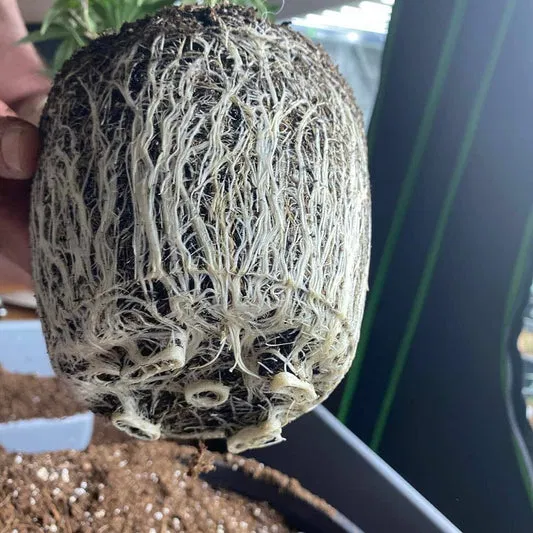
When we talk about living soil, we aren’t just being poetic. We are referring to the rhizosphere, the area around plant roots where the most intense biological activity occurs.
In a degraded system, the microbial bridge is broken. Plants can't "talk" to the soil to ask for nutrients, and the soil can't deliver them. This is where Rhizo Logic® comes in. By reintroducing beneficial microbes, we restore that communication line.
However, biology alone isn't always enough if the soil chemistry is hostile. That’s why we use Bio-boost (Terrabiotics). Think of Bio-boost as the "infrastructure" for the microbes. It provides the essential minerals and organic acids that allow the Rhizo Logic® microbial colonies to establish themselves and thrive.
Advice for Different Growers
For Beginners (The Patio Gardener)
Don't get overwhelmed by the large-scale case studies. The same principles apply to your pots. Start with a high-quality 5-gallon living soil and focus on keeping your moisture levels consistent. You are a "micro-rancher" tending to a herd of microbes.
For Experienced Growers
If you've been using organic methods but have hit a plateau, it’s likely a monitoring issue. Use the Regen Soil Pulse to track your EC levels. High EC can indicate salt buildup that suppresses your biology, even if those salts come from organic fertilizers.
For Commercial Operations
The Quipar Valley and Ryan Britt examples show that scale is your friend, not your enemy. The RSI Method is designed to integrate with your existing equipment. The transition to regenerative shouldn't be a "flip of the switch" that risks your yield; it should be a phased integration of biologicals and data-driven assessments.

Systems-Thinking: The Big Picture
At Regen Soil, we believe that soil restoration is the cornerstone of solving our most pressing environmental issues. Carbon sequestration, water security, and nutrient density in our food all start with the microbiome. When we restore a farm, we aren't just helping one farmer; we are cooling the local climate and cleaning the local water.
FAQ: Soil Restoration Common Questions
Q: How long does it take to see results from the soil restoration framework?
A: While total restoration can take 3-5 years, you will often see changes in water infiltration and plant vigor within the first growing season after applying Rhizo Logic® and Bio-boost.
Q: Is "Living Soil" the same as potting soil?
A: No. Standard potting soil is often sterile or contains synthetic slow-release fertilizers. Living soil is a bio-active medium teeming with the fungi and bacteria necessary for natural nutrient cycling.
Q: Do I need to stop using all fertilizers?
A: Not necessarily. The goal is to reduce dependency on synthetic fertilizers that kill soil biology. We recommend transitioning to biological-friendly inputs that support the ecosystem rather than bypassing it.
Q: What is the most important metric in an ISH Assessment?
A: While many focus on N-P-K, we look closely at the Fungal to Bacterial (F:B) ratio. Most degraded soils are bacterial-dominant; restoring the fungal component is key to long-term carbon storage and structure.
Ready to Start Your Success Story?
Whether you’re dealing with an acre of garden or a thousand acres of corn, the path back to vitality is the same. We are here to help you navigate that transition.

Explore our resources or book a consultation today:
- Learn more About Regen Soil.
- Check out our Rhizo Logic® Living Soil products.
- Start with an Initial Soil Health Assessment.
Got a question about your specific soil type? Drop a comment below or reach out to us directly. Let’s grow something better together.