
The Proven Bio-Complete Framework: How Our Customers Achieved Total Soil Restoration
By Jeremy Standring
At Regen Soil, we have spent years observing a recurring tragedy in modern agriculture: the reliance on sterile, inert media that requires a constant "IV drip" of synthetic nutrients to sustain life. This approach isn't just expensive; it is ecologically bankrupt. We believe that the path to true agricultural success, whether you are a hobbyist or a commercial operator, lies in the restoration of the Soil Food Web.
Our customers have achieved remarkable results by moving away from chemical dependency and adopting our Bio-Complete Framework. This systems-thinking approach treats the soil as a living, breathing organism rather than a static holding tank for minerals. In this guide, we will break down the exact steps and biological principles our customers use to transform depleted dirt into high-performing, regenerative ecosystems.
From Inert Dirt to Living Soil: Defining the Shift
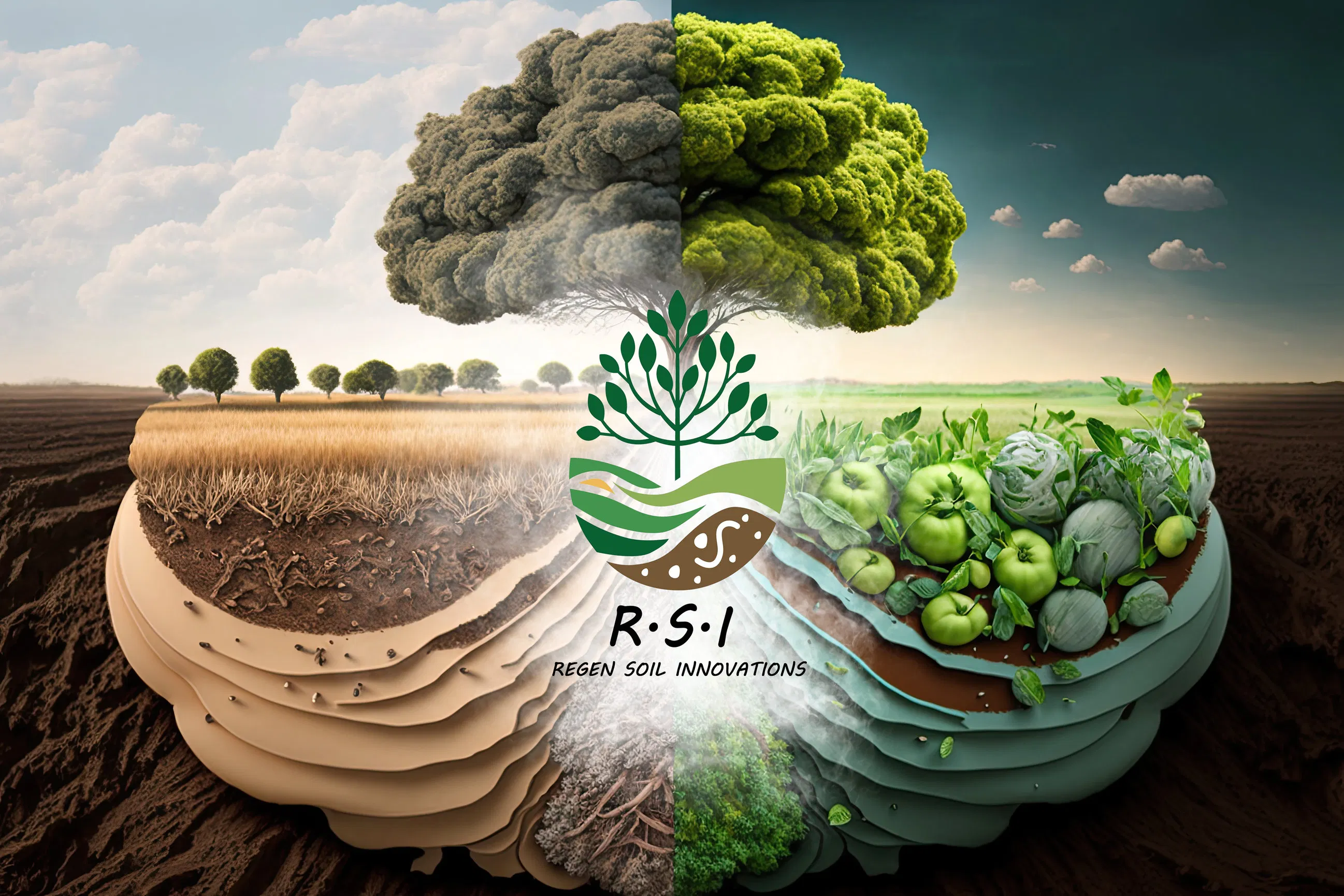
The fundamental difference between "dirt" and "soil" is life. Most conventional growing media are biologically "quiet," meaning they lack the complex microbial communities required for natural nutrient cycling. When we speak of Total Soil Restoration, we are referring to the reintroduction and cultivation of a complete biological profile, including bacteria, fungi, protozoa, and beneficial nematodes.
The Role of Rhizo Logic® in the Framework
In our framework, we utilize Rhizo Logic®, our proprietary approach to Living Soil, as the foundational matrix. Unlike standard potting mixes, Rhizo Logic® is designed to be a "bio-complete" environment. It provides the physical structure and the initial microbial inoculants necessary to kickstart the RSI Method.
The Three Pillars of Total Soil Restoration
We have identified three critical pillars that must be addressed to achieve total restoration. If one is missing, the system eventually collapses.
1. Microbial Diversity (The Engine)
The core of our framework is the reintroduction of beneficial microorganisms. We focus specifically on the fungal-to-bacterial (F:B) ratio. In many degraded soils, bacteria dominate, leading to rapid nutrient leaching and high pH levels. By increasing fungal biomass, we help our customers create stable soil aggregates and long-term carbon sequestration.
For those looking to understand the intricacies of these ratios, we recommend our deep dive on finding balance below.
2. Biological Fuel (Terrabiotics)
Microbes cannot survive on a "clean" diet. They require complex carbon sources and biostimulants. This is where Bio-boost, a cornerstone of our Terrabiotics line, comes into play. Bio-boost acts as a high-energy fuel source that accelerates microbial reproduction, ensuring that the biology you introduce actually takes hold and thrives.
3. Structural Integrity and Aeration
Soil compaction is the enemy of biology. Without pore space, anaerobic conditions take over, leading to root rot and pathogens. Our customers use a blend of physical amendments and biological "architects", like protozoa, to maintain soil structure. You can learn more about these microscopic engineers in our article on soil protozoa.

Case Study: The Commercial Transition
We recently worked with a mid-sized facility that was struggling with rising fertilizer costs and recurring pest outbreaks. Their soil was virtually sterile, and their plants were showing signs of chronic stress.
The Assessment:
We began with an Initial Soil Health Assessment (ISH). The results confirmed our suspicions: zero fungal activity and a complete absence of predator microbes (protozoa).
The Strategy:
- Inoculation: We replaced their spent media with Rhizo Logic® Living Soil.
- Activation: We implemented a weekly regimen of Bio-boost to fuel the transition.
- Monitoring: We used real-time data to track moisture and microbial activity.
The Result:
Within one cycle, the client reported a 30% reduction in water usage and a complete elimination of the need for synthetic NPK inputs. By restoring the biology, the plants were able to access "locked" minerals in the soil, leading to higher brix levels and improved terpene profiles.
Technical Deep Dive: The Science of Nutrient Cycling
Why does the Bio-Complete Framework work? It comes down to Nutrient Cycling. In a conventional system, the grower is the "delivery driver," bringing nutrients to the plant. In a Bio-Complete system, the microbes are the "miners" and "chemists."
- Bacteria and Fungi consume organic matter and minerals, storing them in their bodies.
- Protozoa and Nematodes eat the bacteria and fungi.
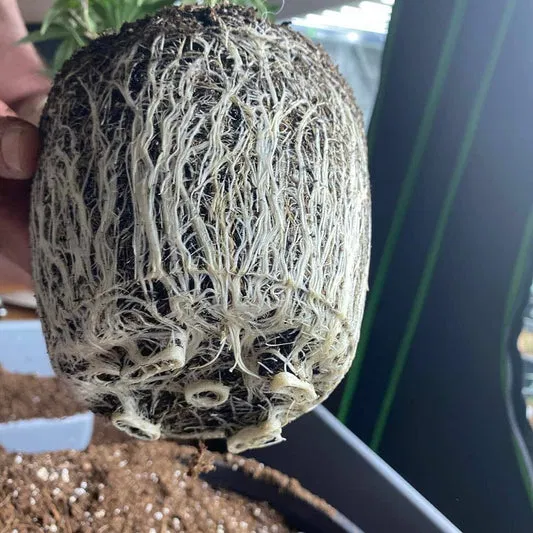
- Waste Products from this predation are excreted in a plant-available form directly at the root zone (the rhizosphere).
This process is what we call "Rhizo Logic." It ensures that the plant gets exactly what it needs, when it needs it, without the risk of nutrient burn or salt buildup.
Step-by-Step: How to Apply the Framework Today
Whether you are a beginner or an experienced grower, the steps to restoration remain consistent.
For Beginners: Starting Small
If you are just starting, don't overcomplicate it.
- Start with the right base: Use a high-quality Living Soil.
- Add Fuel: Incorporate Bio-boost into your watering schedule once a week.
- Protect the Surface: Use cover crops to keep the soil biology protected from light and temperature swings. (See our Cover Crop Guide).
For Commercial Operations: Scaling Biology
Scale requires precision.
- Baseline Testing: You cannot manage what you do not measure. Start with an ISH Assessment.
- System Integration: Integrate microbial brewing stations to apply liquid biology across large canopy areas.
- Data-Driven Adjustments: Use soil sensors to ensure your moisture levels stay within the "Goldilocks zone" for microbial life.

Comparative Analysis: Conventional vs. Bio-Complete
| Feature | Conventional Agriculture | Bio-Complete Framework |
|---|---|---|
| Nutrient Source | Synthetic Salts (NPK) | Microbially Cycled Organic Matter |
| Soil Structure | Degrades over time | Improves over time (Aggregation) |
| Water Retention | Low (High Runoff) | High (Microbial Glues) |
| Pest Resistance | Chemical Dependency | Systemic Acquired Resistance (SAR) |
| Cost | Increasing (Input heavy) | Decreasing (System-led) |
Frequently Asked Questions (FAQ)
Q: Can I use Bio-boost with synthetic fertilizers?
A: We do not recommend it. Synthetic salts can dehydrate and kill the very microorganisms that Bio-boost is designed to feed. To see the full benefits of our Terrabiotics line, it is best to transition to a biological approach.
Q: How long does total soil restoration take?
A: While you will see improvements in plant vigor within weeks, true soil restoration, where the ecosystem becomes self-sustaining, typically takes 12 to 24 months of consistent management using the RSI Method.
Q: Is Rhizo Logic® suitable for all plants?
A: Yes. While we focus heavily on high-value crops like cannabis, the principles of the Soil Food Web apply to all terrestrial plants. From vegetable gardens to orchards, biology is the universal language of health.
Q: How do I know if my soil is "Bio-Complete"?
A: The most accurate way is through microscopy. Our Soil Health Assessment provides a detailed breakdown of the organisms present in your soil, allowing us to give you a tailored roadmap for restoration.
Join the Regeneration
Total soil restoration is not a myth; it is a biological certainty when you follow a proven framework. By combining the physical excellence of Rhizo Logic® products with the biological power of Bio-boost, we are helping growers everywhere step away from the chemical treadmill and back into harmony with nature.
If you're ready to see what your soil is truly capable of, we invite you to explore our services or reach out for a consultation. Let’s build something living, together.
Are you struggling with a specific soil issue? Leave a comment below or contact us for personalized guidance on your restoration journey.


