
The $5 Soil Hack: How to Slash Fertilizer Costs and Water Use by 30%
By Jeremy Standring
We have all been there: standing in the aisle of a big-box garden center, staring at a wall of synthetic fertilizers, liquid feeds, and chemical amendments. You want a thriving garden, but the bill is climbing faster than your tomatoes. It feels like you’re paying a "tax" just to keep your plants from turning yellow.
But what if we told you that the secret to slashing those costs: while actually growing healthier, more resilient plants: doesn't come in a 50lb bag of chemical salts?
At Regen Soil, we’ve spent years researching the "why" behind soil vitality. The answer isn't a better chemical; it’s a better ecosystem. We’ve consolidated all of that science into a single, accessible guide called The Magnificent Microbiome. For just $4.99, this digital book is the ultimate "hack" to transition from expensive, high-maintenance "dirt" to a self-sustaining, thriving living soil.
In this deep dive, we’re going to break down how a few specific microscopic allies can increase your nutrient absorption by 100x, give you "free" nitrogen from the air, and cut your water bill by a third.
1. The Fungal Superhighway: 100x Nutrient Absorption
If you’re just pouring fertilizer on top of your soil, you’re likely wasting 60-80% of it. Without a biological "delivery system," those nutrients either wash away or get "bound up" in the soil where plants can’t touch them.
This is where Mycorrhizal fungi come into play. These aren't just mushrooms; they are complex fungal networks that form a symbiotic partnership with your plant roots.
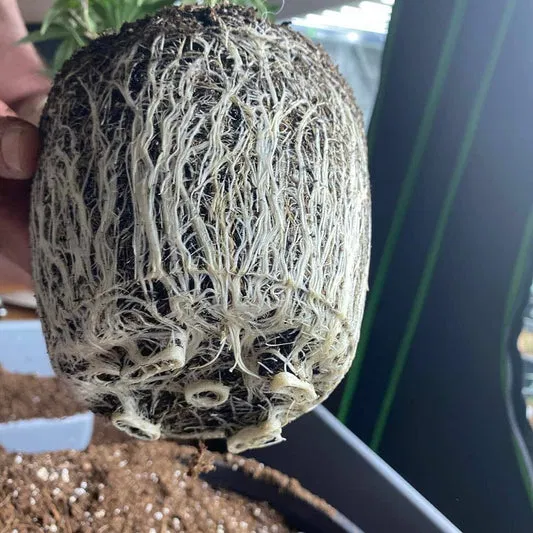
The Science of Surface Area:
- The Problem: Plant roots are relatively thick and can only reach so much soil.
- The Solution: Fungal hyphae (microscopic "threads") are incredibly fine and can penetrate tiny pores in the soil that roots cannot.
- The Result: These networks can increase the effective surface area of your root system by up to 100 times.
Imagine trying to drink a milkshake with a tiny coffee stirrer versus a massive industrial straw. Mycorrhizae are that industrial straw. By expanding the reach of your plants, you ensure that every ounce of organic matter in your Rhizo Logic™ Living Soil is utilized. You stop paying for "extra" fertilizer because your plants finally have the tools to eat what’s already there.
2. The Nitrogen Factory: Harvesting 20-40% "Free" Nitrogen
Nitrogen is often the most expensive component of any fertilizer regimen. Traditional farming relies on synthetic urea or ammonia, which is energy-intensive to produce and devastating to long-term soil health.
We prefer a different approach: Atmospheric Nitrogen Fixation.
Your garden is currently surrounded by nitrogen: about 78% of the air we breathe is N2 gas. The catch? Plants can't "breathe" it in through their leaves. They need a translator.
The Power of Azospirillum:
In our guide, we detail how beneficial bacteria like Azospirillum act as your garden’s personal nitrogen factory. These microbes pull nitrogen from the air and convert it into a form (ammonium) that plants can readily use.
- Financial ROI: By supporting these microbial populations, growers often see a 20-40% reduction in the need for external nitrogen inputs.
- Health ROI: Unlike synthetic nitrogen, which can lead to "leggy" growth and pest attraction, biologically fixed nitrogen is delivered at a steady, natural pace that creates stronger, more nutrient-dense plants.
3. The 30% Water Hack: Building Soil "Sponge"
Water scarcity and rising utility costs are two of the biggest hurdles for modern growers. Most "dirt" is hydrophobic: it either sheds water like a duck’s back or lets it drain straight through to the water table, taking your nutrients with it.

When you implement the strategies in The Magnificent Microbiome, you are essentially turning your soil into a biological sponge.
- Aggregate Stability: Microbes like Bacillus subtilis and various fungi produce "glues" (like glomalin) that bind soil particles together into aggregates.
- Pore Space: These aggregates create tiny pockets that hold onto water, preventing evaporation and runoff.
- The Result: We consistently see a 30% reduction in water usage in systems where the microbiome is fully activated. Your soil stays moist longer, your plants stay hydrated during heat waves, and your water bill stays in check.
Deep Dive: The Rhizo Logic "A-Team"
In the book, we don't just talk about "good bugs" in a general sense. We get into the specific "A-Team" of microorganisms that drive these results.
Bacillus megaterium: The Phosphorus Unlocker
Phosphorus is vital for flowering and fruiting, but it is notoriously "sticky." It binds to minerals in the soil and becomes inaccessible. B. megaterium produces organic acids that dissolve these bonds, "unlocking" the phosphorus so your plants can actually use it.
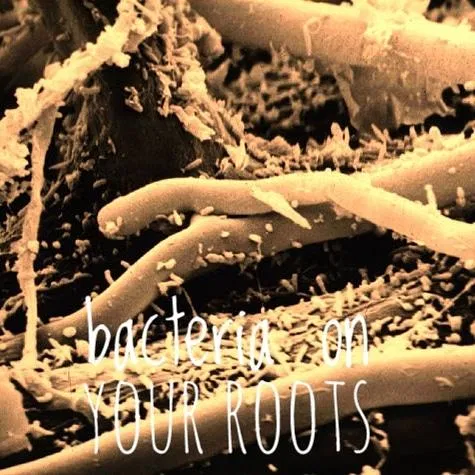
Bacillus subtilis: The Security Guard
Think of this as your plant’s immune system. B. subtilis forms a protective biofilm around the roots, physically blocking pathogens and triggering the plant’s own defense mechanisms.
Who is This Guide For?
For the Beginner
If you’re just starting, don't get overwhelmed by chemical charts. Start with the biology. Understanding the microbiome will prevent you from making the #1 mistake: "over-feeding" your soil until it becomes toxic and lifeless.
For the Experienced Grower
You know your N-P-K ratios, but maybe your yields have plateaued. We show you how to fine-tune your microbial communities to address specific challenges, like drought resistance or pest pressure, without reaching for a bottle of pesticide.
For Commercial Operations
If you are managing acres, a 30% reduction in water and 40% reduction in nitrogen isn't just "nice": it's the difference between profit and loss. Our Initial Soil Health Assessment paired with this guide provides a roadmap for large-scale regeneration.
Traditional vs. Regenerative: A Comparative Analysis
| Feature | Traditional "Chemical" Gardening | Regenerative "Microbial" Growing |
|---|---|---|
| Nutrient Source | Synthetic salts (expensive) | Biological cycling (free/low cost) |
| Water Retention | Low (heavy runoff) | High (soil "sponge" effect) |
| Pest Resistance | Chemical pesticides | Induced Systemic Resistance (ISR) |
| Sustainability | Degrades soil over time | Improves soil every season |
| Cost | Increases annually | Decreases as ecosystem matures |
Why Invest $5 Today?
We believe that the most powerful tool a grower has is knowledge. We priced The Magnificent Microbiome at $4.99 because we want to remove every barrier to entry for soil regeneration.
This guide isn't just a list of facts; it's a Living Soil Blueprint. It’s the "why" behind our Rhizo Logic Products and the foundation of everything we do at Regen Soil.

If you’re ready to stop fighting against nature and start working with it, this is your first step. Your plants will be healthier, your harvest will be more nutrient-dense, and your wallet will thank you.
FAQ: Frequently Asked Questions
Q: Do I need to buy expensive equipment to use these microbes?
A: Absolutely not. Most of these microbes are already present in nature; our guide shows you how to foster their growth through simple cultural practices and strategic inoculations using products like our Living Soil Patio Pro Kit.
Q: Can I use these techniques in pots or just in the ground?
A: These principles apply everywhere. In fact, container gardening often sees the most dramatic results because pots are traditionally very "sterile" and benefit significantly from a microbial boost.
Q: How long does it take to see a 30% reduction in water?
A: You will see improvements in soil structure within a single season. As the fungal networks (mycorrhizae) establish and the soil organic matter increases, your water-holding capacity will continue to grow year over year.
Q: Is this guide too technical for a hobbyist?
A: We’ve written it to be "expertly accessible." We use scientific terms because they matter, but we explain them in a way that makes sense whether you have a PhD or you’re just planting your first tomato.
Do you have questions about your specific soil type?
Leave a comment below or book a Soil Walkthrough Call with one of our consultants. We’re here to help you grow!


