
Soil Microbiology Secrets Revealed: How We Restored Topsoil in Record Time
By Jeremy Standring
For decades, the standard narrative in agricultural science was that it takes 500 years to build a single inch of topsoil. When we first started Regen Soil, we heard this statistic everywhere. It was used as a justification for the slow, agonizing pace of land recovery. But we’ve discovered a "secret" that the traditional industry often overlooks: nature doesn’t work on a linear timeline when the right biology is present.
By focusing on the complex relationships within the soil food web, we have successfully restored topsoil in a fraction of that time: sometimes in just a single growing season. This isn't magic; it’s regenerative agriculture powered by the Rhizo Logic® philosophy of living soil. In this post, we are going to pull back the curtain on how we use microbiology to flip the switch from "dead dirt" to "living ecosystem."
The Science of Speed: Why Microbes Are the Key
Traditional soil management focuses on chemistry: N-P-K (Nitrogen, Phosphorus, Potassium). While these elements are necessary, focusing solely on them is like trying to run a city by only looking at the grocery stores. You’re missing the transportation, the communication, and the waste management.
In a living soil system, the microbes are the infrastructure. When we talk about restoring topsoil in "record time," we are really talking about accelerating the Liquid Carbon Pathway. This is the process where plants take CO2 from the atmosphere, turn it into liquid sugars (exudates) through photosynthesis, and pump those sugars out through their roots to feed soil microbes.
The Micro-Architects of Soil
To understand our restoration process, you have to understand the players:
- Mycorrhizal Fungi: These are the internet of the soil. They extend the reach of plant roots by up to 1,000 times, mining for phosphorus and water in exchange for carbon. They also produce glomalin, a sticky protein that acts as the "glue" for soil aggregates, creating the structure needed for air and water to penetrate.
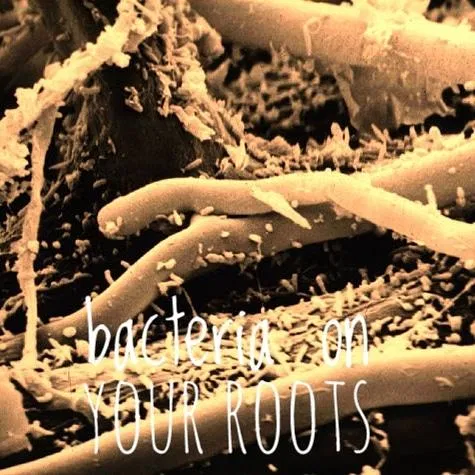
- Rhizobacteria: These colonies live directly on the root surface. We call this the Rhizosphere. They produce plant growth hormones and protect the host from pathogens.
- Protozoa and Nematodes: These are the predators. By eating bacteria and fungi, they "poop" out plant-available nitrogen right where the plant needs it most. This is nature’s precision fertilization.
Our 4-Step Process for Rapid Restoration
We don't guess; we assess. To achieve record-breaking results, we follow a rigorous system designed to maximize biological efficiency.
1. The Initial Soil Health Assessment (ISH)
Before we add a single drop of inoculum, we need to know who is home. Our ISH Assessment uses microscopy and data-driven metrics to look at fungal-to-bacterial ratios. Most degraded soils are "bacterial dominant," which leads to compaction and weeds. We aim to balance this ratio to support the specific crops being grown.
2. Inoculation with Rhizo Logic®
Once we understand the baseline, we introduce high-diversity microbial communities. Our Rhizo Logic® approach isn't about adding one or two species; it’s about introducing a complete ecosystem. We use 5-Gallon Living Soil concentrates to jumpstart the biological engine in depleted fields or indoor beds.
3. Fueling the System with Bio-boost
Microbes need more than just sugar; they need complex catalysts. This is where Bio-boost, our flagship Terrabiotics product, comes into play. Bio-boost acts as a microbial stimulant, providing the micronutrients and humic substances that allow the newly introduced biology to thrive and reproduce at exponential rates.
4. Continuous Ground Cover
The biggest mistake people make is leaving soil bare. Bare soil is dying soil. We use specific cover crop blends to keep the "pump" of the Liquid Carbon Pathway running 24/7. This keeps the microbes fed and protected from the sun’s UV rays, which can sterilize the top layer of soil in minutes.

Case Study: From Dead Clay to Dark Gold
A few years ago, we were called to a site that had been stripped of its topsoil during construction. What was left was compacted, anaerobic red clay. Most "experts" said it would take years of tilling in compost to fix it.
The Regen Soil Approach:
- Day 1: We applied a heavy dose of Bio-boost to break the surface tension of the clay and provide a carbon base.
- Week 2: We inoculated the area with Rhizo Logic® microbes and seeded a diverse 12-species cover crop mix.
- Month 3: By the end of the first 90 days, we performed a secondary assessment. The roots of the cover crops had penetrated 14 inches into the "impenetrable" clay.
- The Result: Within six months, the top 4 inches of soil had transitioned from bright red clay to a dark, crumbly "chocolate cake" texture. We didn't bring in new topsoil; we created it in situ using the power of microbiology.
Systems Thinking: Why This Matters for You
Whether you are a home grower or a commercial farmer, the principles of regenerative agriculture remain the same. You are not a grower of plants; you are a manager of an underground livestock operation.
For Beginners
Start small. Stop using synthetic salts that dehydrate your microbes. Switch to a living soil methodology and watch how your plants respond when they have a biological "support team."
For Commercial Operations
The ROI of soil restoration is found in the reduction of inputs. When your soil biology is functioning, you spend less on fertilizers, less on pesticides (because healthy plants have higher Brix levels and natural resistance), and less on water. Our RSI Method is designed to scale these biological processes for large-scale efficiency.

The Hidden World of Soil Protozoa
One of the most overlooked secrets of rapid restoration is the role of protozoa. These microscopic "architects" are the ones responsible for the majority of nutrient cycling. Without them, your bacteria just hold onto all the nutrients, and your plants starve. Understanding these microscopic architects is the difference between a garden that survives and a garden that thrives.
Frequently Asked Questions (FAQ)
Q: Can I restore soil without buying products?
A: Absolutely. You can build soil through composting and cover cropping alone. However, the Rhizo Logic® and Bio-boost systems are designed to accelerate this process. What takes 5 years with compost alone can often be achieved in 1 year with targeted biological inoculation.
Q: Does "living soil" mean I’ll have bugs in my house?
A: Not the kind you’re thinking of. While living soil is teeming with microscopic life, it doesn't mean you'll have an infestation. In fact, a balanced soil ecosystem usually has fewer pests like fungus gnats because predatory microbes and insects keep them in check. If you do run into issues, check out our guide on fungus gnats.
Q: How do I know if my soil is "restored"?
A: Look for the signs: dark color, earthy smell (actinobacteria), high earthworm counts, and "aggregation" (soil that looks like cottage cheese). For a more scientific answer, we recommend an Initial Soil Health Assessment.
Q: Is this the same as organic farming?
A: It’s beyond organic. Organic farming tells you what not to use. Regenerative agriculture tells you what you must do to improve the ecosystem. We focus on building soil health, not just following a list of approved substances.
Join the Regeneration
We are on a mission to prove that we can heal the earth faster than we are destroying it. The secrets of soil microbiology are no longer hidden: they are available to anyone willing to look beneath the surface.
If you’re ready to stop struggling with "dirt" and start growing in Living Soil, we’re here to help. Whether you need a deep dive into fungal-to-bacterial ratios or you want to join our Operation Green Relief initiative, the first step is recognizing that the soil is alive.
What’s your biggest challenge with your soil right now? Let us know in the comments below, or reach out for a custom assessment!


