Regenerative Organic Living Systems 101: Why Your Garden Needs a Microbiome, Not Just Fertilizer
By Jeremy Standring

Let’s be honest: for the last fifty years, we’ve been treating our gardens and farms like a chemistry set rather than a living organism. We’ve been told that if we just dump enough Nitrogen (N), Phosphorus (P), and Potassium (K) into the dirt, plants will grow. And they do: at least for a while. But there’s a massive difference between a plant that is surviving on life support and one that is thriving as part of a biological community.
At Regen Soil, we don’t just look at dirt; we look at the microbiome. If you’ve ever taken a probiotic for your gut, you already understand the basic principle of Regenerative Organic Living Systems. Just as your body relies on billions of bacteria to digest food and keep you healthy, your soil relies on a complex "Soil Food Web" to feed your plants.
In this guide, we’re going to break down why "feeding the plant" is a dead-end street and why "feeding the soil" is the only way to achieve long-term sustainability, nutrient-dense food, and a garden that actually gets better with age.
The "Fast Food" Trap: Why Synthetic Fertilizers are Failing You
Imagine if you lived entirely on a diet of multi-vitamins and sugar water. You’d probably get through the day, but eventually, your system would crash. That is exactly what synthetic fertilizers do to your soil.
When you use conventional synthetic inputs, you are bypassing the soil’s natural delivery system. These salts provide an immediate hit of nutrients that force a plant to grow, but they come with a heavy cost:
- Microbial Shutdown: When plants get "free" nitrogen from a bag, they stop producing root exudates (the sugars they normally trade to microbes for nutrients). The microbes, essentially out of a job, either die off or go dormant.
- Soil Compaction: Synthetic fertilizers are often salt-based. Over time, these salts build up, killing the fungal "glues" that keep soil crumbly and porous. The result? Hard, compacted dirt that can’t hold water.
- The Chemical Treadmill: Because the soil biology is dead, the plant becomes 100% dependent on you for its next meal. You have to keep buying more fertilizer just to maintain the same results.
We believe there is a better way. By focusing on soil restoration, we can restart the biological engines that have been suppressed by decades of chemical use.

Living Soil: The Underground Economy
When we talk about living soil, we aren’t just talking about dirt with some worms in it. We are talking about a bustling underground economy where plants and microbes trade resources.
The Power of the Rhizosphere
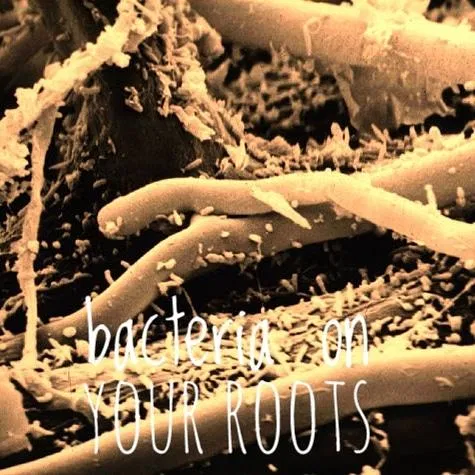
The area immediately surrounding a plant root is called the rhizosphere. This is the "trading floor." The plant pumps out carbon-rich sugars (produced via photosynthesis) into the soil. In exchange, specialized bacteria and fungi "mine" the soil for minerals: like zinc, calcium, and phosphorus: that the plant can't reach or process on its own.
This is where our Rhizo Logic® products come into play. We’ve formulated these solutions to reintroduce the specific beneficial microorganisms that facilitate this trade. Instead of just dumping chemicals, you’re essentially "hiring" a microscopic workforce to do the heavy lifting for you.
Tailoring Your Approach: From Patio to Pasture
Regenerative agriculture isn't just for 5,000-acre farms. It’s a mindset that applies to any scale.
For the Beginners (The Patio Gardener)
If you’re growing in pots or small raised beds, you are in the perfect position to start a living soil system. Conventional potting soils are often sterile.
- The Move: Start with a Living Soil Patio Pro Kit.
- The Why: In a container, the ecosystem is closed. By introducing a diverse microbiome early, you ensure your herbs and veggies have 24/7 access to nutrients without the risk of "fertilizer burn."
For the Experienced Growers (The Home Gardener)
You’ve been composting for years, but maybe your yields have plateaued, or your heirloom tomatoes keep getting blighted.
- The Move: It’s time for an Initial Soil Health Assessment (ISH).
- The Why: You can’t fix what you can’t measure. We use advanced testing to see if your "good" microbes are actually present or if your soil chemistry is locked up.
For Commercial Operations
For those managing large acreage or agricultural businesses, the goal is sequestration and resilience.
- The Move: Transition to a comprehensive Regenerative Farming Plan.
- The Why: Reducing synthetic dependence lowers your overhead and makes your land more resistant to drought. When your soil has a healthy structure, it acts like a sponge, holding onto every drop of water.
Deep Dive: The Science of Soil Restoration
Let’s get technical for a second. Why does a microbiome outperform a bag of 10-10-10?
- Nutrient Cycling: Microbes don’t just "give" nutrients to plants; they cycle them. They break down organic matter and store nutrients in their own bodies. When they die, those nutrients are released in a slow-release, plant-available form. This prevents leaching: where fertilizer just washes away into the groundwater.
- Disease Suppression: A diverse soil microbiome is like an immune system. Beneficial fungi like Trichoderma can actually hunt down and consume pathogenic fungi that cause root rot. In a sterile, chemical-heavy soil, these pathogens have no competition and can run rampant.
- Carbon Sequestration: This is the big one for the planet. Healthy soil biology turns atmospheric carbon into stable soil organic matter. By practicing regenerative agriculture, your garden becomes a tool for fighting climate change.
Comparative Analysis: Regenerative vs. Conventional
| Feature | Synthetic Fertilizer System | Regenerative Living Soil System |
|---|---|---|
| Primary Goal | Short-term plant growth | Long-term soil health & vitality |
| Nutrient Delivery | Soluble salts (Immediate) | Biological cycling (Slow-release) |
| Water Retention | Low (Leads to runoff) | High (Soil acts as a sponge) |
| Pest Resistance | Low (Requires pesticides) | High (Natural immune system) |
| Cost over Time | Increases (Chemical treadmill) | Decreases (Self-sustaining system) |
| Environmental Impact | Degradation & Runoff | Regeneration & Carbon Capture |
How to Get Started with Rhizo Logic®
Transitioning to a regenerative system doesn't have to be overwhelming. We recommend a three-step approach:
- Stop the Harm: Reduce or eliminate the use of synthetic fertilizers and harsh "cides" (pesticides, herbicides) that kill soil life.
- Inoculate: Use Rhizo Logic® products to jumpstart your soil’s microbial populations. This is like adding yeast to bread dough: it’s the "active ingredient" that makes the whole system rise.
- Feed the Biology: Keep the soil covered with mulch or cover crops. These provide the "fuel" (organic matter) that your new microbial workforce needs to thrive.

Frequently Asked Questions (FAQ)
Is "Living Soil" the same as organic gardening?
Not exactly. "Organic" often just means substituting organic-approved fertilizers for synthetic ones. Living soil focuses specifically on the biological components: ensuring that the bacteria and fungi are actually there and active to do the work.
Can I use Rhizo Logic® with my current fertilizer?
If you are using high-salt synthetic fertilizers, they may inhibit the growth of the microbes in Rhizo Logic®. We suggest transitioning to organic-based fertilizers or compost teas to ensure your new microbiome thrives.
How long does it take to see results?
While you may see improved plant vigor in a few weeks, true soil restoration is a journey. It typically takes 1-3 seasons to fully rebuild the soil structure and establish a dominant microbial community.
Do I still need to test my soil?
Absolutely. Even in a regenerative system, you need to know your baseline. Our Initial Soil Health Assessment looks at things conventional tests miss, like microbial diversity and fungal-to-bacterial ratios.
Join the Regeneration
The era of "mining" our soil for short-term gain is over. Whether you are a patio gardener or a commercial farmer, the future of food depends on our ability to work in harmony with nature.
Ready to stop just "feeding" your plants and start building an ecosystem? Browse our Rhizo Logic® collection or reach out to us for a personalized consultation. Let’s bring your soil back to life together.


