
Regenerative Agriculture 101: A Beginner’s Guide to Mastering Living Soil at Home
By Jeremy Standring
Let’s be honest: most of us were taught that gardening is a bit like baking. You take some "dirt," add a specific amount of "NPK" (Nitrogen, Phosphorus, Potassium), pour in some water, and wait for a plant to pop out. If a bug shows up, you spray it. If the leaves turn yellow, you dump more chemicals on it.
At Regen Soil, we’re here to tell you that this "factory" model of gardening is not only outdated: it’s exhausting. It’s expensive, it’s bad for the planet, and frankly, it produces mediocre results.
Welcome to the world of Regenerative Agriculture. This isn't just "organic" gardening with a fancy name. It’s a complete shift in perspective. Instead of feeding the plant, we are feeding the soil. Specifically, we are cultivating a living soil ecosystem. When you master the biology beneath your feet, the plants essentially take care of themselves.
In this guide, we’re going to break down how you can implement large-scale regenerative principles in your own backyard, balcony, or grow room.
What Exactly is Regenerative Agriculture?
In the simplest terms, regenerative agriculture is a system of farming principles and practices that increases biodiversity, enriches soils, improves watersheds, and enhances ecosystem services.
While conventional agriculture (and even some "organic" styles) tends to deplete the soil over time, regenerative agriculture restores it. We are looking to create a "net positive" impact. Think of it as moving from a bank account where you only withdraw money to one where the interest grows faster than you can spend it.
The Shift from Chemistry to Biology
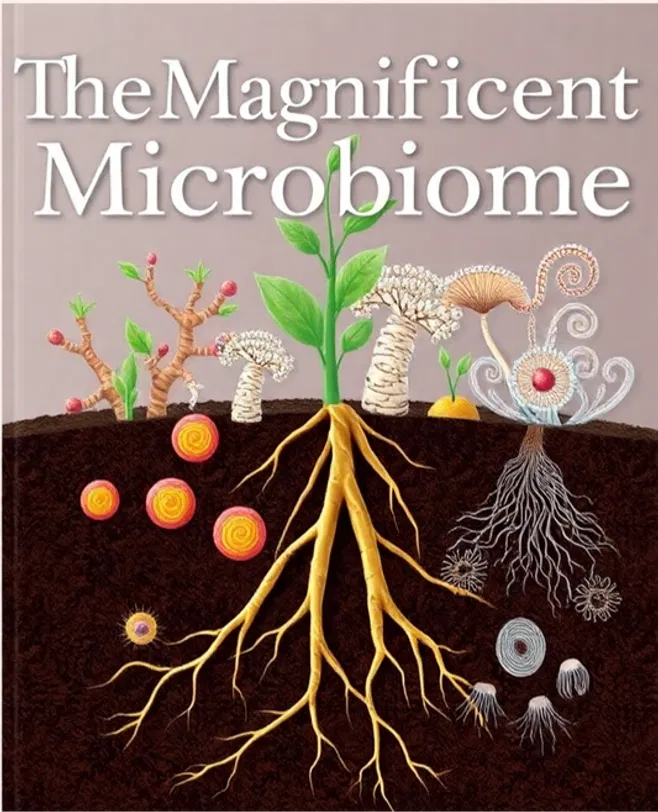
Most home gardeners are stuck in a chemical mindset. They worry about pH levels and ppm (parts per million) of salt-based nutrients. In a regenerative system, we adopt a biological mindset. We focus on the Soil Food Web: the complex community of bacteria, fungi, protozoa, and nematodes that drive nutrient cycling.
The Four Pillars of Living Soil at Home
To master living soil, we follow four core rules that mimic how nature works in an old-growth forest. Nature doesn't use a rototiller, and it certainly doesn't use synthetic 10-10-10 fertilizer.
1. Minimize Soil Disturbance (The "No-Till" Rule)
Every time you turn the soil with a shovel or a tiller, you are essentially hitting a "reset" button on a microscopic city. You’re tearing apart fungal networks (mycelium) and crushing the pore spaces that allow air and water to move.
- The Pro Tip: Stop digging. If you need to add nutrients, layer them on top. Let the worms and microbes do the heavy lifting of moving those nutrients down to the roots.
2. Maximize Crop Diversity
In nature, you rarely see a "monoculture" (only one type of plant). Diversity above ground leads to diversity below ground. Different plants exude different types of sugars (exudates) through their roots, which attract different types of beneficial microbes.
- For Beginners: Even if you are just growing cannabis or tomatoes, try using cover crops like clover or vetch to keep the microbial community varied and vibrant.
3. Keep the Soil Covered
Bare soil is dying soil. Exposed dirt is subject to erosion, extreme temperature swings, and evaporation.
- The Solution: Use mulch or "green manure" (living plants). This keeps the soil "skin" protected, maintaining the moisture levels required for your Rhizo Logic® microbes to thrive.
4. Maintain Living Roots Year-Round
Microbes need food. Their primary food source is the carbon-rich sugars leaked by living roots. When you pull a plant and leave the soil fallow, the microbial population starves and dies off.
- The Strategy: As soon as one crop is finished, have the next one (or a cover crop) ready to go. We want carbon sequestration happening 365 days a year.
Starting Your First Living Soil Container
If you’re a home grower, the easiest way to start is with a high-quality living soil medium. At Regen Soil, we’ve developed the Rhizo Logic® 5gal Living Soil specifically for those who want the power of a farm in a portable format.
Step 1: The Foundation
You want a mix that is rich in organic matter but has excellent aeration. We use a blend of high-quality compost, sphagnum peat moss, and perlite or pumice. But the "secret sauce" is the microbial inoculation.
Step 2: The Inoculation
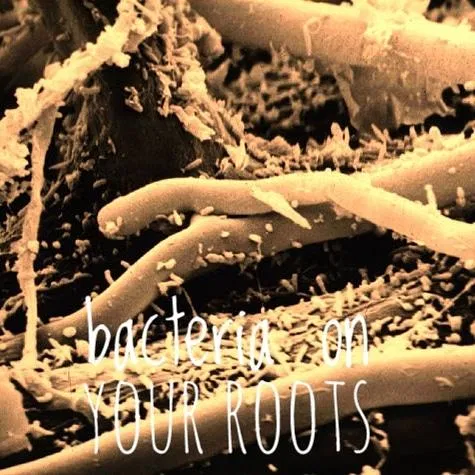
This is where we move from "dirt" to "living soil." By introducing specific beneficial bacteria and fungi, you kickstart the rhizophagy cycle: a process where plants actually "eat" microbes to gain nutrients and then spit them back out to grow again. It sounds like science fiction, but it’s just high-level biology.
Step 3: Feeding the Soil (Not the Plant)
In a regenerative system, you don't use bottled nutrients that look like neon Gatorade. Instead, you use organic amendments like alfalfa meal, kelp, and crustacean meal.
- Deep Dive: If your soil needs a boost, we recommend a product like Bio-boost (a Terrabiotics essential) to provide the raw materials that microbes need to build soil structure and health.
Monitoring Success: Science Meets the Soil
How do you know if your regenerative efforts are working? In the old days, you’d just wait to see if the plant died. Today, we use data.
We recommend every grower start with an ISH Assessment (Initial Soil Health Assessment). This isn't your standard hardware store test. We look at the biological activity: the actual life in your soil.
For the tech-savvy home grower, tools like the Regen Soil Pulse allow you to monitor moisture, temperature, and EC (Electrical Conductivity) in real-time via a mobile app.

When you see your moisture levels stabilizing and your nutrient cycling (measured via EC) remaining consistent without adding synthetic salts, you know you’ve mastered the art of Living Soil.
Living Soil vs. Super Soil: What’s the Difference?
A common point of confusion for beginners is the difference between "Super Soil" and "Living Soil."
- Super Soil is typically "water only" because it is heavily amended with enough nutrients to last the plant's entire life. However, it can often be "too hot" (too nutrient-dense) for young plants and lacks the long-term regenerative capacity.
- Living Soil is an ecosystem. It relies on active nutrient cycling. It’s not just a gas tank full of fuel; it’s an engine that produces its own fuel.
For a deeper comparison, check out our article on Living Soil vs Super Soil.
Common Barriers for Beginners (FAQ)
"Does living soil smell bad?"
Nope. If your living soil smells like rotten eggs, it’s gone anaerobic (no oxygen). Healthy living soil should smell like a fresh forest floor after a rainstorm. This is thanks to actinomycetes, a type of bacteria that produces that "earthy" scent.
"Will living soil attract pests?"
Actually, a healthy living soil ecosystem includes predatory mites and beneficial insects that act as a security force. While you might see a few fungus gnats, a balanced system usually keeps them in check. If things get out of hand, we have a comprehensive guide on fungus gnats to help you out.
"Is it more expensive?"
Upfront, buying high-quality biology like Rhizo Logic® products costs more than a bag of cheap potting soil. However, because you can reuse living soil indefinitely (with minor re-amending), it is significantly cheaper in the long run. You stop buying bottles of nutrients every month, and your plants become more resilient to disease, saving you money on "cures."
Join the Regeneration
Regenerative agriculture is more than a gardening technique; it’s a way to reconnect with the natural world. Whether you’re growing a few herbs on your windowsill or managing a full-scale medical cannabis garden, the principles remain the same: Protect the microbes, and the microbes will protect the plants.
We’ve seen incredible transformations through our RSI Method, taking barren, compacted dirt and turning it into a thriving, carbon-sequestering oasis.
Ready to get your hands dirty: or rather, "soily"? Start by browsing our blog for more deep dives into the microscopic world, or reach out to us for a personalized Soil Health consultation.
Let’s grow something that gives back.
Have questions about your specific setup? Drop a comment below or connect with us directly. We’re here to help you transition from a "grower" to a "steward of the soil."


