
7 Mistakes You’re Making with Your Soil Health Assessment (And How to Fix Them)
By Jeremy Standring
When we talk about regenerative agriculture, the conversation often starts with the soil. However, a common hurdle many growers face isn't a lack of effort, it’s a lack of accurate data. At Regen Soil, we’ve seen countless cultivation projects stall because the initial assessment was either incomplete, misunderstood, or focused on the wrong metrics.
A true soil health assessment is more than just checking your N-P-K levels. It is a deep dive into a complex, living ecosystem. If you are only looking at the chemistry, you are missing two-thirds of the story: the biology and the physical structure. To achieve true soil restoration, we must transition from a reactive "input-based" mindset to a proactive "systems-based" approach.
Here are the seven most common mistakes we see growers making with their soil health assessments and exactly how we recommend fixing them.
1. The "Chemistry-Only" Trap: Ignoring Soil Biology
The biggest mistake in modern cultivation is treating soil like a sterile medium that only exists to hold synthetic salts. Standard lab tests often focus exclusively on chemical concentrations. While knowing your mineral balance is vital, it doesn't tell you if those minerals are actually bio-available.
The Fix: You must include biological markers in your assessment. We advocate for looking at microbial populations, including fungal-to-bacterial ratios. Without active biology, your nutrients remain "locked" in the soil profile. This is why we developed the Initial Soil Health (ISH) Assessment, which analyzes the living components of your medium.
2. Testing Only at the Surface Level
Many growers take a quick "plug" from the top two inches of soil and call it a day. However, the top layer is often the most volatile, influenced heavily by recent top-dressings or weather events. This doesn't represent the environment where the bulk of the root system resides, especially in living soil systems like Rhizo Logic®.
The Fix: Sample at multiple depths. We recommend taking core samples that reach the "hardpan" layer. Testing the soil at the depth where roots are actively interacting with microbes provides a much more accurate picture of the rhizosphere. This ensures you aren't missing drainage issues or mineral accumulations that happen deeper in the profile.
3. Confusing "Total" Nutrients with "Plant-Available" Nutrients
A standard soil test might show that you have high levels of Phosphorus. You might then wonder why your plants are showing P-deficiencies. This happens because most lab tests use strong acids to extract total minerals, which doesn't reflect what a plant root can actually pull out using its own organic acids.
The Fix: Use a saturated paste test or a Haney test alongside your standard soil report. These tests better simulate how nutrients move in soil water. To bridge the gap between "total" and "available," we utilize Bio-boost (a Terrabiotics product). These specialized inoculants help solubilize locked-up minerals, turning "storage" nutrients into "available" food for your crop.
4. Overlooking Physical Structure and Compaction
We can balance the chemistry and biology perfectly, but if the soil is as hard as a brick, your plants will suffer. Soil health is a three-legged stool: Chemistry, Biology, and Physics. Mistakenly ignoring the physical structure, like aggregate stability and pore space, leads to anaerobic conditions and root rot.
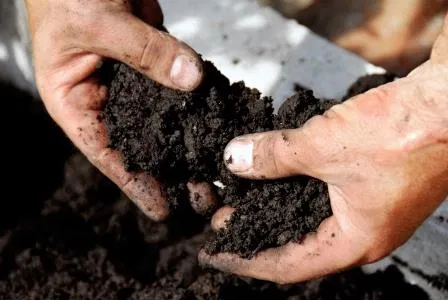
The Fix: Perform an in-field "squeeze test" and look for aggregate stability. Healthy soil should look like cottage cheese, full of small clumps held together by microbial glues (glomalin). If your soil is compacted, focus on mechanical aeration or using cover crops with deep taproots to break up the soil naturally. You can read more about this in our guide on cover crops for cannabis.
5. Failing to Track Trends Over Time
A single soil test is just a snapshot in time. One of the most significant mistakes we see is growers testing once, applying a massive amount of amendments, and never testing again. Soil is a dynamic, shifting environment. What was true in the spring may not be true during the peak of the flowering cycle.
The Fix: Implement a seasonal testing schedule. By tracking data over several cycles, you can see how your soil restoration efforts are actually performing. Are your fungal populations increasing? Is your organic matter rising? Use data-driven tools like the Regen Soil Pulse to monitor real-time metrics such as moisture and EC.

6. Relying on Generic Lab Recommendations
Most commercial labs provide "standard" recommendations based on high-yield industrial corn or soy. If you are a specialized organic grower or working with high-value crops like cannabis, these generic N-P-K recommendations can actually do more harm than good by over-applying salts that kill your living soil microbes.
The Fix: Work with a consultant who understands regenerative agriculture specifically. At Regen Soil, we don't just give you a data sheet; we provide a roadmap. We interpret the data through the lens of the RSI Method, ensuring that any amendments recommended are compatible with a biological system, not just a chemical one.
7. Neglecting the Rhizosphere (The "Root-Microbe" Connection)
Many assessments stop at the soil itself and never look at the plant's response. The rhizosphere is the area immediately surrounding plant roots where the most intense biological activity occurs. If you aren't assessing root health and microbial colonization, you’re missing the engine of the entire system.
The Fix: Inspect your roots! Healthy roots should be vibrant white and covered in a "rhizosheath" (soil sticking to the roots). This indicates active microbial interaction. To enhance this connection, we recommend Rhizo Logic® products, which are designed to bolster the specific microbes that live in symbiosis with your plants.

Comparison: Traditional Testing vs. Regen Soil ISH Assessment
To help you understand the difference, let’s look at how a standard approach compares to a comprehensive regenerative assessment.
| Feature | Traditional Soil Test | Regen Soil ISH Assessment |
|---|---|---|
| Primary Focus | Chemical N-P-K levels | Biological, Chemical, and Physical health |
| Nutrient View | Total nutrients (Acid extraction) | Plant-available nutrients (Saturated Paste) |
| Biology | Often completely ignored | In-depth microbial & fungal analysis |
| Recommendations | Synthetic salt-based fertilizers | Organic amendments & Bio-boost inoculants |
| Context | Generic crop data | Site-specific, goal-oriented strategies |
Deep Dive: The Science of Microbial Chelation
Why does biology matter so much in your assessment? It comes down to chelation. In a sterile environment, minerals like Iron or Zinc often bind with other elements and become insoluble. In a living soil system, microbes produce organic acids and siderophores that "wrap" around these minerals, keeping them in a form the plant can absorb.
When we perform an ISH Assessment, we are looking for the presence of these "microbial architects." If they are missing, no amount of added fertilizer will fix your nutrient lockout. This is the "why" behind our focus on biology-first restoration.
Frequently Asked Questions (FAQ)
How often should I perform a soil health assessment?
For most growers, we recommend a minimum of two tests per year: one before planting to establish your baseline and one mid-season to see how the plants are utilizing nutrients.
Can I fix my soil if the assessment shows high heavy metals?
Yes, but it requires a specific strategy involving phytoremediation or the use of specific biological buffers. Our Operation Green Relief initiative often deals with soil health in challenging environments.
What is the difference between Rhizo Logic and Bio-boost?
Rhizo Logic® refers to our line of products designed to support a thriving Living Soil ecosystem. Bio-boost is a Terrabiotics product focused on providing high-energy microbial stimulants and catalysts to accelerate the restoration process.
Is the ISH assessment suitable for home gardeners?
Absolutely. Whether you are managing a 50-acre farm or using 5-gallon living soil bags at home, understanding your soil health is the key to success.
Taking the Next Step in Your Soil Journey
Correcting these seven mistakes will fundamentally change the way you interact with your land. Stop guessing and start measuring. By integrating biological analysis and physical observations into your routine, you move closer to a self-sustaining, high-yielding ecosystem that works in harmony with nature.
If you’re ready to get a clear picture of what’s happening beneath the surface, we’re here to help. You can meet Jeremy to learn more about our philosophy or dive straight into our blog for more technical guides.
What is the biggest challenge you've faced with your soil testing? Leave a comment below or reach out for a personalized consultation!


