
Fall Lawn Care That Actually Works: Why Your Soil, Not Your Fertilizer, Decides Next Spring's Green-Up
By Jeremy Standring
Fall Lawn Care Is Really Winter Soil Prep
The lawn you see in April is largely determined by the decisions you make in September and October.
That may sound counterintuitive. Most homeowners think of fall lawn care as a fertilizer application followed by leaf cleanup. But a greener spring does not begin with feeding grass alone. It begins with improving the soil ecosystem that supports grass roots.
Healthy soil provides:
- Water-holding capacity during spring growth
- Air-filled pore space for root respiration
- Nutrient cycling through microbial activity
- Disease-suppressive biology around the root zone
- Stronger root development before winter dormancy
In other words, fertilizer can supply nutrients, but soil biology determines how efficiently those nutrients are stored, transformed, and delivered to plants.
For Zone 6 homeowners, fall is the most important window for building that foundation.
The Zone 6 Fall Window: Work in the Right Order
Cool-season grasses such as Kentucky bluegrass, perennial ryegrass, and fescues respond well to fall conditions because soil remains warm while air temperatures begin to moderate.
A practical Zone 6 sequence looks like this:
- Test the soil
- Overseed into a living seedbed
- Mow appropriately and return organic matter
- Protect soil biology as dormancy approaches
- Break pest and disease cycles before winter
The order matters. Testing after applying amendments, for example, makes it harder to understand what the soil actually needed.
Step 1: Soil Test Timing Comes Before Fertilizer
Why Test in Fall Instead of Spring?
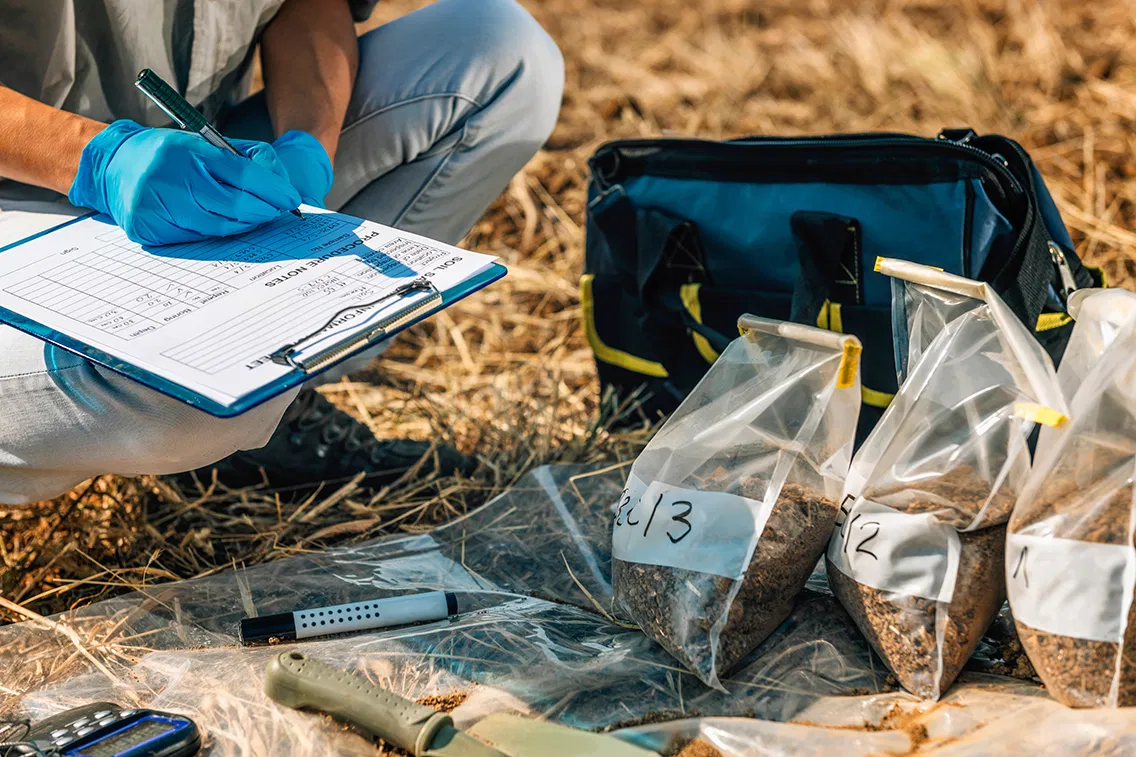
Late September through October is a useful soil test timing window in much of Zone 6. The lawn has already experienced summer stress, drought, traffic, compaction, and nutrient demand. A fall test gives us a more useful picture of the conditions that shaped lawn performance.
Testing now also gives you time to:
- Apply lime or other amendments when appropriate
- Plan winter soil prep
- Correct pH before spring growth accelerates
- Identify excess salts or nutrient buildup
- Adjust next year's fertility program
- Compare weak areas with healthy areas
A basic soil test may measure pH, organic matter, salts, nitrate, phosphorus, potassium, and other fertility indicators. However, a laboratory report alone does not always explain why one part of a lawn is thin while another is dense.
That is why the Regen Soil Initial Soil Health Assessment is a natural first step. It combines sampling, field observations, and practical interpretation to evaluate soil biology, chemistry, and physical structure.
Before spreading fertilizer, ask:
- Is the soil compacted?
- Is water infiltrating or running off?
- Is organic matter adequate?
- Are roots shallow because of poor structure?
- Is the pH appropriate for the grass species?
- Are microbial populations active enough to support nutrient cycling?
For Beginners
Do not guess from the color of the grass. A lawn can look yellow because of nitrogen deficiency, poor drainage, compaction, drought stress, or root disease. These problems require different solutions.
Step 2: Overseed Into a Living Seedbed
Fall is generally the best time to overseed cool-season lawns in Zone 6. Aim to complete major overseeding by mid-September when possible, although early October may still work during a warm, moist fall.
The goal is not simply to place seed on the ground. The goal is to create a living seedbed where seed can contact soil, receive consistent moisture, and establish roots before hard freeze.
A Better Overseeding Process
- Mow and remove heavy debris.
- Address compaction with core aeration if water infiltration is poor.
- Rake thin areas so seed can reach the soil surface.
- Choose grass seed suited to your light, moisture, and traffic conditions.
- Broadcast seed in two directions for more even coverage.
- Press seed into the soil rather than burying it deeply.
- Keep the surface consistently moist during germination.
- Reduce foot traffic until seedlings are established.
A biologically active seedbed can support faster establishment than a bare, compacted surface because roots encounter better aggregation, moisture movement, and microbial activity.
For targeted renovation areas, raised beds, or lawn-adjacent growing spaces, Rhizo Logic Living Soil is one biological input to consider where appropriate. Its role is to support living root zones and biologically active soil, not to replace testing, proper seeding, or good moisture management.

Step 3: Mow High, Return Clippings, and Avoid Scalping
Grass should continue growing as long as conditions allow. Mowing too short reduces leaf area, limits photosynthesis, and exposes the crown and soil surface to greater temperature and moisture swings.
For most Zone 6 cool-season lawns:
- Maintain an upper, species-appropriate mowing height through fall.
- Never remove more than one-third of the leaf blade at one time.
- Keep mower blades sharp to reduce tissue damage.
- Continue mowing until growth has genuinely slowed or stopped.
- Make a modest final height adjustment only if long grass would mat under snow.
Many lawns perform well entering winter around 2.5 to 3 inches, but the correct height depends on grass species, shade, drainage, and local conditions. The goal is neither a summer scalping nor an excessively tall, matted canopy.
Leave the Clippings, When They Are Healthy
Short, evenly distributed clippings return organic matter and nutrients to the soil. They provide small, repeated inputs that soil organisms can process over time.
Leave clippings when:
- The lawn is mowed regularly
- Clippings are short enough to fall between the blades
- There is no active, severe turf disease
- Clippings are not forming thick piles
Bag or remove clippings when they are heavily diseased, wet and clumped, or likely to create a dense mat. The same principle applies to leaves: mulch them into small pieces when possible, but remove heavy layers that block light and airflow.
Step 4: Keep the Microbiome Alive Into Dormancy
As temperatures fall, microbial activity slows, but it does not immediately stop. Soil organisms remain part of the lawn ecosystem, and their condition going into winter influences spring nutrient cycling and root recovery.
This is not the season for synthetic nitrogen bombs or repeated applications made without a soil test. A sudden nutrient surge can stimulate weak top growth, increase runoff risk, and create an imbalance between leaf growth and root development.
Instead, we recommend:
- Returning healthy clippings
- Mulching leaves lightly
- Using compost or amendments only when justified
- Maintaining adequate moisture before the ground freezes
- Minimizing unnecessary soil disturbance
- Applying nutrients according to test results and label directions
- Supporting biological activity with compatible, science-backed inputs
This is the foundation of regenerative home gardening: build a system that becomes more resilient rather than forcing short-term color.
Experienced Growers
Think in terms of carbon flow and root exudates. Living roots release compounds that feed microorganisms in the rhizosphere. The narrow zone of soil directly influenced by roots. Those microbial populations can help cycle nutrients and improve aggregation, but only when the physical environment provides adequate oxygen and moisture.
Step 5: Break the Pest and Disease Cycle Before Winter
Fall garden prep is also pest and disease prevention. The objective is to avoid handing spring an established population of overwintering pests or a reservoir of disease-infected debris.
Complete a sanitation walk before snowfall:
- Remove diseased leaves and heavily infected plant material.
- Mulch or remove leaf layers that remain wet and compacted.
- Clear debris from lawn edges, beds, and foundation plantings.
- Inspect the undersides of leaves, stems, and protected areas.
- Record where pest or disease symptoms appeared.
- Clean mower decks and tools after working in affected areas.
- Avoid carrying contaminated clippings into healthy beds.
Biological IPM, integrated pest management, works best as a layered system rather than a single product.
A Biological IPM Layered Approach
- Monitor first. Identify the pest, disease, or environmental cause.
- Improve habitat. Support plant diversity and avoid unnecessary broad-spectrum treatments.
- Use beneficial predator insects and mites where appropriate for the crop or ornamental system.
- Consider Athena Organic Shield according to its product label and the specific plant or site.
-
Use CEASE according to its label:
- As a foliar spray on a 7–10 day preventative schedule when conditions and labeling support preventative use.
- As a root drench for systemic protection, only where the product label permits that application.
- Sanitize in fall so fewer pests and pathogens have protected places to overwinter.
Always verify product registration, crop or turf labeling, application rates, weather restrictions, and personal protective equipment requirements before use.
Feeding Grass vs. Feeding Soil: Pros and Cons
| Approach | Advantages | Limitations |
|---|---|---|
| Heavy fertilizer-first program | Fast visible color; simple to apply | Can mask compaction, create imbalance, and increase runoff |
| Soil-first regenerative program | Builds roots, structure, biology, and resilience | Requires observation, testing, and patience |
| Bagging all clippings and leaves | Cleaner appearance; useful for diseased material | Removes organic matter that could feed soil organisms |
| Returning healthy organic matter | Supports nutrient cycling and soil carbon | Must be finely distributed to avoid mats and disease pressure |
The best lawn care program is not “never fertilize.” It is fertilize with evidence, while improving the ecosystem that makes fertility work.
Who Should Take What Approach?
For Beginners
Start with a soil test, correct obvious compaction, overseed thin areas, and mow consistently. Avoid purchasing multiple amendments before you know what the soil needs.
For Experienced Growers
Track mowing height, rainfall, disease symptoms, soil test results, and spring green-up by lawn zone. Compare shaded and sunny areas instead of treating the property as one uniform system.
For Commercial Operations and Land Managers
Map compaction, drainage, traffic, and fertility zones. Use sampling data to reduce unnecessary inputs and prioritize areas where improved structure and water retention will provide the greatest return.
FAQ: Fall Lawn Care and Winter Soil Prep
Is fall really better than spring for a soil test?
Often, yes. Fall testing captures the effects of the growing season and gives you time to plan amendments before spring demand increases. Soil can technically be tested at many times of year, but fall is especially useful for planning.
Should I fertilize a lawn in fall?
Only according to grass needs, soil test results, local recommendations, and product directions. Avoid high-rate applications made solely to create quick color.
Can I overseed after October in Zone 6?
Success becomes less predictable as soil temperatures fall and the time before hard freeze shortens. Earlier seeding generally provides stronger root establishment.
Should I remove every leaf from the lawn?
No. Mulch manageable leaf cover into fine pieces when possible. Remove thick, wet layers and diseased material that can block light, restrict airflow, or shelter pests.
What is the first step if my lawn is thin every spring?
Begin with diagnosis rather than more fertilizer. The Initial Soil Health Assessment can help identify whether the underlying issue is compaction, poor drainage, nutrient imbalance, low organic matter, or weak soil biology.
Build Spring Green-Up From the Ground Down
Fall is not the end of the lawn season. It is the transition point between this year's stress and next year's vitality.
Test before treating. Overseed into living soil. Mow thoughtfully. Return healthy organic matter. Clean up disease reservoirs. Support the microbiome instead of overwhelming it.
That is fall lawn care that actually works, and it is the same systems-thinking approach we use in regenerative agriculture, gardens, and living soil management.
What is the biggest challenge in your lawn right now: compaction, thin grass, poor drainage, pests, or inconsistent spring green-up? Share your experience in the comments, or contact Regen Soil for personalized guidance.
Research and Further Reading
- Iowa State University: Late-Summer and Fall Lawn Care
- University of Maryland Extension: Lawn Maintenance Calendar
- University of Minnesota Extension: Lawn Care Calendar
- University of Wisconsin Extension: Wisconsin Lawn Care Calendar


